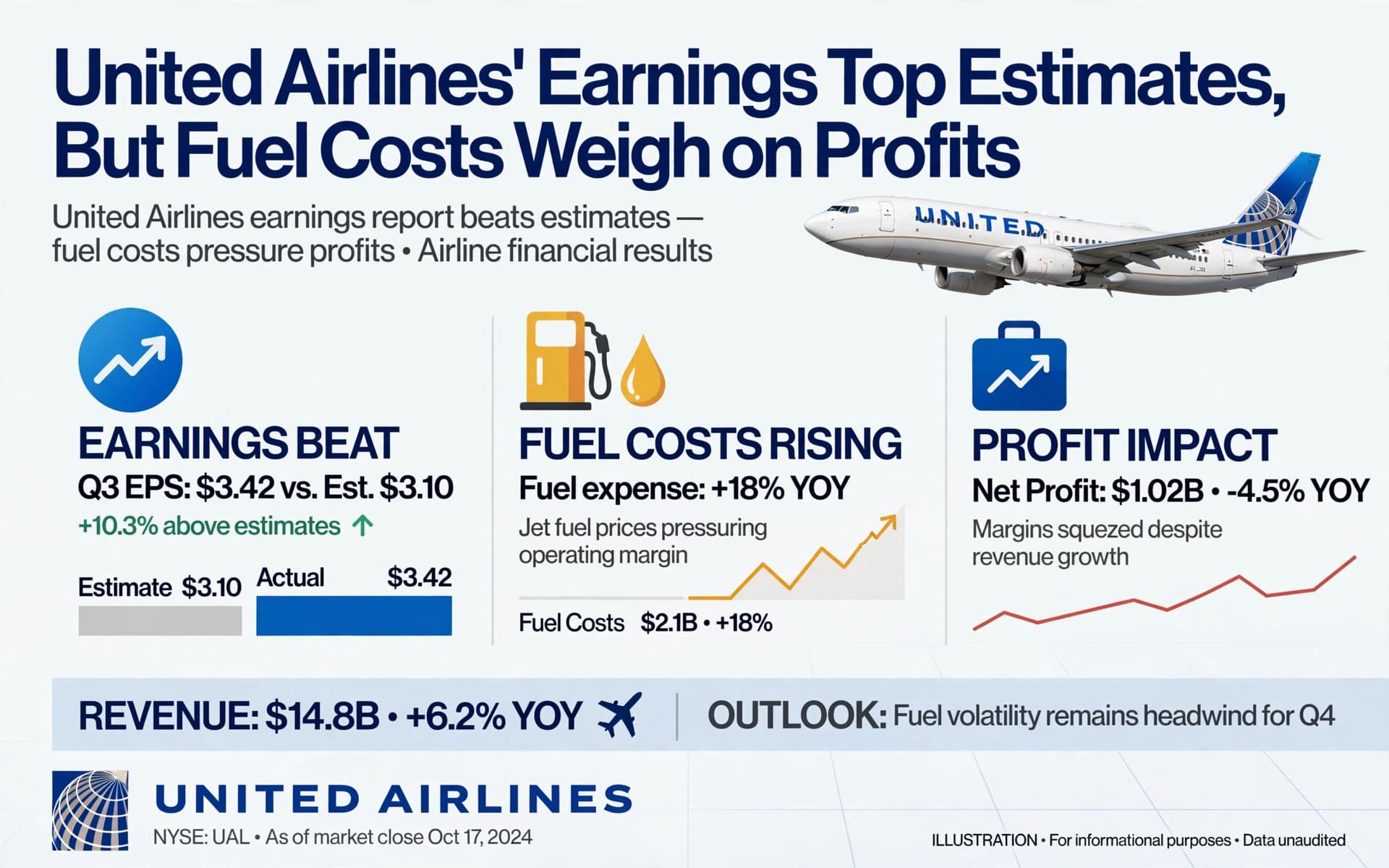
United Airlines' Second-Quarter Earnings Reflect the Industry's Complex Landscape
The airline industry continues to navigate the complex landscape of rising fuel costs and fluctuating demand. United Airlines has reported a mixed bag of results in its second-quarter earnings, with revenue seeing a significant boost but net income taking a hit due to soaring fuel prices.
United Airlines' second-quarter earnings topped estimates, with the carrier reporting an adjusted earnings per share of $1.99. However, the airline's net income fell more than 17% to $805 million, largely due to the sharp increase in fuel costs. Jet fuel prices at major U.S. airports are up 34% in July alone through Tuesday, with United Airlines bearing the brunt of this rise. The carrier's second-quarter fuel costs rose 84% from last year to $2.3 billion.
Fuel Costs Weigh Heavily on United Airlines' Profits
| Key Highlights | Details |
|---|---|
| Fuel costs | $2.3 billion, up 84% from last year |
| Expected added fuel costs for the year | Nearly $6 billion |
| Revenue growth | 16% from a year earlier to $17.67 billion |
| Net income | Fell more than 17% to $805 million |
The impact of rising fuel costs is expected to be felt throughout the year, with United Airlines forecasting that added fuel expenses will add nearly $6 billion to its expenses. This will undoubtedly put pressure on the carrier's profitability, particularly as it looks to maintain its competitiveness in a crowded market.
Why Fuel Costs Are a Major Concern for United Airlines
- The airline industry is heavily reliant on fuel, with fuel costs accounting for a significant proportion of its expenses.
- Rising fuel prices can have a disproportionate impact on airlines, particularly those with high fuel consumption rates.
- United Airlines is not alone in facing this challenge, with other major carriers such as Delta Air Lines also grappling with the effects of high fuel costs.
Deal Structure and Key Features
| Key Features | Details |
|---|---|
| Forecast for third-quarter adjusted earnings per share | Between $2.50 and $3.50 |
| Expected full-year adjusted earnings per share | Between $9 and $11 |
The airline's forecast for the third quarter suggests that it is cautiously optimistic about the remainder of the year, with adjusted earnings per share expected to come in between $2.50 and $3.50. However, the impact of rising fuel costs will undoubtedly continue to be a major concern for the carrier.
Broader Market Impact
- The airline industry is facing significant challenges in the wake of rising fuel costs, with carriers struggling to maintain profitability.
- United Airlines is not alone in facing this challenge, with other major carriers also grappling with the effects of high fuel costs.
- The impact of rising fuel costs is expected to be felt throughout the industry, with carriers looking to implement cost-saving measures to mitigate the effects.
As United Airlines continues to navigate the complex landscape of the airline industry, it is clear that the challenge of rising fuel costs will be a major concern for the carrier in the coming months. While the airline's revenue has seen a significant boost, the impact of soaring fuel prices has taken a toll on its bottom line.
In the short term, United Airlines is expected to continue to focus on cost-saving measures, including the implementation of more efficient fuel-saving technologies. However, the long-term implications of rising fuel costs will undoubtedly have a significant impact on the airline industry as a whole.
The valuation of United Airlines remains a topic of interest, with investors looking for signs of stability and growth in the face of rising fuel costs. As the airline continues to navigate this complex landscape, it will be essential for investors to keep a close eye on the carrier's progress.