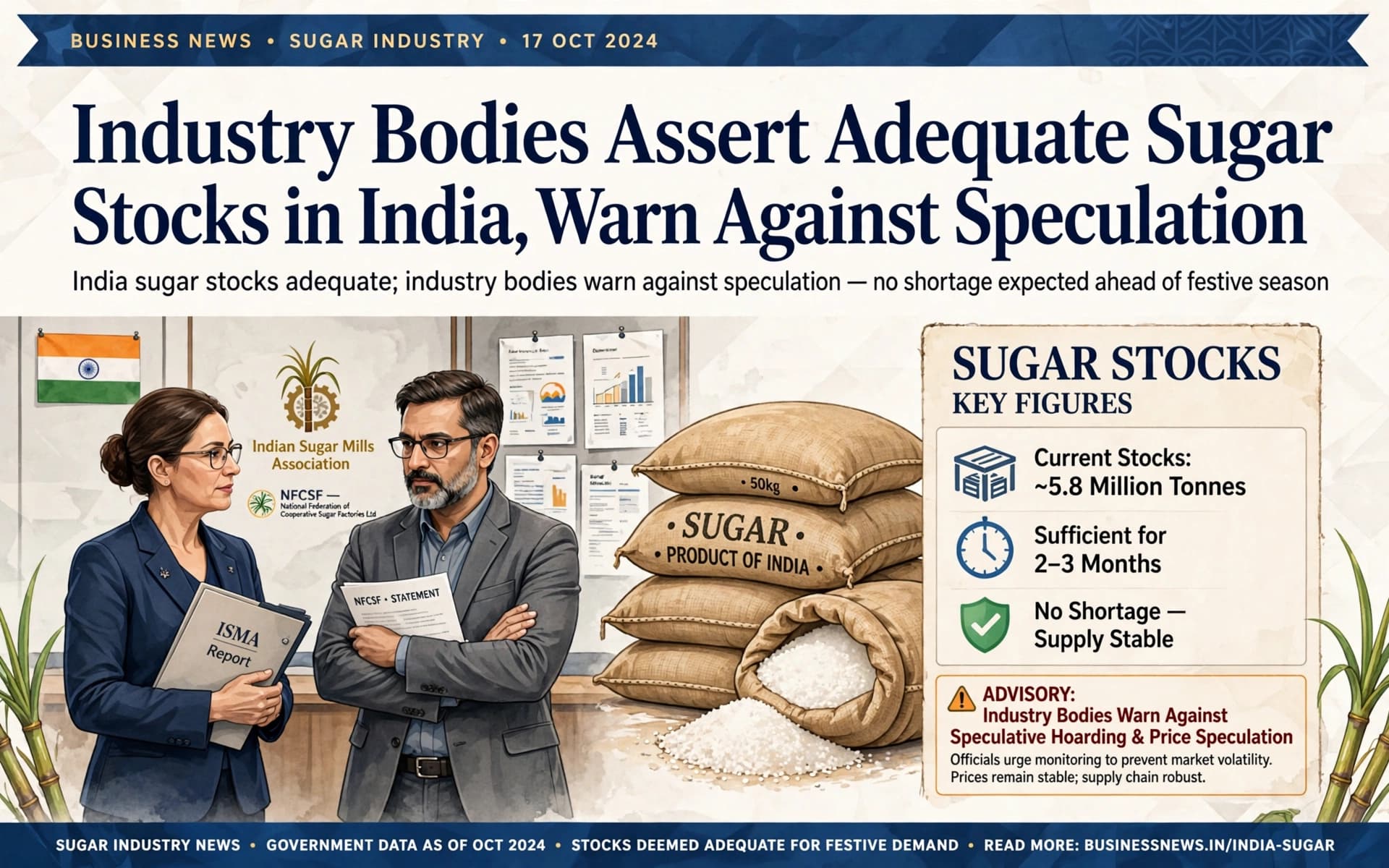
The stability of India's domestic sugar market is under scrutiny as industry leaders move to stabilize prices and prevent market volatility. Despite recent fluctuations in commodity pricing, the core supply chain remains robust. Current inventories are sufficient to satisfy national consumption requirements.
This period of heightened scrutiny occurs at a critical juncture for the agricultural sector. Weather patterns and production estimates are shifting the landscape for upcoming seasons.
As the industry prepares for the next cycle, the tension between production realities and market speculation has become a central focus for policymakers. The ability to manage these stocks effectively will determine whether the market remains stable or succumbs to hoarding and artificial price inflation.
Industry Leaders Affirm Stock Adequacy
The primary representative bodies for the sector have issued a joint statement confirming that current sugar reserves are sufficient to meet domestic demand. This assurance aims to calm market sentiment and discourage irregular trading activities.
| Key Metric | Current Status |
|---|---|
| Domestic Availability | Sufficient for current demand |
| Market Sentiment | Targeted against speculation |
| Primary Industry Bodies | ISMA and NFCSF |
According to the Indian Sugar & Bio-energy Manufacturers Association (ISMA) and the National Federation of Cooperative Sugar Factories (NFCSF), the coordinated stance serves as a direct signal to traders that the supply chain is not under immediate threat.
Drivers of Market Volatility
The current landscape is shaped by a complex interplay of seasonal weather patterns and revised production forecasts. Several factors are contributing to the current uncertainty in the sugar sector:
- Recent excessive rainfall in Maharashtra and Karnataka during late August and September 2025 has disrupted agricultural cycles.
- Revised cane production estimates for 2025-26 have been lowered to 455 million tonnes from the previous 465 million tonnes.
- The industry is working with the Government of India to synchronize the start of the new crushing season.
- Speculative buying and hoarding remain significant risks to price stability in the retail market.
These variables have forced analysts to recalibrate expectations for both cane and sugar output. The impact of the late 2025 rainfall remains a primary concern for final yield assessments.
Production Forecasts and Seasonality
The sugar industry is currently navigating a period of recalibration, adjusting production targets to reflect agricultural conditions. The following data outlines the shifts in expected output and the planned timeline for the upcoming season.
| Production Metric | Estimated Volume |
|---|---|
| Current Season Gross Sugar (Ending Sept 30) | 32 MT |
| Previous Season Estimate | 32.4 MT |
| USDA 2026-27 Forecast | 33.6 MT |
| USDA 2026-27 Growth Rate | +12% |
The industry has reached a consensus to commence the 2026–27 sugar season at the earliest possible date following consultations with the Government of India. This proactive approach is intended to maximize efficiency and stabilize the supply chain.
Broader Market Implications
The strategic decisions made by ISMA and the NFCSF will have effects across the wider Indian economy and the global commodity market.
- Price stability in the domestic sugar market directly influences food inflation metrics.
- Increased production in the 2026-27 season may alter India's export capacity.
- The transition toward bio-energy production continues to influence sugar-to-ethanol diversion strategies.
The alignment between industry bodies and the Government of India is essential for maintaining a balanced market that protects both farmers and consumers.
Outlook
As the 2026–27 season approaches, the industry remains focused on mitigating risks posed by weather-induced production shifts. While current stock levels are adequate, the exact date for the commencement of the 2026-27 crushing season remains a critical piece of information.
The ability of the industry to manage the transition from the current season to the next will be the defining factor in maintaining price equilibrium.
A significant variable remains the specific impact of the rainfall in Maharashtra and Karnataka. While cane production estimates have already been adjusted downward, the final sugar yield for the current season will depend heavily on how moisture levels affect the sucrose content in the harvested cane.
According to industry expert Ashish Pandey, these developments are being monitored closely to provide guidance to stakeholders. Ultimately, the success of India's sugar policy will depend on the enforcement of anti-hoarding measures and the ability of manufacturers to maintain consistent output despite environmental challenges. The projected 12% rise in output forecasted by the USDA suggests a positive trajectory for the 2026-27 period, provided that current seasonal volatility is managed effectively.