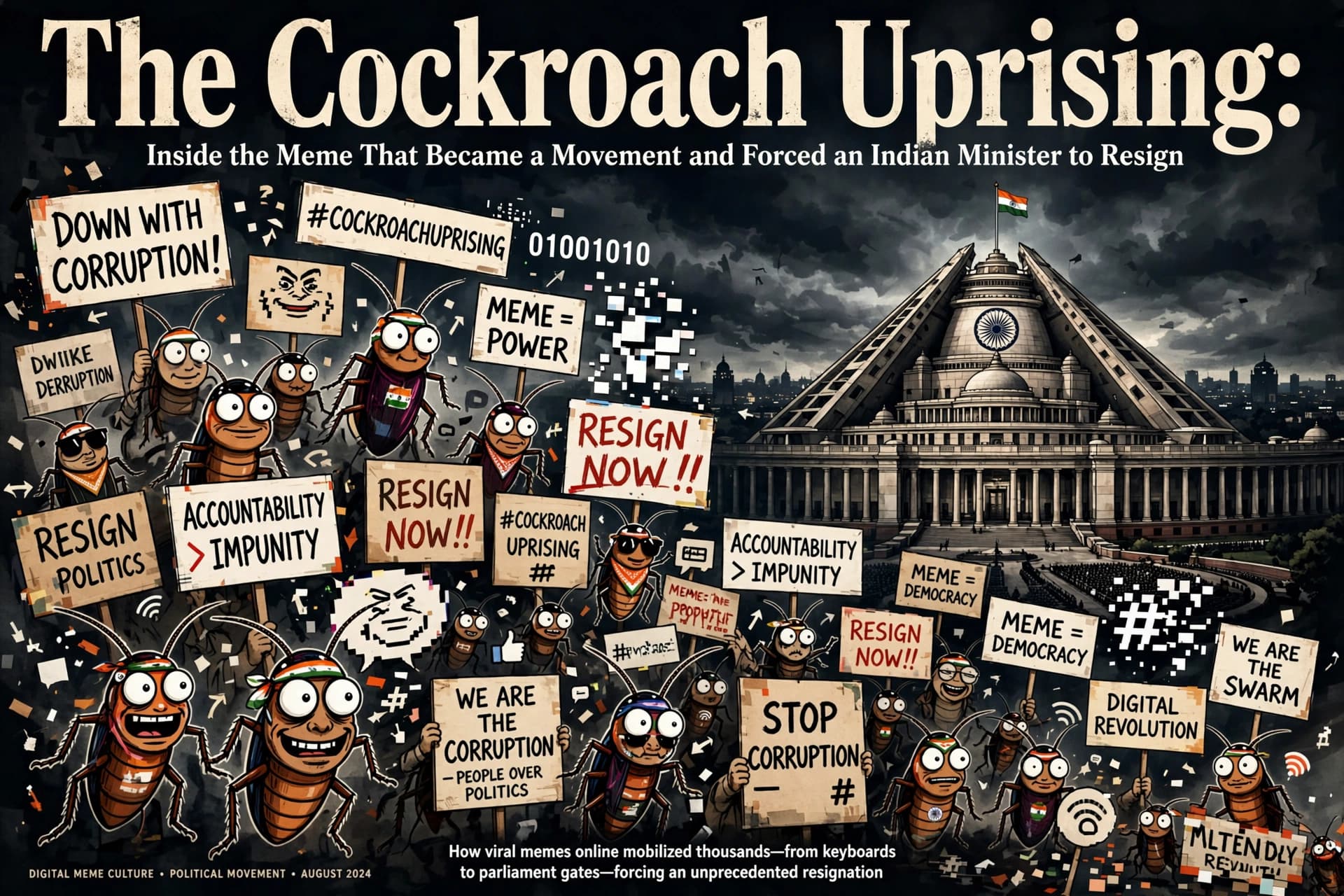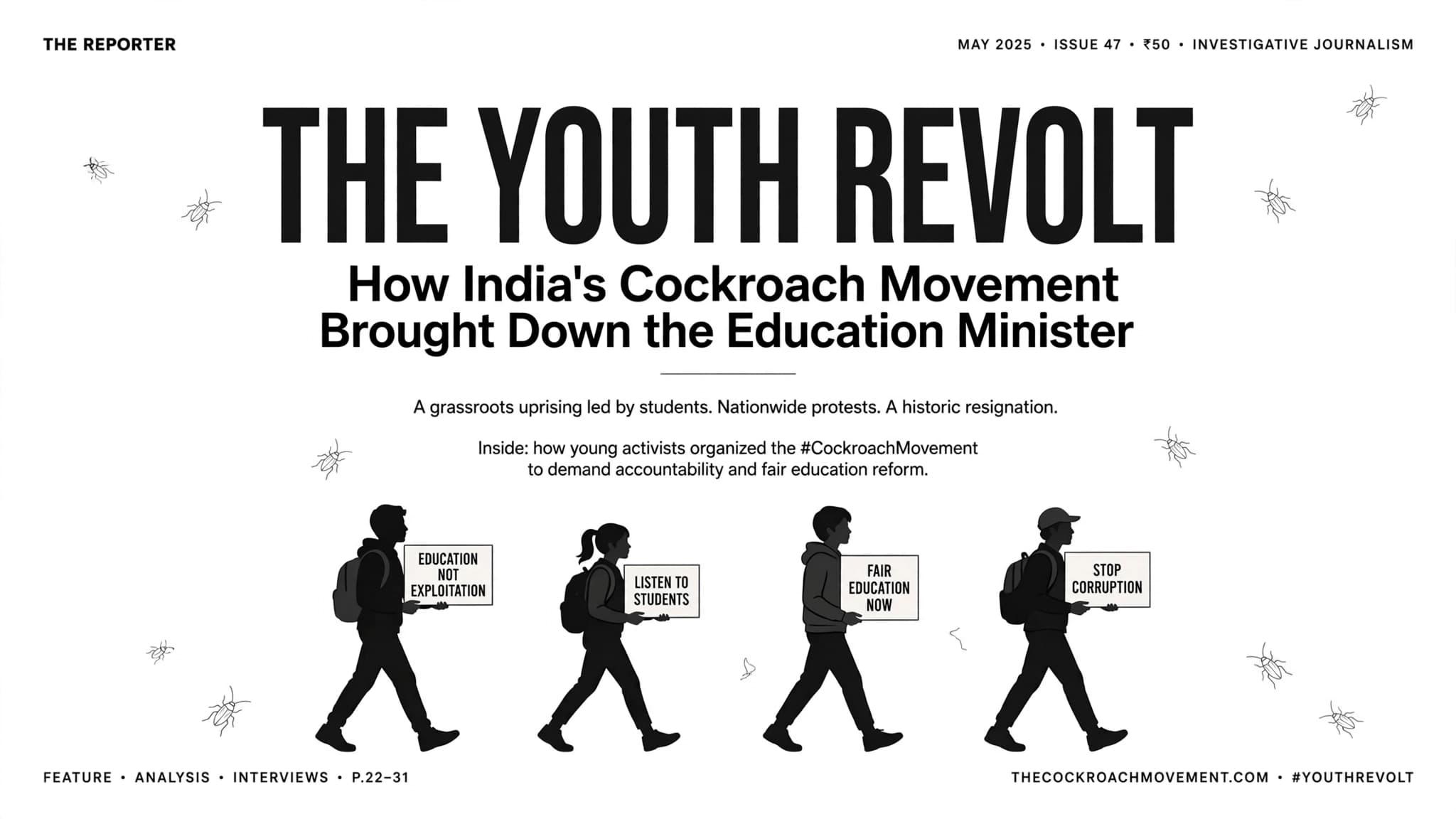
In a stunning capitulation to unprecedented public fury, India's Union Education Minister Dharmendra Pradhan tendered his resignation on Saturday. His departure marks the first major political casualty of a nationwide youth uprising that has paralyzed the capital, dominated national headlines, and forced Prime Minister Narendra Modi's government into an uncomfortable corner.
For weeks, the streets of New Delhi have been swarmed by students, parents, and activists rallying under the banner of the "Cockroach Janta Party" (CJP). What began in May as localized outrage over the systemic leak of the highly competitive NEET-UG medical entrance examination papers quickly metamorphosed into a broader referendum on unemployment, corruption, and the government's accountability to its youth.
The Breaking Point
Pradhan’s position became increasingly untenable following violent clashes earlier in the week. On Monday, July 20, tensions reached a boiling point when police deployed batons and tear gas to disperse thousands of students attempting to march toward Parliament, resulting in several injuries.
Announcing his resignation on the social media platform X, Pradhan maintained that he had taken responsibility "from day one". He framed his exit as a sacrifice meant to protect the nation's youth from being caught in a "web of confusion and misinformation," while cautioning against "anti-national forces" exploiting the unrest at Jantar Mantar, the epicenter of the protests. "My resolve was that we would not let any meritorious student's prospects be ruined by the examination mafia," Pradhan wrote.
However, for the millions of young Indians whose futures hinge on the sanctity of these examinations, the resignation was not merely a noble exit—it was a hard-fought victory. Following the announcement, the CJP declared on X, “DEMOCRACY WINS!”, as jubilant protesters embraced each other and waved the Indian flag at the Jantar Mantar encampment.
Anatomy of a Protest
The "Cockroach" movement—a moniker seemingly embraced by the youth to symbolize their resilience and ubiquity—has proven to be one of the most formidable challenges to the Modi administration in recent years. The movement's momentum was supercharged by prominent figures, notably activist Sonam Wangchuk, who undertook a grueling 25-day hunger strike in solidarity with the students before ending his fast late Thursday upon receiving assurances from the government.
The protesters' demands went far beyond a single resignation. In direct negotiations with government ministers, the CJP laid out stringent conditions: a massive overhaul of the examination system, withdrawal of all FIRs and legal cases against protesting students, and Rs 1 crore in compensation for the families of aspirants who tragically died by suicide in the wake of the exam paper leaks.
Too Little, Too Late?
In the days leading up to Pradhan's resignation, the government scrambled to defuse the crisis. The Union Cabinet hurriedly approved a bill introducing draconian punishments for those convicted in paper leak schemes, including up to 10 years in prison and fines reaching Rs 10 crore. Prime Minister Modi himself released a late-night video promising the establishment of fast-track courts dedicated exclusively to paper leak cases. Additionally, the government shunted out its education secretary in an attempt to signal accountability.
Yet, the CJP held its ground, insisting that Pradhan’s resignation was non-negotiable and warning of further escalation if their demands were not met.
The Road Ahead
Dharmendra Pradhan’s exit is a watershed moment for Indian student politics. It underscores the profound anxiety gripping a generation facing fierce competition for limited opportunities, where the integrity of an entrance exam is often the only barrier between a secure future and economic despair.
While the streets of Delhi saw celebrations on Saturday, the structural rot exposed by the NEET-UG scandal remains. The "examination mafia" that Pradhan decried in his parting letter is a deep-seated issue that will require far more than legislative tweaks to dismantle.
The government has bought itself a momentary reprieve, but the "Cockroach" movement has established a new precedent. India's youth have demonstrated that they are capable of forcing the hand of the government to demand transparency and justice. The true test for the administration will not just be finding a new Education Minister, but rebuilding the shattered trust of an entire generation.