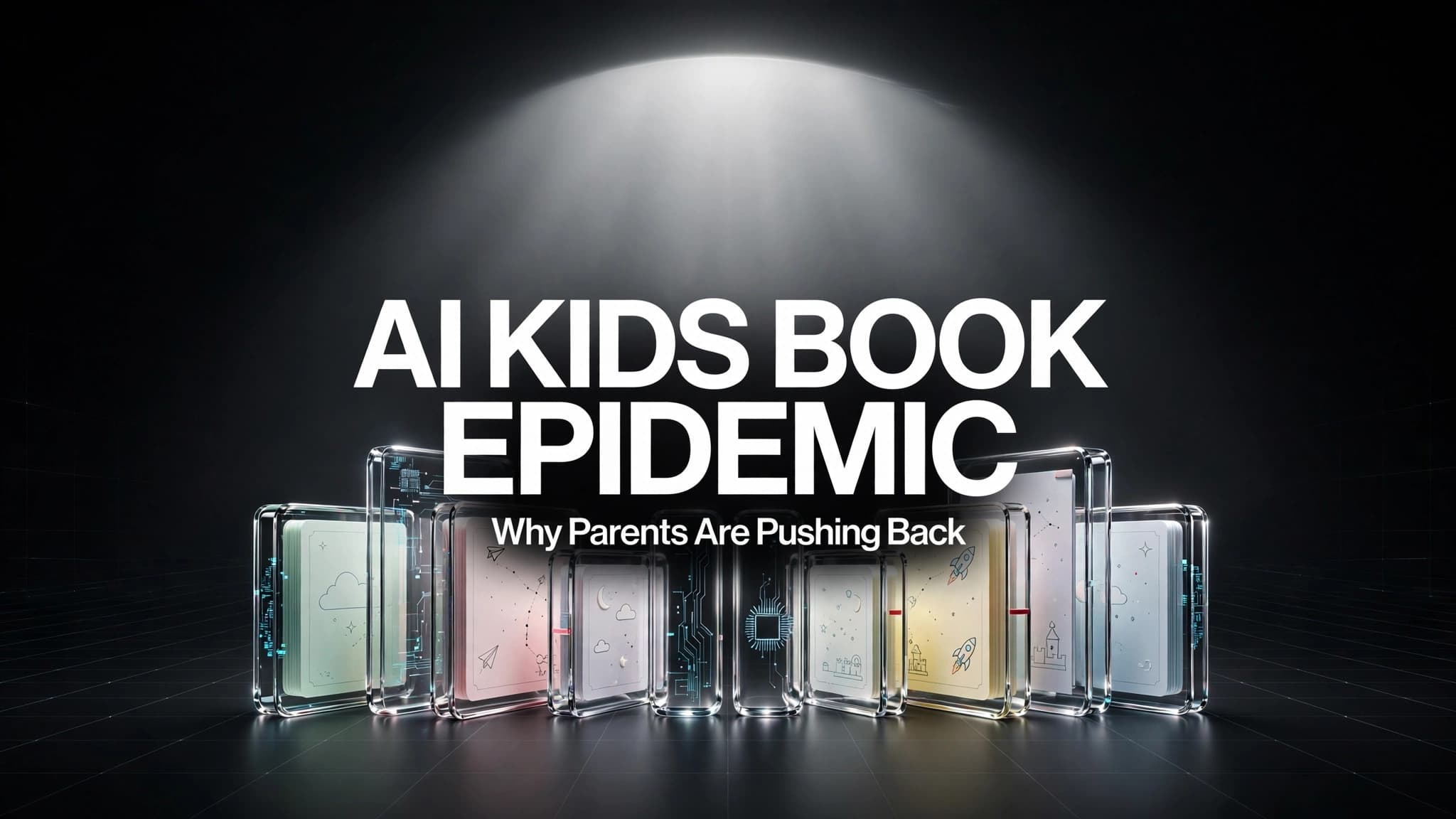
The AI-Generated Children's Book Phenomenon: Why Parents Are Pushing Back
As the US struggles to address its reading crisis, with about 40 percent of fourth-graders reading below the 'basic' standard set by the National Assessment of Educational Progress, a new trend has emerged: AI-generated children's books. The phenomenon has seen companies like Imagitime, StoryWonderBook, and Childbook.ai capitalize on the trend, offering parents a convenient solution to keep their kids engaged. However, parents are increasingly pushing back against the AI-fueled explosion of children's books.
Key Takeaways
- AI-generated children's books have become a contentious issue among parents, with many questioning their quality and educational value.
- The trend has been fueled by companies like Imagitime, StoryWonderBook, and Childbook.ai, which offer cheaper subscription models and convenience.
- A survey by HarperCollins and Nielsen found that the number of parents reading aloud to children is at an all-time low, with less than half of those with kids aged up to 13 saying it's 'fun' for them.
The Rise of AI-Generated Children's Books
A recent study by Macquarie University's Daozhi Xu found that Gen Z parents were particularly likely to see reading as work rather than a source of pleasure. This shift in attitude has created a market opportunity for companies like Imagitime, which employs several security measures to ensure the safety of user data. According to Imagitime, user data is neither shared with unauthorized third parties nor used for any promotional purposes or for any AI training. However, the quality of these AI-generated books remains a concern.
| Feature | Impact |
|---|---|
| AI-generated content | Struggles to deliver the qualities that make them both educationally valuable and entertaining |
| Cheaper subscription models | Attracts price-conscious parents, but may compromise on quality |
The impact of these AI-generated books is evident in the market. Companies like StoryWonderBook and Childbook.ai are built on cheaper subscription models, with StoryWonderBook offering a $14.99 monthly plan and Childbook.ai having a $24 monthly premium plan. However, a comparison with traditional children's books reveals a significant gap in quality.
Why it Matters
The rise of AI-generated children's books has significant implications for the education sector. A survey by HarperCollins and Nielsen found that the number of parents reading aloud to children is at an all-time low, with less than half of those with kids aged up to 13 saying it's 'fun' for them. This trend is exacerbated by the Gen Z parents' attitude towards reading, which is increasingly seen as a chore rather than a source of pleasure.
- The National Assessment of Educational Progress highlights the US's reading crisis, with about 40 percent of fourth-graders reading below the 'basic' standard.
- The AI-fueled explosion of junk children's books may exacerbate this crisis, rather than address it.
- The convenience offered by AI-generated books may be a double-edged sword, attracting price-conscious parents but compromising on quality.
Deal Structure
Imagitime's subscription model is a key factor in its success. The company offers a range of plans, including a free trial and a premium plan that costs $24.99 per month. However, the quality of the AI-generated content remains a concern. A recent review of Imagitime's books found that they struggled to deliver the qualities that make them both educationally valuable and entertaining.
| Feature | Impact |
|---|---|
| AI-generated content | Struggles to deliver the qualities that make them both educationally valuable and entertaining |
| Subscription model | Attracts price-conscious parents, but may compromise on quality |
Broader Market Impact
The rise of AI-generated children's books has significant implications for the education sector. A survey by HarperCollins and Nielsen found that the number of parents reading aloud to children is at an all-time low, with less than half of those with kids aged up to 13 saying it's 'fun' for them. This trend is exacerbated by the Gen Z parents' attitude towards reading, which is increasingly seen as a chore rather than a source of pleasure.
- The National Assessment of Educational Progress highlights the US's reading crisis, with about 40 percent of fourth-graders reading below the 'basic' standard.
- The AI-fueled explosion of junk children's books may exacerbate this crisis, rather than address it.
- The convenience offered by AI-generated books may be a double-edged sword, attracting price-conscious parents but compromising on quality.
Outlook
As the AI-generated children's book phenomenon continues to spread, parents are increasingly pushing back against the trend. The quality of these books remains a concern, and the convenience offered by AI-generated content may be a double-edged sword. The education sector must address the reading crisis head-on, rather than relying on AI-generated solutions that may exacerbate the problem.
Frequently Asked Questions
What is the impact of AI-generated children's books on the education sector?
The rise of AI-generated children's books has significant implications for the education sector, with many parents questioning their quality and educational value.
How do companies like Imagitime ensure the safety of user data?
Imagitime employs several security measures to ensure the safety of user data, which is neither shared with unauthorized third parties nor used for any promotional purposes or for any AI training.
What are the technical shortcomings of AI-generated children's books?
AI-generated children's books struggle to deliver the qualities that make them both educationally valuable and entertaining, raising concerns about their quality and educational value.