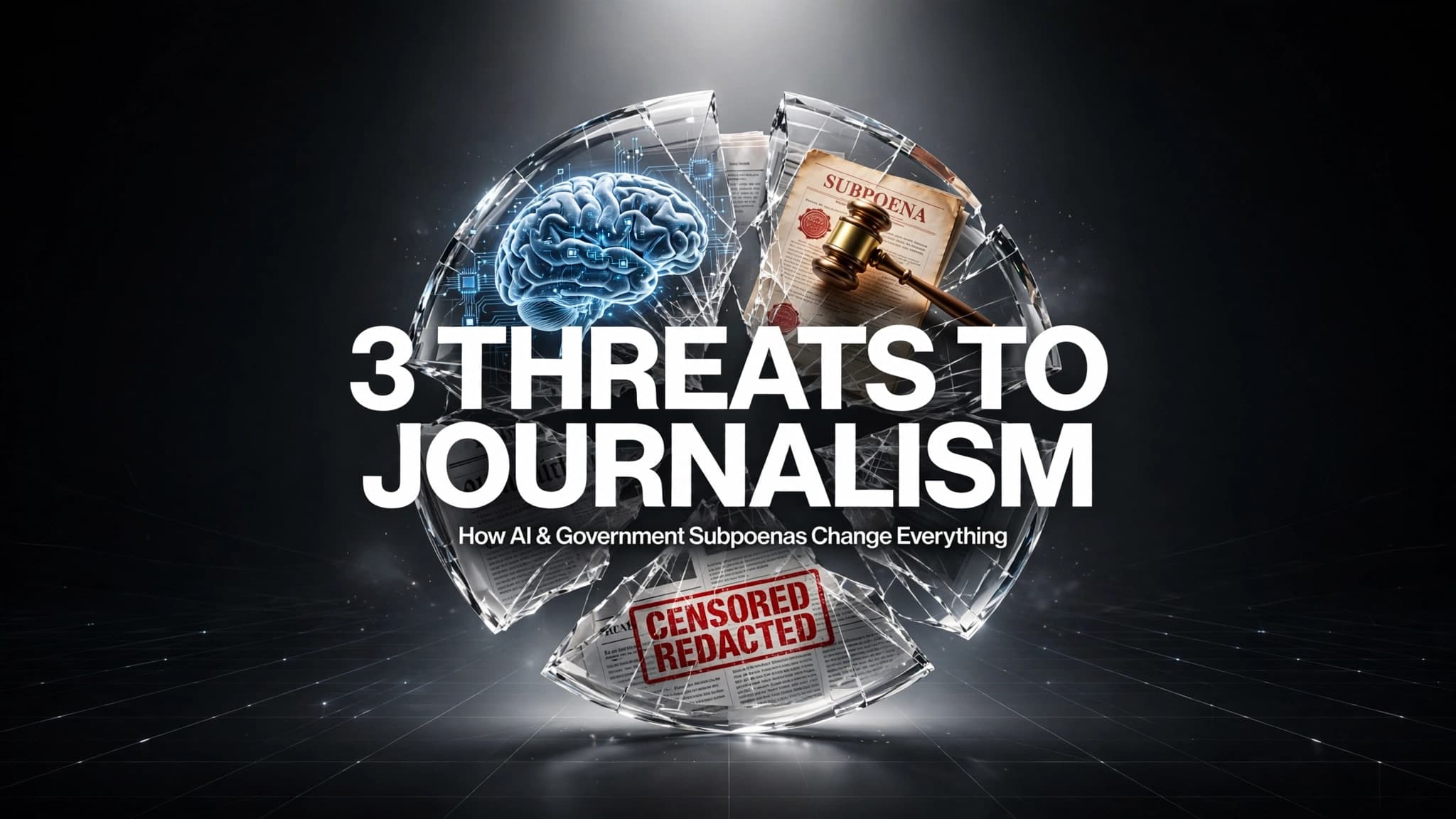
Key Takeaways
- The intersection of copyright litigation and government surveillance is creating a dual-front crisis for legacy news organizations.
- The New York Times' legal battle against OpenAI and Microsoft represents a pivotal moment for the economic viability of subscription-based journalism.
- Recent Justice Department subpoenas targeting journalist communications signal an escalating tension between national security interests and press freedom.
The traditional pillars of journalism are facing a simultaneous assault from technological exploitation and state-level scrutiny. As AI models ingest decades of proprietary reporting and government agencies demand access to private communications, the fundamental business model and protective shields of the press are being tested.
The Legal Battle for Intellectual Property
The economic foundation of modern journalism is currently being litigated in a high-stakes confrontation between content creators and AI developers.
| Key Highlight | Details |
|---|---|
| Primary Litigants | The New York Times vs. OpenAI and Microsoft |
| Core Allegation | Illegal use of journalistic content to train large language models |
| Market Position | The New York Times has surpassed 13 million subscribers |
| Leadership | A.G. Sulzberger has served as publisher for approximately a decade |
This litigation seeks to determine whether the ingestion of news archives constitutes fair use or systemic theft. While competitors like the Wall Street Journal and Associated Press monitor these proceedings closely, the outcome will dictate whether AI companies must pay licensing fees to sustain the open web.
Read also: Sam Altman Reveals Plan to Slow Down AI Development: What You Need to Know
Drivers of the Press Crisis
The current instability in the media sector is driven by two distinct but equally potent forces: the automation of information and the expansion of state investigative powers.
- Data Scraping and Model Training: AI developers require vast datasets, often relying on high-quality journalism for which they do not directly compensate.
- Governmental Surveillance: The Justice Department has moved beyond traditional investigative methods to target the digital footprints of reporters.
- Economic Erosion: As AI-generated summaries replace direct visits to news sites, the subscription-based revenue model faces significant pressure.
- Privacy Vulnerabilities: The demand for metadata and private communications threatens the anonymity essential to investigative reporting.
These factors create a landscape where news organizations must defend both their intellectual property and their physical and digital security.
The Scope of Government Subpoenas
The tension between law enforcement and the press has reached a critical juncture following recent Department of Justice actions.
| Investigative Target | Scope of Request |
|---|---|
| Primary Subject | Journalists covering the Qatari-gifted jet for the Trump administration |
| Data Requested | Text messages and phone calls via third-party providers |
| Affected Parties | Journalists and their family members |
The Justice Department's pursuit of communications between journalists and their family members marks a significant expansion of investigative reach. This tactic bypasses traditional protections by targeting the digital infrastructure used by the press, raising questions about the future of confidential sourcing.
Read also: Bot Traffic Overtakes Human Activity Online: Spur Intelligence Raises $200M to Combat Threat
Broader Industry Implications
The convergence of these threats suggests a fundamental shift in how information is produced, protected, and policed.
- Legal Precedents: The outcome of the New York Times lawsuit will set the standard for how AI companies compensate media outlets.
- Regulatory Reform: The DOJ's use of subpoenas may trigger legislative debates regarding the protection of journalists' digital privacy.
- Operational Costs: Newsrooms may face increased expenditures to secure communications and defend against protracted legal battles.
The strategic implications are clear: the era of "free" data for AI training and the era of unchecked digital surveillance are both facing intense scrutiny from the industry's most established players.
Outlook
The trajectory of journalism depends heavily on two pending variables: the judicial interpretation of copyright in the age of generative AI and the legislative response to government overreach.
If the courts favor AI developers, the economic incentive to produce high-quality, original reporting may diminish as the value of content is diluted by automated summaries.
Simultaneously, the precedent set by the Justice Department's subpoenas will determine whether the press can continue to operate without the constant threat of digital exposure. As the industry navigates these challenges, the tension between technological progress and constitutional protections will likely become the defining conflict of the decade.
Frequently Asked Questions
What is the current status of the New York Times lawsuit against OpenAI?
The lawsuit is ongoing, focusing on whether the use of copyrighted news articles to train AI models constitutes copyright infringement or fair use.
Why is the Justice Department targeting journalists' phone records?
The Department has issued subpoenas to investigate coverage regarding a Qatari-gifted jet intended for the Trump administration, seeking to identify sources through metadata and communications.
How many subscribers does The New York Times currently have?
The New York Times has surpassed 13 million subscribers, highlighting its significant market influence and the scale of the assets at stake in current litigation.