Key Takeaways
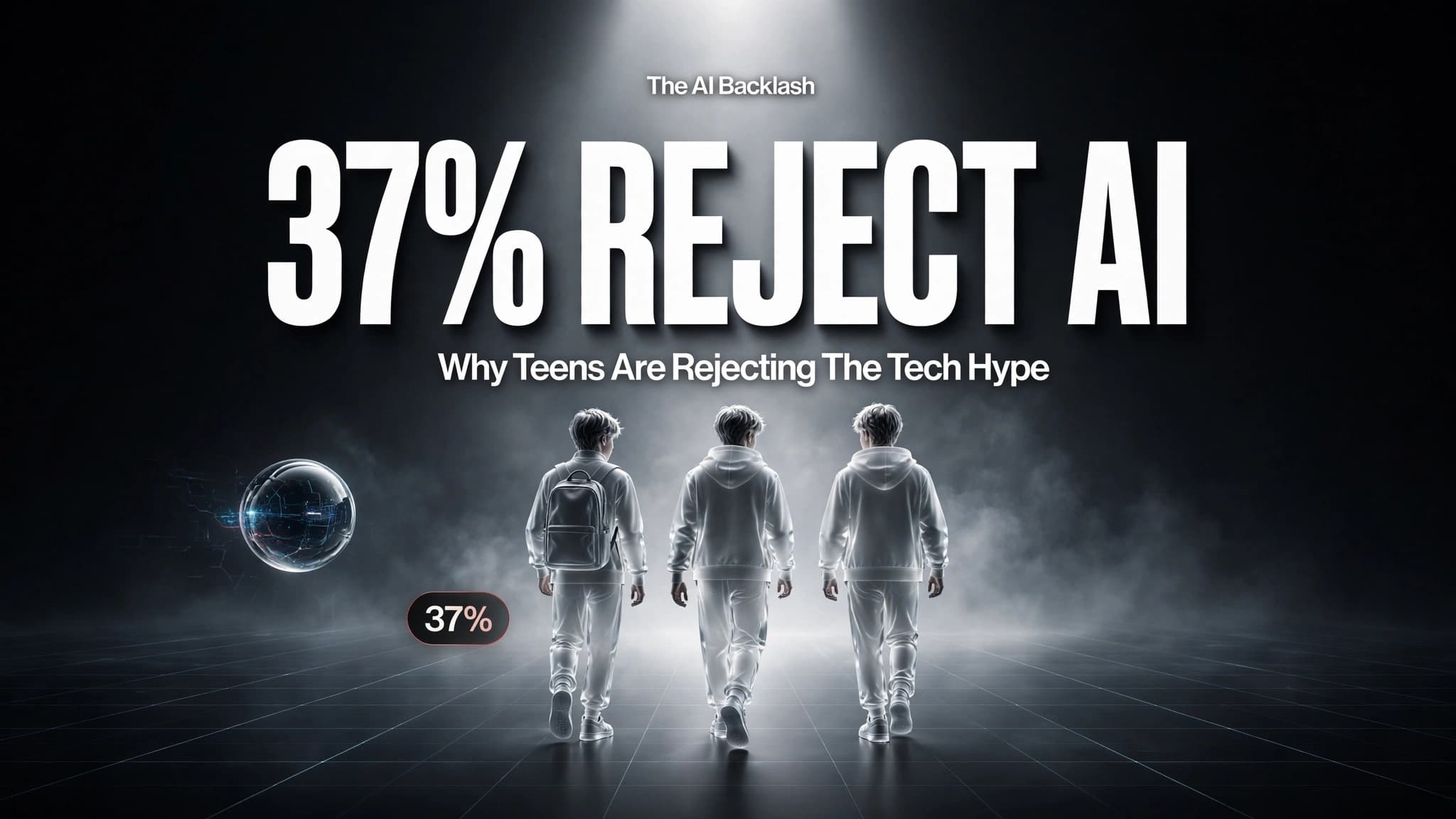
- 37% of teenagers aged 13 to 17 report feeling "cringe" when encountering AI-generated music or video content.
- Over 50% of the youth demographic expresses significant concern regarding the proliferation of deepfakes and misinformation.
- A growing segment of Gen Z views AI as a net negative for society, specifically citing job displacement and environmental degradation.
The initial wave of generative AI enthusiasm is meeting a cold reality among the next generation of consumers. While tech giants invest billions into model training, the demographic most critical to long-term market adoption is showing signs of profound skepticism and aesthetic fatigue.
The Generational Divide in AI Sentiment
Recent data highlights a widening gap between corporate AI deployment and youth reception.
| Sentiment Metric | Youth Response | Primary Driver |
|---|---|---|
| Aesthetic Reaction | 37% "Cringe" | Over-saturation of synthetic media |
| Misinformation Anxiety | >50% Concerned | Deepfakes and digital deception |
| Long-term Outlook | >25% Negative | Job loss and environmental impact |
| Usage Patterns | Majority | Chatbot integration in daily tasks |
This disconnect suggests that while a majority of American teens are actively using chatbots, the novelty of generative media is rapidly evaporating. This is being replaced by a sense of distrust in the authenticity of digital content.
Read also: Bot Traffic Overtakes Human Activity Online: Spur Intelligence Raises $200M to Combat Threat
Core Drivers of Youth Skepticism
The resistance from younger cohorts is not merely a matter of taste; it is rooted in systemic concerns regarding how these technologies are being integrated into the social fabric.
- Aesthetic Fatigue: A significant portion of teens find AI-generated music and video to be unappealing or "cringe," signaling a potential ceiling for the cultural impact of synthetic media.
- Information Integrity: More than half of teens are actively worried about the rise of deepfakes and the erosion of truth in digital spaces.
- Socio-Economic Anxiety: Over a quarter of the youth population believes AI will have a negative impact on society over the next two decades, specifically citing the loss of human jobs.
- Environmental Costs: There is growing concern regarding the massive energy and water requirements needed to sustain large-scale model training.
Melanie Green notes that young people are increasingly turned off by the aggressive push of AI by adults and major tech corporations. This friction is creating a unique market challenge: how to deploy advanced intelligence without alienating the users who will define the future digital economy.
The Technical Arms Race vs. User Agency
As skepticism grows, the industry is responding with more powerful models and complex privacy controls.
| Development | Entity | Technical Detail |
|---|---|---|
| Inkling Model | Thinking Machines Lab | 975-billion-parameter open source |
| Muse Image Model | Meta | Opt-out model for Instagram users |
| Humanoid Robotics | Flexion Robotics | Training for useful labor |
The rollout of Meta's Muse Image model highlights a shift in user agency. Instagram users with public accounts must now actively opt out to prevent their content from being used for AI generations. This "opt-out" model is becoming a flashpoint for debates regarding digital ownership and consent.
Meanwhile, the technical complexity of these systems continues to scale. Thinking Machines Lab recently released Inkling, a massive 975-billion-parameter open source model designed to process video and audio with high fidelity.
At the same time, companies like Flexion Robotics—founded by former Nvidia engineers—are moving the AI frontier into the physical world by training humanoid robots for practical labor.
Read also: US Open Source AI Lab Arcee Says Chinese Models Are Not Inherently Dangerous
Broader Industry and Economic Implications
The tension between rapid development and social skepticism is creating several strategic shifts in the tech economy.
- Regulatory Pressure: As concerns over misinformation grow, governments are under pressure to regulate deepfake technology and content provenance.
- Market Volatility: The skepticism of Gen Z poses a long-term risk to the projected ROI of companies heavily reliant on generative media.
- The Ethics of Automation: The debate over job loss and the environmental footprint of AI is moving from academic circles into mainstream consumer sentiment.
The strategic implications are clear: the industry cannot rely solely on technical capability to ensure adoption. If the "cringe" factor persists, the economic value of generative media may be significantly lower than current valuations suggest.
Read also: Sam Altman Reveals Plan to Slow Down AI Development: What You Need to Know
Outlook
The trajectory of AI adoption now depends on whether developers can move past the hype phase and address the core anxieties of the youth demographic.
If the industry fails to solve the problems of misinformation and environmental sustainability, it may face a permanent "authenticity premium." In this scenario, human-made content becomes a luxury good, while AI content is relegated to low-value background noise.
We expect to see a bifurcation in the market. On one side, high-utility, specialized AI (like the robotics being developed by Flexion Robotics) will likely find steady adoption.
On the other, the consumer-facing generative media market faces a crisis of confidence. The "opt-out" model for social media content is likely to become the industry standard as privacy concerns continue to escalate.
The ultimate question remains: will the skepticism of Gen Z act as a necessary corrective to prevent runaway AI development, or will it create a massive market vacuum that prevents the technology from ever reaching its full economic potential?
Frequently Asked Questions
Why are teenagers reacting negatively to AI content?
Many teens report feeling "cringe" due to the perceived lack of authenticity and the oversaturation of synthetic media in their social feeds.
What are the main concerns for Gen Z regarding AI?
The primary concerns include the spread of misinformation through deepfakes, potential job displacement, and the environmental impact of training large models.
How can users protect their content from being used by AI?
On platforms like Instagram, users with public accounts may need to use specific opt-out settings to prevent their images and videos from being used by generative models.