The Reserve Bank of India Explores Polymer Banknotes for Indian Currency
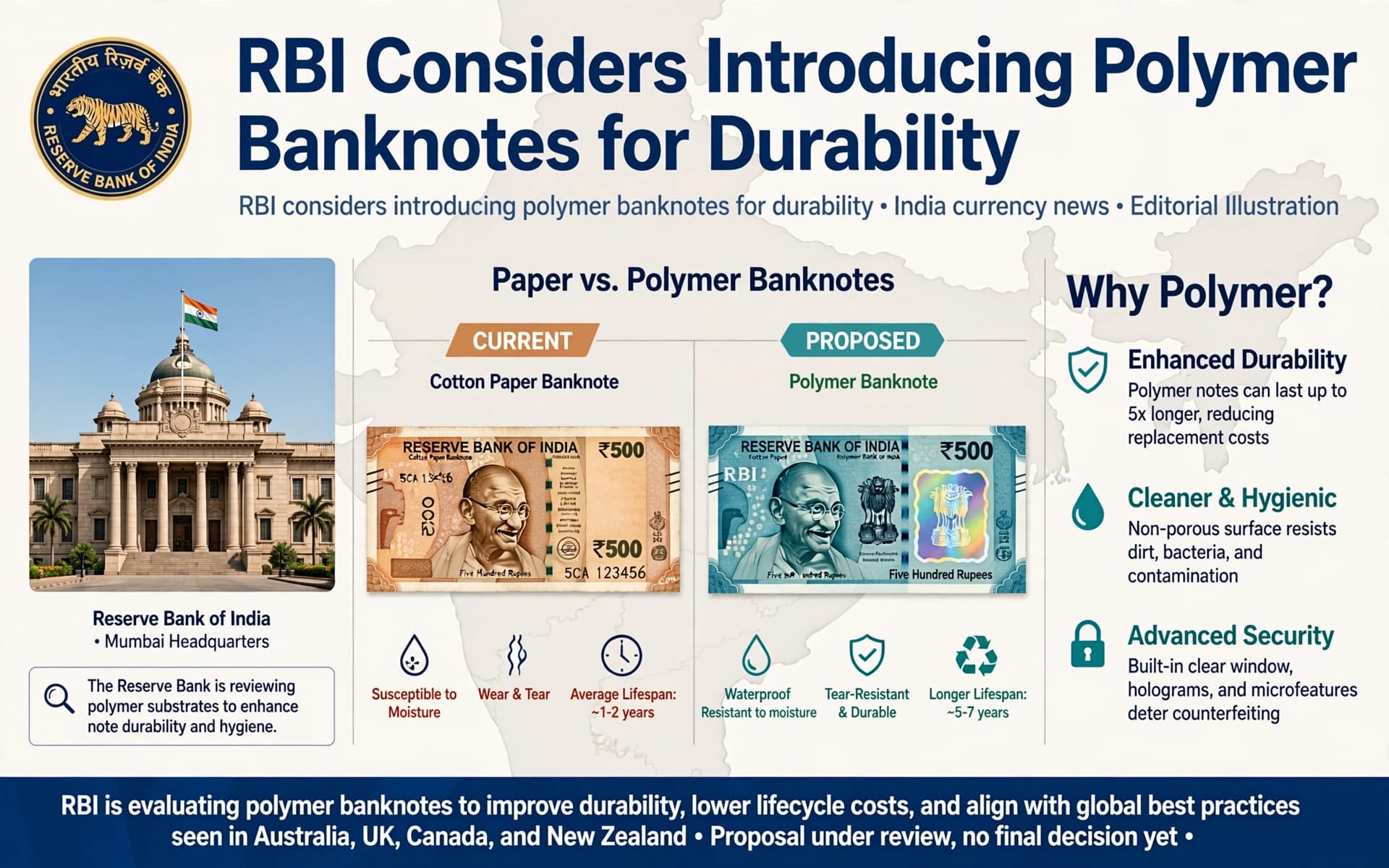
The Reserve Bank of India (RBI) is exploring innovative ways to ensure the durability of its currency, a move that could have significant implications for the economy. After nearly a century of relying on specialized paper for printing money, the RBI is now considering a shift towards polymer banknotes. This change aims to reduce the wear and tear of banknotes, ultimately benefiting the economy by reducing the frequency of replacements.
The Bharatiya Reserve Bank Note Mudran (BRBNMPL), a wholly-owned subsidiary of the RBI, has issued a tender inviting eligible domestic and international manufacturers to submit bids for the production of polymer banknotes. The tender, set to close on August 18, has imposed stringent national security conditions, including obtaining security clearance from the government and avoiding sourcing raw materials from China or Pakistan. The initial requirement is for 68,000 reams, although BRBNMPL has clarified that this is only for immediate needs, and larger procurements could follow after successful field trials.
The RBI's decision to explore polymer banknotes comes at a time when the value of currency in circulation has risen significantly. At the end of March 2026, the value of currency in circulation stood at ₹41.23 lakh crore, a 12% increase from the previous year. The ₹500 denomination remained the dominant note, accounting for 86% of the total value of currency in circulation. The currency-to-GDP ratio also increased to 12.1% at the end of March 2026 from 11.7% a year earlier.
Polymer Banknotes: A New Era for Indian Currency
The RBI is considering introducing polymer banknotes due to their durability. Here are the key highlights:
| Key Highlights | Details |
|---|---|
| Tender Issued | Bharatiya Reserve Bank Note Mudran (BRBNMPL) has issued a tender inviting eligible domestic and international manufacturers to submit bids for the production of polymer banknotes. |
| Initial Requirement | The initial requirement is for 68,000 reams, although BRBNMPL has clarified that this is only for immediate needs, and larger procurements could follow after successful field trials. |
| National Security Conditions | The tender imposes stringent national security conditions, including obtaining security clearance from the government and avoiding sourcing raw materials from China or Pakistan. |
The introduction of polymer banknotes is expected to have a significant impact on the economy, particularly in reducing the frequency of replacements and associated costs. The RBI has already seen a reduction in note printing costs, which fell nearly a quarter to ₹4,875 crore in 2025-26 from a year earlier.
Why the RBI is Considering Polymer Banknotes
The RBI's decision to explore polymer banknotes is driven by several factors, including the need to reduce the wear and tear of banknotes and associated costs. Here are some of the reasons why:
- The RBI has been relying on specialized paper for printing money for nearly a century, which has become expensive and time-consuming to maintain.
- The introduction of polymer banknotes is expected to reduce the frequency of replacements and associated costs, ultimately benefiting the economy.
- The RBI is also looking to reduce its dependence on paper-based currency and explore more sustainable and durable alternatives.
Deal Structure
The RBI is considering a deal structure that would involve the production of polymer banknotes by eligible domestic and international manufacturers. Here are the key details:
| Deal Structure | Details |
|---|---|
| Tender Issued | Bharatiya Reserve Bank Note Mudran (BRBNMPL) has issued a tender inviting eligible domestic and international manufacturers to submit bids for the production of polymer banknotes. |
| Security Clearance | The tender imposes stringent national security conditions, including obtaining security clearance from the government and avoiding sourcing raw materials from China or Pakistan. |
The introduction of polymer banknotes is expected to have a significant impact on the economy, particularly in reducing the frequency of replacements and associated costs. The RBI has already seen a reduction in note printing costs, which fell nearly a quarter to ₹4,875 crore in 2025-26 from a year earlier.
Broader Market Impact
The introduction of polymer banknotes is expected to have a significant impact on the broader market, particularly in reducing the frequency of replacements and associated costs. Here are some of the expected outcomes:
- Reduced note printing costs: The RBI has already seen a reduction in note printing costs, which fell nearly a quarter to ₹4,875 crore in 2025-26 from a year earlier.
- Increased durability: Polymer banknotes are expected to be more durable and less prone to wear and tear, reducing the frequency of replacements.
- Reduced dependence on paper-based currency: The introduction of polymer banknotes is expected to reduce the RBI's dependence on paper-based currency and explore more sustainable and durable alternatives.
Outlook
The RBI's decision to explore polymer banknotes is a significant step towards reducing the frequency of replacements and associated costs. While the project is still in its infancy, it is expected to have a significant impact on the economy and the broader market. As the RBI continues to explore this new technology, it will need to ensure the security and integrity of the currency. With careful planning and execution, the RBI can ensure that the introduction of polymer banknotes is a success and benefits the economy in the long run.