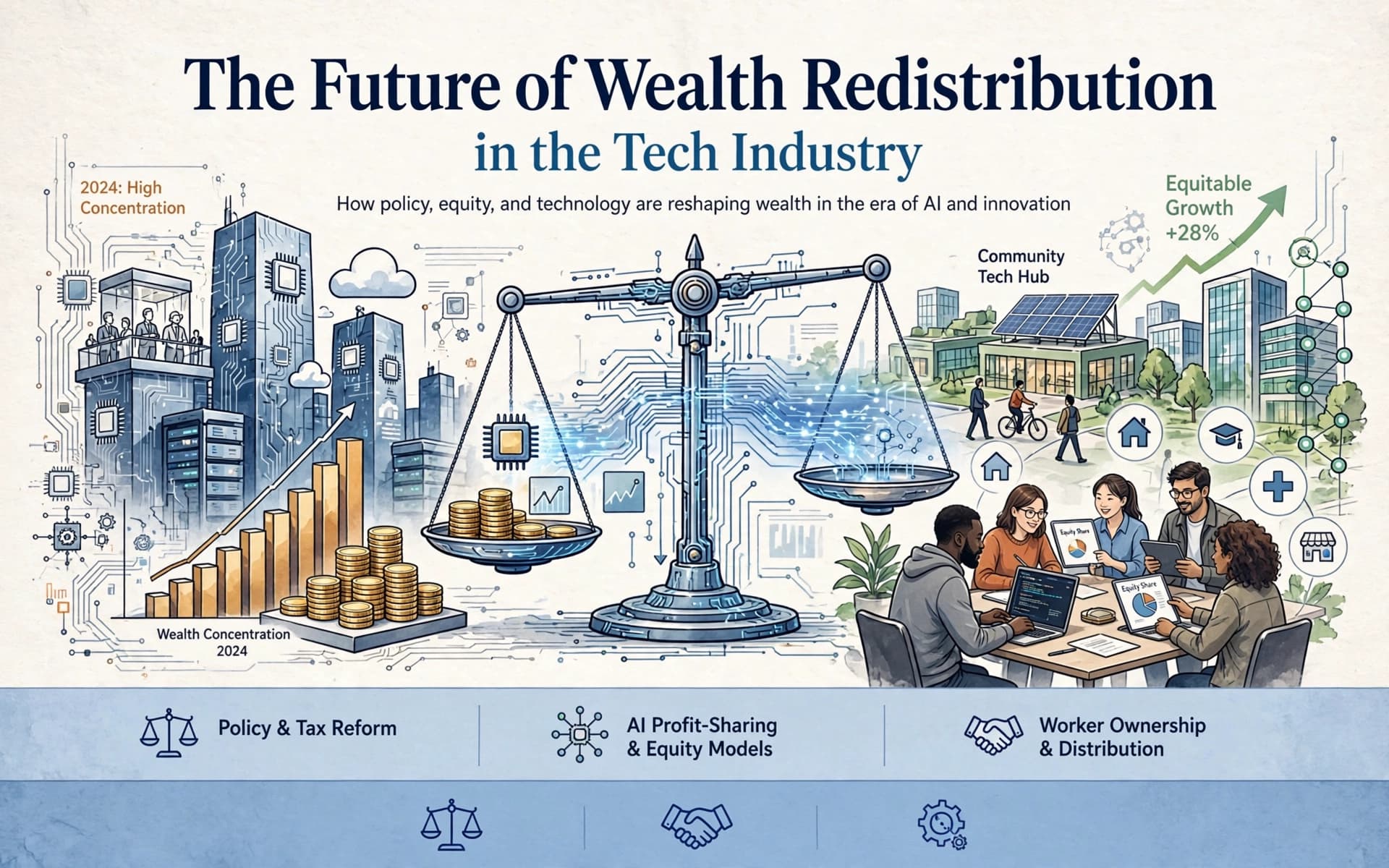
The tech industry has long been a source of wealth creation, with entrepreneurs and investors amassing fortunes that rival those of nations. However, as the wealth gap in the US continues to grow, with the top 1% of households now holding a record 31.7% of the country's wealth, the question of how to redistribute this wealth has become increasingly pressing. According to Neil Rimer, a prominent venture capitalist, the industry is poised for a new wave of investment and innovation. The wealth of tech billionaires continues to grow, with 45 new billionaires emerging in 2026 alone, worth a combined $2.9 trillion.
The issue of wealth redistribution is becoming more urgent. The recent success of Index Ventures, which has raised roughly $15 billion from outside investors since its founding, is a case in point. The firm's exits, including Figma's IPO and Google's purchase of Wiz, reportedly netted Index roughly $9 billion last year. This return on investment is notable. However, the wealth of individuals like Elon Musk, who is now worth just over $1 trillion after SpaceX's IPO, continues to grow.
The question of how to give back to society is becoming more pressing. The Giving Pledge, which was once seen as a beacon of philanthropic effort, has become less effective, with only four new signers in 2024. Total American charitable giving hit a record $592.5 billion in 2024, but the number of Americans giving has fallen for five straight years. This suggests that traditional models of philanthropy are no longer effective.
As the tech industry continues to evolve, new models of wealth redistribution are emerging. Anthropic, a leading AI company, matches employee donations of up to 25% of their equity to charity, providing a new model for giving back to society. California voters will decide on a 5% one-time wealth tax that targets the state's billionaires, a move that could have significant implications for the tech industry. OpenAI is reportedly considering going public in 2027, which could create a new wave of wealth for its founders and investors.
The Current State of Wealth Redistribution
The current state of wealth redistribution in the tech industry can be seen in the following table:
| Key Highlights | Details |
|---|---|
| Index Ventures' exits | Netted roughly $9 billion last year |
| The Giving Pledge | Only four new signers in 2024 |
| Total American charitable giving | Hit a record $592.5 billion in 2024 |
| Anthropic's charitable giving model | Matches employee donations of up to 25% of their equity |
| The implications of this table are clear: traditional models of philanthropy are no longer effective, and new models of wealth redistribution are needed. |
The Reasons Behind the Growing Wealth Gap
The reasons behind the growing wealth gap in the US are complex. Some key factors include the increasing concentration of wealth among the top 1% of households and the decline of traditional philanthropic models. The growing wealth of tech billionaires, such as Elon Musk and the founders of OpenAI, is also a factor. According to Gabriel Zucman, a leading expert on wealth inequality, the growing wealth gap is a threat to democracy and social stability.
The Specifics of the Proposed Wealth Tax
The proposed wealth tax in California is a significant development in the debate over wealth redistribution. The following table provides more details on the proposed tax:
| Key Features | Details |
|---|---|
| Tax rate | 5% one-time wealth tax |
| Targets | The state's billionaires |
| Implications | Could raise significant revenue for the state, but may also drive away wealthy individuals and companies |
| The implications of the proposed wealth tax are complex and could have significant consequences for the tech industry. |
The Broader Market Impact
The growing wealth gap and the debate over wealth redistribution are having a significant impact on the broader market. Some key implications include the growing wealth of tech billionaires and the decline of traditional philanthropic models. The proposed wealth tax in California could have significant implications for the tech industry and the economy. More effective policies are needed to address the wealth gap.
Outlook
The future of wealth redistribution in the tech industry is uncertain. It will depend on a variety of factors, including the outcome of the proposed wealth tax in California and the development of new models of philanthropy. According to Andrew Carnegie, "The man who dies thus rich dies disgraced." The question is, what will the tech industry do to address the growing wealth gap?
The answer will depend on the actions of tech billionaires and the development of new models of philanthropy. It will also depend on the outcome of policy debates, such as the proposed wealth tax in California. As Huey Long noted, "We must make our choice between democracy and the concentration of wealth in the hands of a few." The tech industry must make a similar choice.
Ultimately, the future of wealth redistribution in the tech industry will depend on the ability of the industry to balance its own interests with the needs of society. This will require a fundamental shift in the way that the industry thinks about wealth and philanthropy. According to Franklin Roosevelt, "The test of our progress is not whether we add more to the abundance of those who have much; it is whether we provide enough for those who have too little." The tech industry must pass this test.