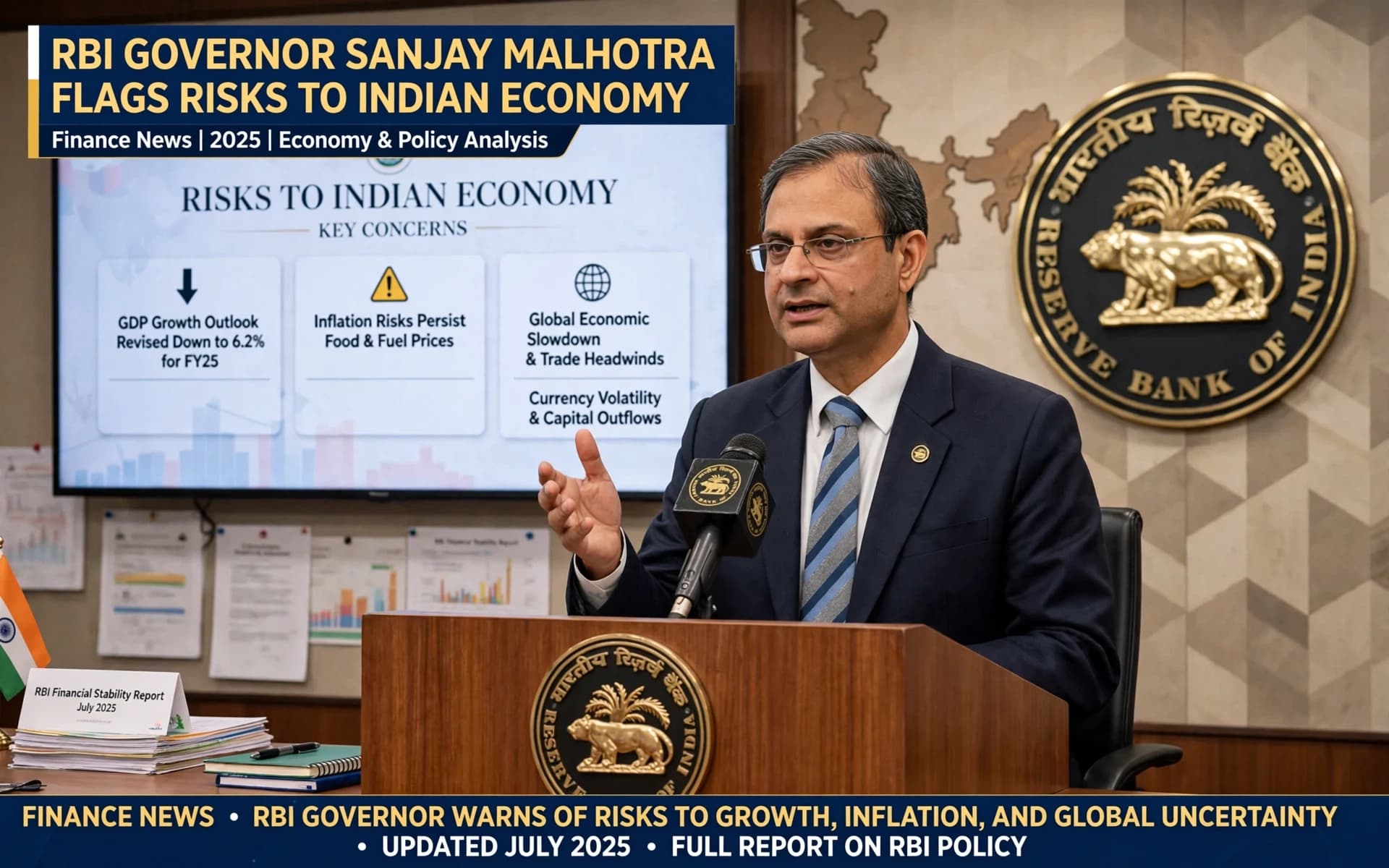
The Indian economy is navigating a complex landscape, with the Reserve Bank of India (RBI) Governor Sanjay Malhotra sounding a warning bell about risks to the country's economic growth. The RBI's latest projections paint a nuanced picture, with a 6.6% GDP growth forecast for the current fiscal year, down from the previous estimate of 7.2%. This revision indicates the challenges facing the Indian economy, despite its impressive 7.7% growth in the last financial year.
The RBI's concerns are not unfounded, given the recent uptick in inflation. Retail inflation accelerated to 4.38% in June, up from 3.93% in May, while food inflation rose to 5.32% from 4.78% in the previous month. The RBI has also raised its inflation forecast for FY27 to 5.1% from 4.6% earlier. These developments are a cause for concern, as the RBI will continue to prioritize inflation control while supporting growth.
RBI Flags Risks to Indian Economy: Key Highlights
| Key Highlights | Details |
|---|---|
| GDP growth forecast | 6.6% for the current fiscal year |
| Inflation forecast | 5.1% for FY27, up from 4.6% earlier |
| Retail inflation | 4.38% in June, up from 3.93% in May |
| Food inflation | 5.32% in June, up from 4.78% in the previous month |
The RBI's inflation control measures will have a significant impact on the Indian economy, particularly in the context of the country's reliance on agriculture, which contributes about 17% to India's GDP. The monsoon remains a key factor to watch, given its importance to the economy. The RBI's focus on inflation control will also have implications for the Indian rupee, which has been under pressure in recent months.
Why the RBI is Flagging Risks to the Indian Economy
- The RBI is concerned about the impact of the West Asia conflict on the Indian economy, which could lead to higher oil prices and inflation.
- The RBI is also monitoring the potential consequences of a weak monsoon on the Indian economy, which could lead to a decline in agricultural production and higher food prices.
- The RBI's inflation control measures will have a significant impact on the Indian economy, particularly in the context of the country's reliance on agriculture.
- The RBI will continue to prioritize inflation control while supporting growth, which may lead to a slowdown in economic growth in the short term.
Deal Structure: RBI's Inflation Control Measures
| Measure | Details |
|---|---|
| Interest rates | The RBI has raised interest rates to control inflation |
| Reserve requirements | The RBI has increased reserve requirements for commercial banks to reduce lending |
| Liquidity management | The RBI will continue to manage liquidity to prevent inflationary pressures |
Broader Market Impact
- The RBI's inflation control measures will have a significant impact on the Indian rupee, which has been under pressure in recent months.
- The RBI's focus on inflation control will also have implications for the Indian economy's growth prospects, particularly in the context of the country's reliance on agriculture.
- The RBI's measures will also have implications for the country's external sector, which remains resilient, with record gross foreign direct investment of about $95 billion last year.
The RBI's decision to prioritize inflation control while supporting growth is a delicate balancing act. While the RBI's measures may lead to a slowdown in economic growth in the short term, they are necessary to prevent higher inflation and maintain the country's economic stability. As the Indian economy continues to navigate a complex landscape, the RBI's actions will be closely watched by investors and policymakers alike.
The RBI's focus on inflation control will also have implications for the country's growth prospects, particularly in the context of the country's reliance on agriculture. The RBI's measures will also have implications for the country's external sector, which remains resilient. As the Indian economy continues to grow, the RBI's actions will be crucial in maintaining the country's economic stability.
In the coming months, the RBI will continue to monitor the Indian economy's performance and adjust its policies accordingly. The RBI's actions will be closely watched by investors and policymakers alike, and will have significant implications for the country's economic growth prospects. As the Indian economy continues to navigate a complex landscape, the RBI's decisions will be crucial in maintaining the country's economic stability.