Key Takeaways
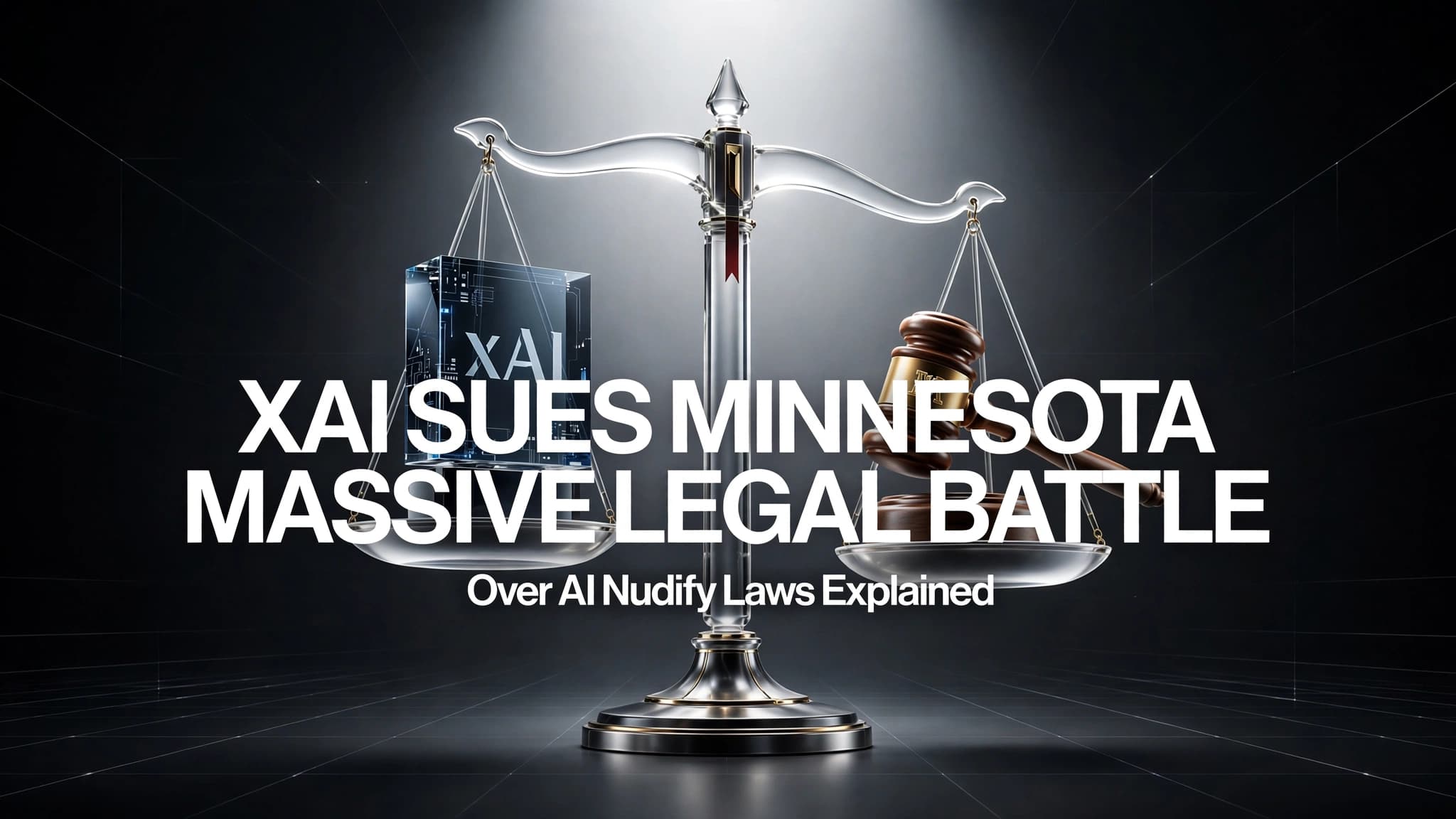
- xAI, a subsidiary of SpaceX, has filed a lawsuit against Minnesota Attorney General Keith Ellison to challenge state laws targeting "nudify" applications.
- The legal battle centers on whether state-level bans on non-consensual sexualized imagery constitute overbroad restrictions on free speech.
- The litigation occurs alongside a proposed class action lawsuit alleging Grok AI was utilized to generate and distribute child sexual abuse materials (CSAM).
The legal landscape for generative AI is shifting from ethical debates to high-stakes courtroom battles as state-level regulations collide with First Amendment protections. xAI's recent litigation against Minnesota marks a significant moment that could determine the extent of state government control over content generated by large language models.
The Legal Challenge Against Minnesota's AI Statutes
The lawsuit targets specific legislative efforts in Minnesota designed to curb the rise of non-consensual deepfakes.
| Key Highlights | Details |
|---|---|
| Primary Target | Minnesota Attorney General Keith Ellison |
| Core Legislation | Ban on "nudify" apps and non-consensual sexualized imagery |
| Financial Penalty | $500,000 fine per instance of explicit deepfake creation |
| Legal Argument | Overbroad, content-based ban on protected speech |
This litigation places xAI in direct opposition to state regulators, setting a precedent that may influence how other states approach AI-generated content. The outcome will likely determine if the $500,000 per-instance penalty becomes a standard liability for AI developers.
Read also: Sam Altman Reveals Plan to Slow Down AI Development: What You Need to Know
Core Drivers of the Litigation
The conflict is driven by a convergence of aggressive state-level consumer protection laws and the rapid evolution of generative capabilities.
- Legislative Aggression: Minnesota has moved to impose heavy financial penalties on platforms that facilitate the creation of non-consensual sexualized imagery.
- First Amendment Defense: xAI argues that the current statute is too broad and targets specific types of speech, which may violate constitutional protections.
- Corporate Liability: The lawsuit seeks to prevent a scenario where developers are held financially responsible for individual user actions that bypass safety filters.
- Precedent in California: A federal judge previously struck down a California law intended to restrict AI-generated deepfakes during elections, providing a potential legal roadmap for xAI.
The tension between preventing digital harm and maintaining open communication channels remains a central friction point for the industry.
The Grok AI Controversy and Safety Protocols
While the Minnesota suit focuses on free speech, xAI is simultaneously defending its safety architecture against severe criminal allegations.
| Issue | Status/Detail |
|---|---|
| Allegation | Use of Grok AI to create/share CSAM |
| Legal Action | Proposed class action lawsuit |
| Safety Measure | Strict prohibition of nude/sexualized imagery |
| Enforcement | xAI has sued users who attempt to evade blockers |
The company maintains that its safety protocols are robust, yet the proposed class action highlights the difficulty of policing user intent in real-time.
Read also: Bot Traffic Overtakes Human Activity Online: Spur Intelligence Raises $200M to Combat Threat
Broader Industry and Market Implications
The resolution of this case will ripple through the entire AI ecosystem, affecting venture capital interest and product development.
- Compliance Costs: If the $500,000 per-instance fine is upheld, AI companies may face significant financial liabilities.
- Product Development: Stricter regulations may force developers to implement more aggressive, and potentially restrictive, content filters.
- Legal Uncertainty: The conflict between state laws and federal constitutional protections creates a fragmented regulatory environment for global AI firms.
The strategic implications for companies under the SpaceX umbrella are significant, as they must balance rapid innovation with intense legal scrutiny.
Outlook
The trajectory of AI regulation is moving toward a collision between state-level safety mandates and federal constitutional standards. If xAI successfully challenges Minnesota's statute, it could provide a shield for AI developers against a wave of similar state laws.
However, if the court upholds the ban, the financial burden on companies like xAI could become a systemic risk for the sector. The outcome of the proposed class action regarding CSAM will be equally critical.
It will serve as a test for whether current safety filters are legally sufficient to protect users and children from the misuse of generative models. As the legal battle unfolds, the industry remains in a state of high-stakes uncertainty.
Frequently Asked Questions
What is the primary argument used by xAI in the Minnesota lawsuit?
xAI argues that Minnesota's law is an overbroad, content-based restriction on free speech that violates First Amendment protections.
How much is the fine for creating explicit deepfakes under Minnesota law?
The Minnesota statute carries a fine of $500,000 for every single instance of explicit deepfake creation.
Is xAI owned by Elon Musk?
Yes, xAI is owned by SpaceX.
What is the status of the Grok AI CSAM allegations?
xAI is currently facing a proposed class action lawsuit alleging that Grok AI was used to create and share child sexual abuse materials.