Key Takeaways
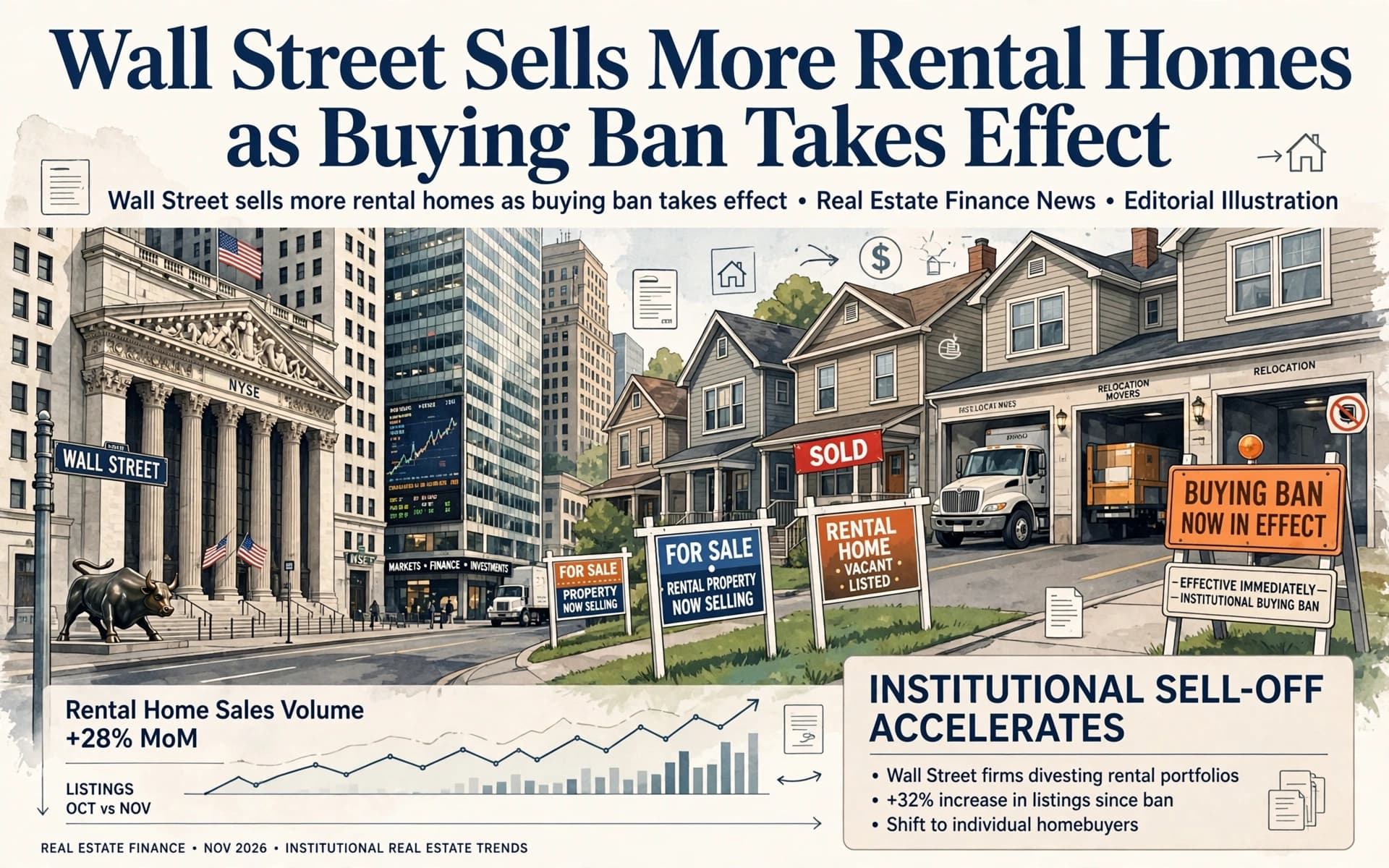
- Institutional investors are selling more rental homes in response to the buying ban taking effect.
- The total asking price of homes listed for sale by institutional investors is $3.1 billion, with 38.7% of listings having had price cuts.
- The largest landlords are net sellers year to date, with 3,180 more homes sold than bought since January 1.
As the buying ban on single-family rentals by institutional investors takes hold, Wall Street is shifting its strategy. According to our analysis, the number of homes owned by institutional investors listed for sale has more than doubled since the start of February, with 9,447 homes now on the market. This represents a significant change in market dynamics, as institutional investors reassess their portfolios in response to the new legislation. [1]
Institutional Investors Sell More Rental Homes
| Key Highlights | Details |
|---|---|
| Total asking price | $3.1 billion |
| Number of homes listed | 9,447 |
| Largest landlords | Progress Residential, Invitation Homes, AMH, Tricon, FirstKey, Amherst, VineBrook |
The impact of this shift is significant, with the largest landlords all reporting more homes sold than bought since January 1. Progress Residential, Invitation Homes, AMH, Tricon, FirstKey, Amherst, and VineBrook are among the largest landlords, with VineBrook currently having nearly 10% of its portfolio on the market. [2]
Why It Happened
The buying ban, which aims to curb the dominance of institutional investors in the single-family rental market, has led to a change in strategy among these investors. As the market adjusts to the new legislation, institutional investors are reassessing their portfolios and selling more homes. This shift is likely driven by a combination of factors, including the desire to reduce exposure to regulatory risk and to focus on more profitable investment opportunities.
- The buying ban has created uncertainty in the market, leading institutional investors to reassess their portfolios and reduce their exposure to regulatory risk.
- The shift in strategy is also driven by the desire to focus on more profitable investment opportunities, such as multifamily rentals or other asset classes.
- The largest landlords are all net sellers year to date, with 3,180 more homes sold than bought since January 1.
Deal Structure
| Key Highlights | Details |
|---|---|
| VineBrook's portfolio on the market | 1,900 homes |
| Total asking price of VineBrook's portfolio | $285 million |
| Invitation Homes and AMH's listings | 549 and 536 homes, respectively |
VineBrook's decision to list nearly 10% of its portfolio for sale represents a significant shift in strategy for the company. This move is likely driven by a desire to reduce exposure to regulatory risk and to focus on more profitable investment opportunities.
Market Impact
The shift in strategy among institutional investors is likely to have a significant impact on the single-family rental market. As the largest landlords reduce their exposure to regulatory risk, it is likely that other investors will follow suit, leading to a decrease in demand for single-family rentals. This could have a ripple effect throughout the market, leading to increased competition for investors and potentially driving down prices.
- The shift in strategy among institutional investors is likely to lead to a decrease in demand for single-family rentals.
- This could have a ripple effect throughout the market, leading to increased competition for investors and potentially driving down prices.
- The impact of the buying ban on the single-family rental market is still uncertain, but it is likely to be significant.
Outlook
As the buying ban takes hold, the single-family rental market will likely continue to evolve in response. Institutional investors will need to reassess their portfolios and adjust their strategies to remain competitive. This could lead to a decrease in demand for single-family rentals, potentially driving down prices and increasing competition for investors. As the market adjusts to the new legislation, it will be essential for investors to stay informed and adapt to changing market conditions.
Frequently Asked Questions
What is the valuation of the homes listed for sale by institutional investors?
The total asking price of homes listed for sale by institutional investors is $3.1 billion.
What is the impact of the new legislation on the single-family rental market?
The impact of the buying ban on the single-family rental market is still uncertain, but it is likely to be significant. The shift in strategy among institutional investors is likely to lead to a decrease in demand for single-family rentals, potentially driving down prices and increasing competition for investors.