Key Takeaways
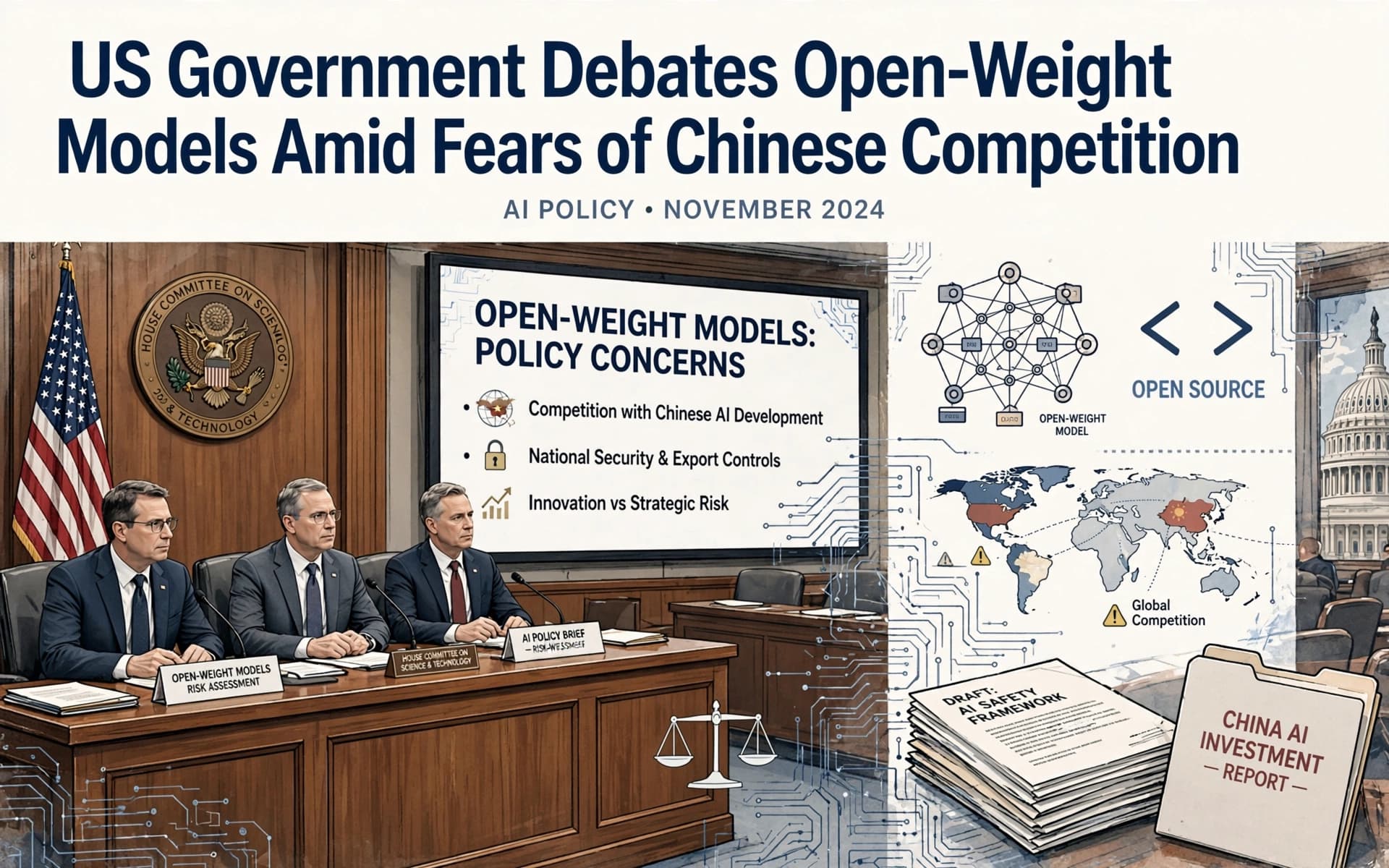
- The US government is debating the creation of regulatory hurdles around open-weight models to counter Chinese competition.
- Restricting open models would concentrate power in the hands of a few and make it harder for researchers and academia to participate in making AI safer.
- Focusing on chip export controls and limiting Nvidia H200 processor sales to China could be a more effective way to preserve US AI leadership.
The US government's stance on open-weight models has become increasingly complex, with various factions weighing in on the issue. OpenAI's head of strategic futures, Dean W. Ball, initially suggested that the government create regulatory hurdles around these models. However, he later retracted his claims that a regulatory crackdown was the White House's best strategy. 1
The Debate Over Open-Weight Models
| Key Highlights | Details |
|---|---|
| Open-weight models offer cheaper intelligence | Running on independent infrastructure or inside major enterprises, these models provide a more affordable alternative to Anthropic or OpenAI's class-leading models. |
| Strong open source models will bring down prices | Frontier-caliber open source models will place a squeeze on the margins and reduce the prices of frontier companies. |
| Restricting open models would hide risks | Rather than making AI safer, restricting open models would concentrate power in the hands of a few and make it harder for researchers and academia to participate in making AI safer. |
The debate over open-weight models is not just about the US government's stance, but also about the broader implications for the AI industry. Some experts argue that restricting open models would be a misguided approach, as it would not address the underlying risks and would instead concentrate power in the hands of a few.
Why It Happened
- The Trump administration is considering banning K3 and other advanced Chinese models at the behest of American frontier labs.
- The Department of Commerce has not taken any concrete steps to implement a ban on K3 and other advanced Chinese models.
- Focusing on chip export controls and limiting Nvidia H200 processor sales to China could be a more effective way to preserve US AI leadership.
The current debate over open-weight models is a symptom of a larger concern: the US government's efforts to counter Chinese competition in the AI space. The Trump administration is considering banning K3 and other advanced Chinese models, but the Department of Commerce has not taken any concrete steps to implement such a ban. Instead, some experts argue that focusing on chip export controls and limiting Nvidia H200 processor sales to China could be a more effective way to preserve US AI leadership.
Deal Structure
| Key Highlights | Details |
|---|---|
| Nvidia H200 processor sales to China | The US government could limit Nvidia H200 processor sales to China to preserve US AI leadership. |
| Chip export controls | Focusing on chip export controls could be a more effective way to counter Chinese competition in the AI space. |
Limiting Nvidia H200 processor sales to China could be a more effective way to preserve US AI leadership, as it would directly address the issue of Chinese access to advanced AI technology. Furthermore, focusing on chip export controls could be a more effective way to counter Chinese competition in the AI space.
Broader Market Impact
- Strong open source models will place a squeeze on the margins and bring down the prices of frontier companies.
- Restricting open models would concentrate power in the hands of a few and make it harder for researchers and academia to participate in making AI safer.
- Focusing on chip export controls and limiting Nvidia H200 processor sales to China could be a more effective way to preserve US AI leadership.
The debate over open-weight models has significant implications for the broader AI industry. Strong open source models will place a squeeze on the margins and bring down the prices of frontier companies. Restricting open models would concentrate power in the hands of a few and make it harder for researchers and academia to participate in making AI safer. Instead, focusing on chip export controls and limiting Nvidia H200 processor sales to China could be a more effective way to preserve US AI leadership.
Outlook
The debate over open-weight models is a complex issue that requires a nuanced approach. Rather than restricting open models, the US government should focus on chip export controls and limiting Nvidia H200 processor sales to China. This would be a more effective way to preserve US AI leadership and counter Chinese competition in the AI space.
Frequently Asked Questions
What is the current stance of the Department of Commerce on banning K3 and other advanced Chinese models?
The Department of Commerce has not taken any concrete steps to implement a ban on K3 and other advanced Chinese models.
How will the US government decide on the fate of open-weight models?
The US government is still debating the issue, and no concrete decisions have been made.
What is the valuation of OpenAI and Anthropic?
The valuation of OpenAI and Anthropic is not publicly disclosed.