Key Takeaways
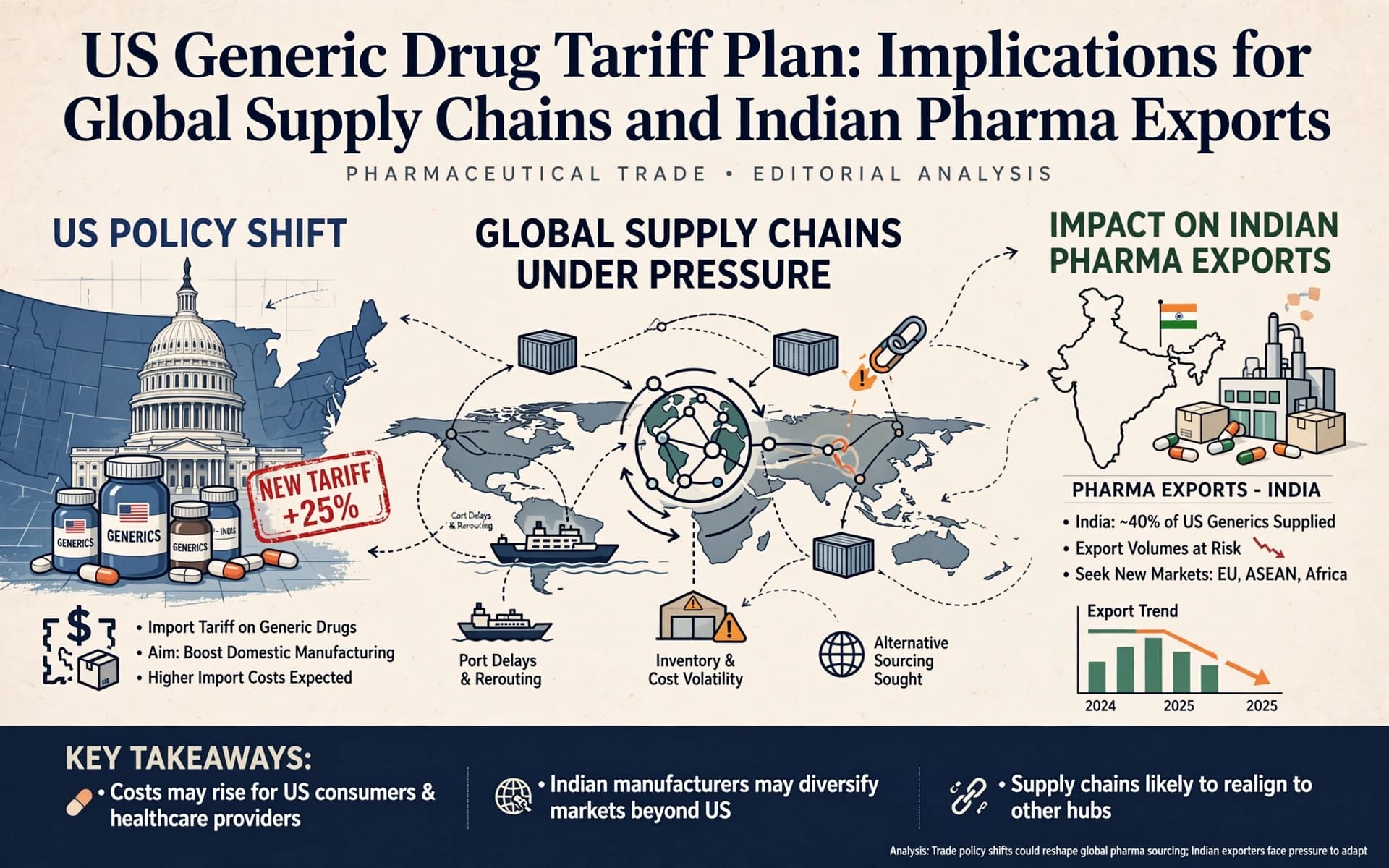
- The US administration has issued a two-year ultimatum for generic drug manufacturers to relocate production to US soil or face 100% import tariffs by August 2028.
- India, the primary supplier of generics to the US, faces significant export risks; pharmaceutical exports to America reached $10.5 billion in the 2024-25 period.
- The policy shift, coupled with the launch of the TrumpRX consumer platform, signals a restructuring of the US pharmaceutical supply chain and Economy & Policy landscape.
The American pharmaceutical market is undergoing a significant shift as the Trump administration moves to onshore the production of essential medicines. By targeting the supply chain of generic drugs—which currently account for more than 90% of all US prescriptions—the administration is signaling a departure from decades of globalized manufacturing reliance.
This strategic pivot aims to reduce dependency on foreign manufacturing hubs, particularly in Asia, by leveraging protectionist measures. While the stated goal is national security and supply chain resilience, the immediate economic fallout is being felt in global markets, specifically within the pharmaceutical sectors of India and Europe.
The US Tariff Roadmap for Generic Pharmaceuticals
The administration has outlined a phased escalation of import duties designed to make foreign manufacturing economically unviable compared to domestic production.
| Tariff Milestone | Effective Date | Imposed Rate |
|---|---|---|
| Initial Manufacturing Shift Window | August 2028 | 100% |
| Secondary Tariff Escalation | August 2029 | 200% |
This timeline leaves manufacturers with a narrow window to establish or expand domestic facilities to avoid high costs.
Drivers of the Onshoring Mandate
The decision to implement these tariffs is rooted in a strategy to secure the domestic supply of essential medications and reduce the influence of foreign entities on US healthcare stability.
- The administration's primary objective is to onshore generic pharmaceutical production to the United States to mitigate supply chain vulnerabilities.
- A move toward direct-to-consumer sales through the new TrumpRX platform seeks to bypass traditional distribution complexities.
- The policy aims to reduce the trade deficit in the pharmaceutical sector by incentivizing domestic capital investment.
- National security concerns involve the concentration of active pharmaceutical ingredient (API) production in non-allied nations.
The implementation of these measures represents a pivot in Economy & Policy that prioritizes domestic industrial capacity over low-cost global sourcing.
Impact on Indian Pharmaceutical Exports
India is the largest exporter of generic medicines to the United States, making its industry particularly vulnerable to these upcoming trade barriers.
| Metric | Data Point |
|---|---|
| Total Indian Pharma Exports to US (2024-25) | $10.5 Billion |
| Market Volatility | NSE Nifty Pharma index saw 20 drugmakers slip by 1.9% |
| Key Manufacturers (Birth Control) | Glenmark Pharmaceuticals Ltd. & Lupin Ltd. (65% of 2024 US market) |
The scale of exposure for Indian firms is significant, particularly for companies like Sun Pharmaceutical Industries Ltd., Glenmark Pharmaceuticals Ltd., and Lupin Ltd., which hold substantial market shares in specific therapeutic categories.
Global Supply Chain Implications
The shift toward domestic manufacturing will create ripples across the global Startups & Funding and manufacturing ecosystems.
- Large-scale players such as Sandoz Group AG, Teva Pharmaceutical Industries Ltd., and Viatris Inc. must weigh the cost of US facility construction against high tariff penalties.
- The competitive landscape between branded drugs and generics may shift if the cost of generics rises due to manufacturing relocation.
- Global logistics and shipping routes for pharmaceutical ingredients will require reconfiguration to accommodate US-centric production.
Companies must navigate both regulatory hurdles and massive capital expenditures to remain competitive in the US market.
Outlook
The next 24 months will be a critical period for the global pharmaceutical industry. As companies like Merck & Co. and Eli Lilly & Co. navigate the evolving regulatory environment, the generic sector faces a fundamental question: can the infrastructure for US-based manufacturing be built fast enough to meet the August 2028 deadline?
The success of this policy depends on several uncertain variables. It remains unclear how much specific tariff amount Indian drug companies will face given the February trade pact, or if the proposed 100% tariffs will extend to specific patented medicines. Furthermore, the ability of firms to complete US manufacturing plant construction within the two-year window remains a primary concern for investors.
As the TrumpRX platform begins to influence consumer behavior, the intersection of AI & Technology in drug discovery and the physical reality of manufacturing will define the next era of the pharmaceutical economy. The tension between low-cost global efficiency and high-security domestic production is set to redefine the global trade order.
Frequently Asked Questions
What is the primary goal of the new US pharmaceutical policy?
The goal is to onshore generic drug production to the United States to ensure supply chain security and reduce reliance on foreign manufacturers.
How will this affect Indian pharmaceutical companies?
Indian companies face significant risks, as they are the largest exporters of generics to the US; the NSE Nifty Pharma index has already seen downward movement in response to these announcements.
What is TrumpRX?
TrumpRX is a direct-to-consumer discount drug sales platform launched by the US administration to streamline access to affordable medications.