Key Takeaways
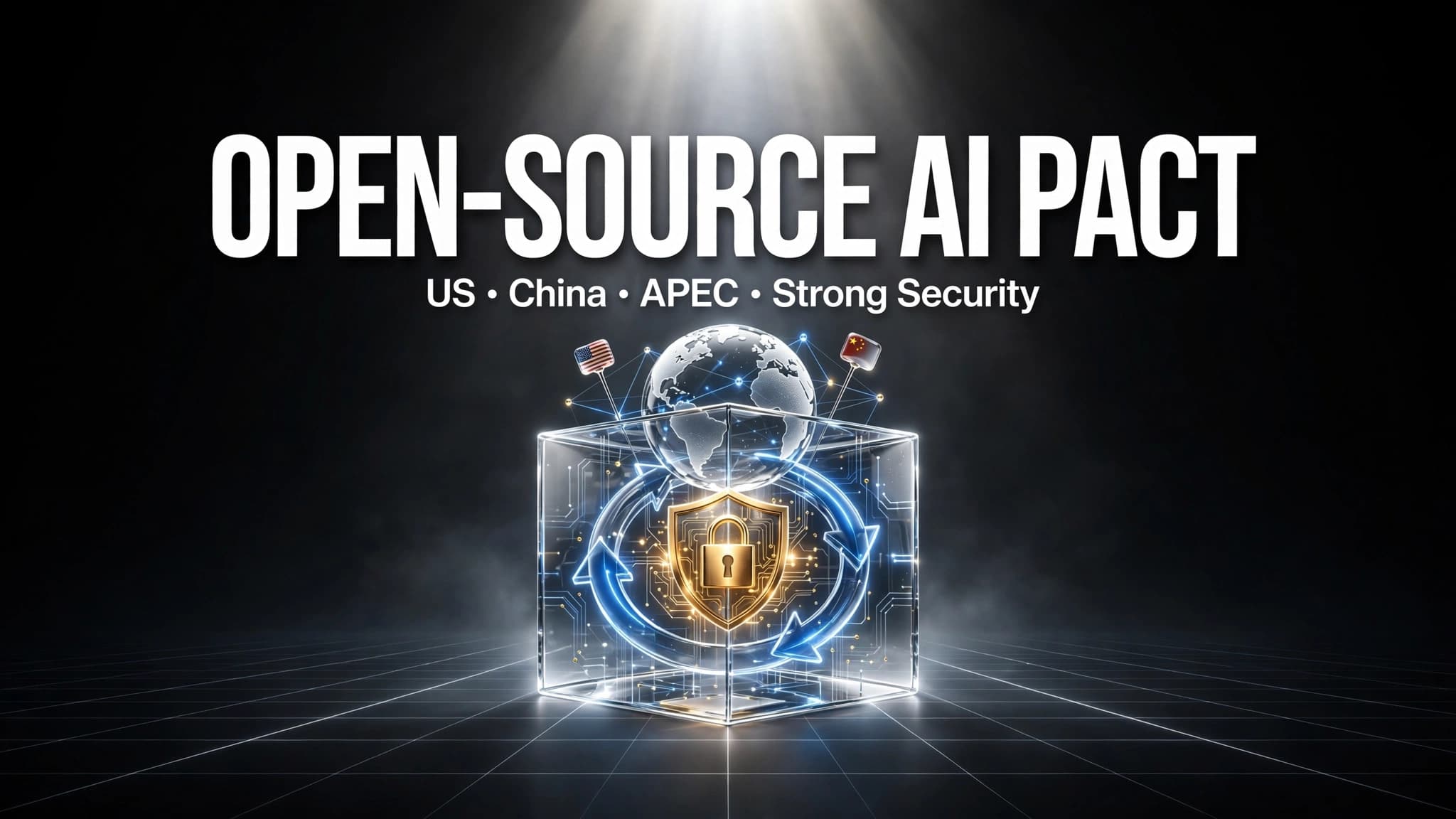
- The 21 APEC member economies have issued the 'Chengdu statement,' marking the first minister-level agreement to include open-source AI cooperation.
- Major powers, including the U.S. and China, have signaled support for open-source AI models provided they maintain "strong security assurance."
- The agreement emphasizes a tripartite focus on security, data protection, and intellectual property rights to mitigate global AI risks.
In a shift for international digital policy, the leaders of the Asia-Pacific Economic Cooperation (APEC) economies have reached a consensus on the future of open-source artificial intelligence. The summit, which brought together major global players, resulted in a unified stance that seeks to balance the proliferation of accessible AI models with the necessity of rigorous safety protocols.
This development comes at a critical juncture for AI & Technology, as the tension between proprietary closed-source systems and open-source accessibility increases. While open-source models offer the benefit of being free to download and use, they also present unique challenges regarding oversight and the potential for misuse.
The Chengdu Statement on AI Cooperation
The following table outlines the core pillars established by the APEC member economies during the summit.
| Core Pillar | Mandate Details |
|---|---|
| Security Assurance | Support for models employing strong security through development and deployment |
| Data Protection | Strict adherence to privacy standards and user data integrity |
| Intellectual Property | Respect for IP rights within the open-source ecosystem |
| Multi-Sector Dialogue | Encouragement of cooperation between government, private sector, and academia |
This statement represents a significant moment in international diplomacy, as it is the first time open-source cooperation has been addressed at a ministerial level.
Drivers of the APEC Consensus
The move toward a unified stance on open-source AI is driven by several geopolitical and economic factors currently shaping the global landscape.
- The rapid rise of open-source development, particularly with China leading recent advancements in the sector.
- Increasing geopolitical friction, with the U.S. alleging that China has utilized stolen American technology to fuel its open-source capabilities.
- The dual-track approach of Washington and Beijing, both of which are seeking tighter controls on their respective homegrown AI capabilities.
- The necessity for a standardized framework to manage the risks associated with highly accessible, high-performance models.
By establishing these guidelines, APEC aims to create a predictable environment for startups & funding to innovate without compromising national security.
Key Entities and Technical Context
The landscape of AI development is increasingly defined by the interplay between massive proprietary models and highly capable open-source alternatives.
| Entity/Model Type | Strategic Context |
|---|---|
| Open-Source Leaders | Models like DeepSeek and GLM 5.2 are driving global accessibility |
| Proprietary Leaders | Companies like Anthropic maintain closed-source, high-security ecosystems |
| Regulatory Bodies | APEC economies acting through ministerial-level consensus |
The tension between these two models is central to current Markets & IPOs trends, as investors weigh the scalability of open-source against the controlled monetization of proprietary tech.
Global Market and Policy Implications
The Chengdu statement is expected to influence the global economy, affecting how nations regulate their digital borders.
- It provides a framework for international cooperation that could prevent a fragmented "splinternet" of AI regulations.
- It creates a standardized expectation for "strong security assurance," which will likely become a requirement for any model seeking global distribution.
- It encourages a collaborative approach between academia and the private sector to address the inherent risks of AI.
The success of this framework depends heavily on how individual nations translate these high-level principles into enforceable domestic laws.
Outlook
The implementation of the Chengdu statement remains a significant variable for the future of global AI development. While the agreement provides a diplomatic roadmap, the practical application of "strong security assurance" remains an open question.
It is currently unclear what specific technical measures or auditing standards will be required to satisfy the security demands of both the U.S. and China. Furthermore, the tension between the desire for tighter domestic controls and the necessity of international cooperation will be a defining theme for Economy & Policy in the coming years.
As nations attempt to protect their intellectual property and national security, they must avoid creating barriers that stifle the innovation they seek to govern. The long-term impact of this APEC statement on the global development of open-source AI will depend on whether the participating economies can move from high-level rhetoric to concrete, interoperable security standards. If successful, it could stabilize the market; if not, it may lead to further technological decoupling.