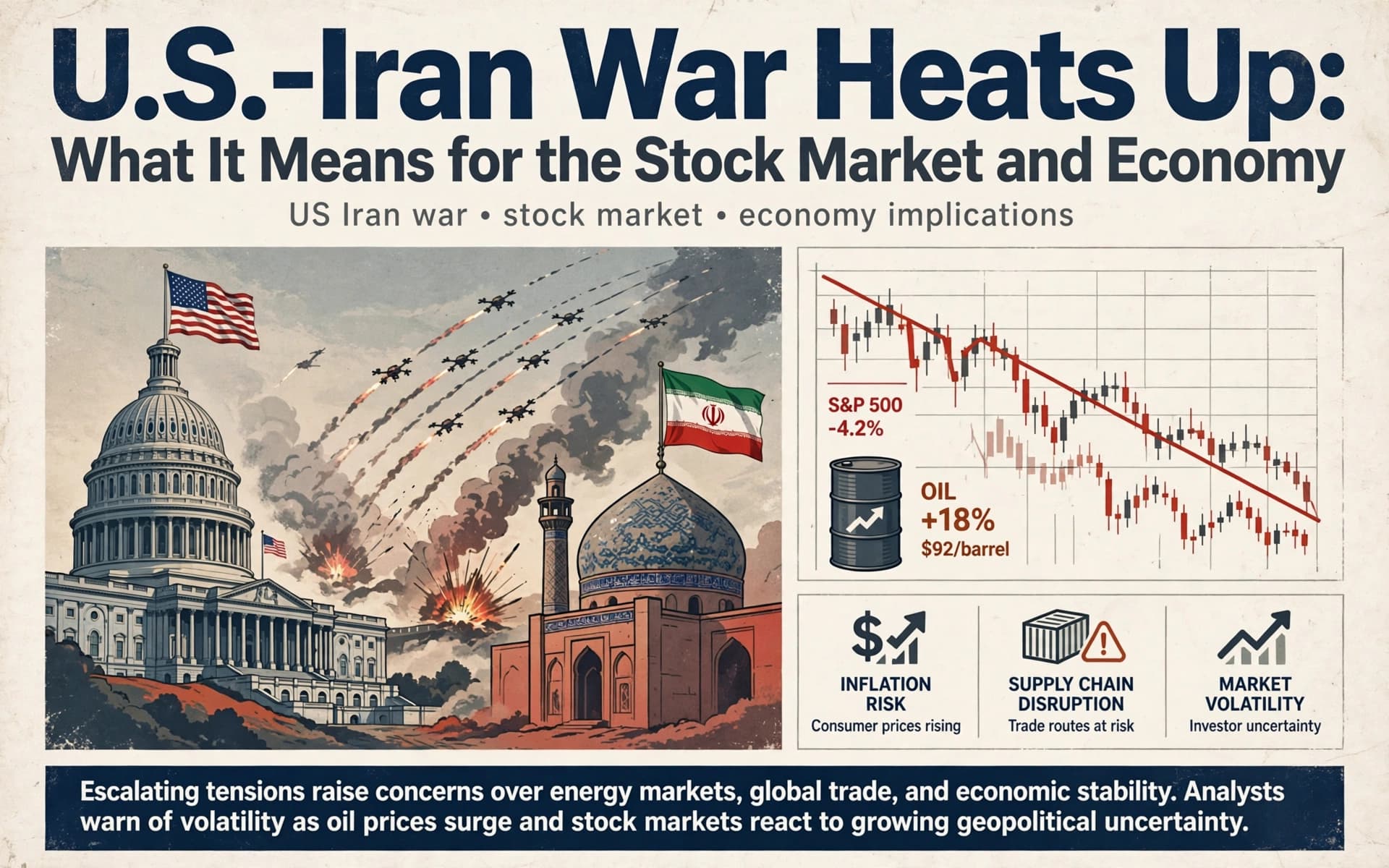
Key Takeaways
- The U.S.-Iran war has escalated, with a surge in fighting over the weekend, but stocks remain resilient.
- Economists warn that rising energy prices could weigh on consumers and the broader economy.
- The energy sector and logistics companies are likely to be the biggest laggards in a worst-case scenario.
The world is bracing for the potential consequences of a prolonged U.S.-Iran war, but the stock market seems unfazed for now. Despite a ramp-up in fighting between the two nations over the weekend, stocks continue to brush off the latest flare-up in tensions. The S&P 500 has bounced to all-time highs since sagging to a closing low of 6,343.72 in late March, a testament to its resilience in the face of uncertainty.
Market Impact of the U.S.-Iran War
| Key Highlights | Details |
|---|---|
| Energy prices | Brent crude briefly topped $90 a barrel on Monday and hovered just below that level on Tuesday |
| Treasury yields | The U.S. 10-year Treasury yield traded above 4.6% on Monday— a key level watched by traders |
| Stock market | The S&P 500 could fall into a correction in a worst-case scenario, according to Art Hogan, chief market strategist at B. Riley Wealth |
The market impact of the U.S.-Iran war is multifaceted and far-reaching. Rising energy prices, which have already begun to affect consumers, could weigh on the broader economy. The energy sector and logistics companies that rely on fuel are likely to be the biggest laggards in a worst-case scenario.
Why It Happened
- The war has led to a surge in energy prices, with Brent crude briefly topping $90 a barrel on Monday.
- The U.S. 10-year Treasury yield traded above 4.6% on Monday, a key level watched by traders.
- The S&P 500 has bounced to all-time highs, but could fall into a correction in a worst-case scenario.
- The average American household has lost around $1,100 so far from the war, a figure that includes increasing energy costs and higher military expenses.
- The personal saving rate came in at 3% in May, down nearly 2 percentage points from a year prior.
The escalation of the U.S.-Iran war has led to a surge in energy prices, which has already begun to affect consumers. The U.S. 10-year Treasury yield traded above 4.6% on Monday, a key level watched by traders, indicating a potential increase in interest rates. The S&P 500 has bounced to all-time highs, but could fall into a correction in a worst-case scenario.
Deal Structure
| Key Highlights | Details |
|---|---|
| Gasoline prices | Gasoline prices rose to $4 per gallon on Monday for the first time in more than a month |
| Warehouse clubs | Warehouse clubs such as Costco and Sam's Club could win market share as drivers hunt for value |
The deal structure of the U.S.-Iran war is complex and multifaceted. Gasoline prices rose to $4 per gallon on Monday for the first time in more than a month, affecting consumers directly. Warehouse clubs such as Costco and Sam's Club could win market share as drivers hunt for value.
Market Impact on Consumers
- Consumers are paying attention, and they are shifting their habits to manage their wallet.
- Companies with value-focused or driving-dependent consumer bases could see their clientele become more selective if oil prices remain elevated.
- Warehouse clubs such as Costco and Sam's Club could win market share as drivers hunt for value.
The market impact of the U.S.-Iran war on consumers is significant. Consumers are paying attention, and they are shifting their habits to manage their wallet. Companies with value-focused or driving-dependent consumer bases could see their clientele become more selective if oil prices remain elevated.
Outlook
The U.S.-Iran war has the potential to significantly impact the global economy, with far-reaching consequences for consumers and businesses alike. As the situation continues to unfold, it is essential to monitor the market and adjust accordingly. The Fed funds futures are pricing in a more than 83% likelihood that the central bank holds rates steady at its gathering next week, but the situation remains fluid. Elevated energy prices could lead to a prolonged period of economic uncertainty, affecting consumers and businesses directly.
Frequently Asked Questions
What is the current valuation of the S&P 500?
The current valuation of the S&P 500 is not explicitly stated in this article, but it has bounced to all-time highs since sagging to a closing low of 6,343.72 in late March.
How will the war affect the global economy?
The war has the potential to significantly impact the global economy, with far-reaching consequences for consumers and businesses alike. Rising energy prices could weigh on the broader economy, affecting consumers and businesses directly.
What are the potential consequences of a prolonged war for the U.S. economy?
The potential consequences of a prolonged war for the U.S. economy include a prolonged period of elevated energy prices, affecting consumers and businesses directly. The war could also lead to a decrease in consumer spending and a potential recession.