Key Takeaways
- India's exporters in labor-intensive sectors may benefit from the US's 10% tariff on Indian goods.
- The tariff is part of a broader country-level policy and does not specifically target Indian exporters.
- The government's timely policy interventions have helped India secure a relatively favorable tariff position.
The recent imposition of a 10% tariff by the US on India, Pakistan, Bangladesh, the UK, and others in a forced labor probe has sparked mixed reactions in the global trade community. While some may view this as a setback for Indian exporters, a closer examination of the situation reveals that India may actually emerge as a beneficiary of this move.
Tariff Impact on Indian Exports
| Key Highlights | Details |
|---|---|
| 10% tariff on Indian goods | Applies to labor-intensive sectors such as textiles, garments, leather, and footwear |
| Exclusions for certain products | Steel, aluminium, auto components, pharmaceuticals, and certain agricultural products continue to have exclusions |
| Competitive advantage | Indian exporters in labor-intensive sectors will remain competitive compared to several competing exporting nations |
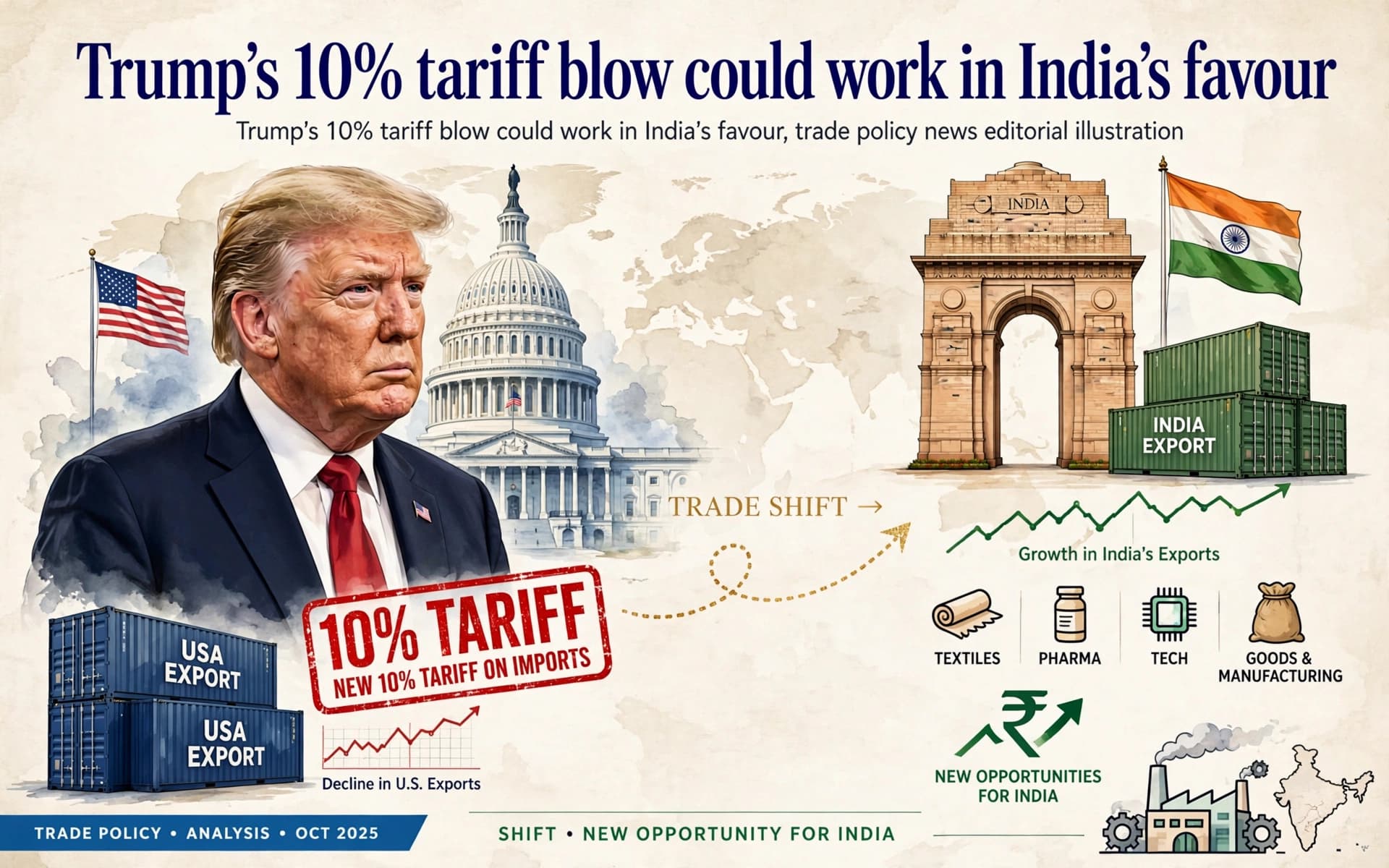
The imposition of a 10% tariff on Indian goods may seem daunting at first, but a closer look reveals that several key product categories have already been excluded from the tariff. This means that Indian exporters in labor-intensive sectors such as textiles, garments, leather, and footwear will continue to remain competitive in the global market.
Why it Happened
The US's decision to impose a 10% tariff on India is part of a broader country-level policy aimed at addressing forced labor concerns. While this may seem like a setback for Indian exporters, the government's timely policy interventions and continuous engagement with the US have helped India secure a relatively favorable tariff position compared with many trading partners.
- The US has imposed a 10% tariff on several countries, including India, Pakistan, Bangladesh, the UK, and others, in a forced labor probe.
- The tariff is not a finding against Indian exporters or Indian products, but part of a wider country-level policy covering several economies.
- Several key product categories, including steel, aluminium, auto components, pharmaceuticals, and certain agricultural products, continue to have exclusions.
- Indian exporters have repeatedly demonstrated resilience in overcoming global disruptions.
Deal Structure
| Key Highlights | Details |
|---|---|
| Exclusions for certain products | Steel, aluminium, auto components, pharmaceuticals, and certain agricultural products continue to have exclusions |
| Competitive advantage | Indian exporters in labor-intensive sectors will remain competitive compared to several competing exporting nations |
The exclusions for certain products, including steel, aluminium, auto components, pharmaceuticals, and certain agricultural products, will continue to provide Indian exporters with a competitive advantage in the global market.
Broader Market Impact
The imposition of a 10% tariff on Indian goods may lead to a shift in trade patterns, with some countries potentially diverting their trade to India. This could have a positive impact on India's exports, particularly in labor-intensive sectors.
- The tariff may lead to trade diversion in segments where competing countries face a higher tariff.
- Indian exporters may benefit from increased demand for their products.
- The government's timely policy interventions will be crucial in ensuring that Indian exporters take advantage of this opportunity.
Outlook
The imposition of a 10% tariff by the US on India is a complex issue that requires careful consideration. While it may seem like a setback for Indian exporters at first, a closer examination reveals that India may actually emerge as a beneficiary of this move. The government's timely policy interventions and continuous engagement with the US have helped India secure a relatively favorable tariff position compared with many trading partners. As the global trade landscape continues to evolve, it will be interesting to see how Indian exporters respond to this new challenge.
Frequently Asked Questions
What is the impact of the tariff on a product-by-product basis?
The tariff will have a varying impact on different products, with some products facing a 10% tariff and others being exempt due to exclusions.
What are the available exclusions for Indian exporters?
Indian exporters can continue to export certain products, including steel, aluminium, auto components, pharmaceuticals, and certain agricultural products, without facing the 10% tariff.
How will the tariff affect the trade diversion in segments where competing countries face a higher tariff?
The tariff may lead to trade diversion in segments where competing countries face a higher tariff, potentially benefiting Indian exporters in labor-intensive sectors.