Key Takeaways
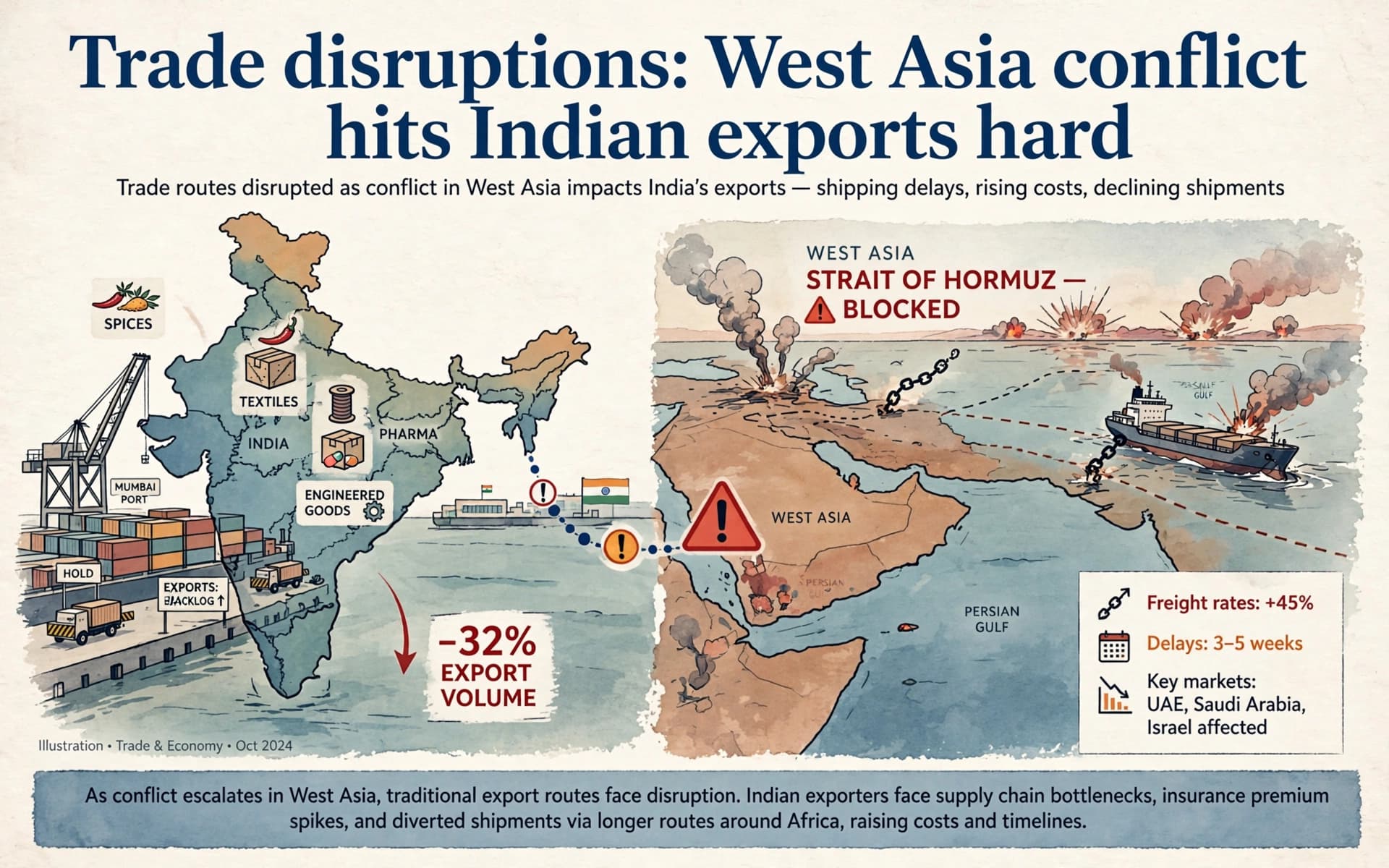
- Renewed conflict in West Asia has severely disrupted India's exports, with exporters facing container shortages and limited vessel availability.
- Sea freight rates have surged sharply, doubling or even tripling on several routes, significantly increasing logistics costs and delaying critical export shipments.
- The disruption has highlighted the need for the Indian government to address the issue of elevated freight rates and additional charges imposed by foreign shipping lines.
India's export sector is facing significant challenges due to the ongoing conflict in West Asia. The renewed violence has severely disrupted India's exports, with exporters facing container shortages and limited vessel availability. This has resulted in a sharp surge in sea freight rates, with rates doubling or even tripling on several routes. The increased logistics costs and delayed shipments have had a substantial impact on Indian exporters, with many struggling to meet their delivery commitments.
Trade Disruptions Hit Hard
| Key Highlights | Details |
|---|---|
| Container shipping rates to West Asia have surged to $3,500 | From $400 in the past three months, a nearly 9-fold increase |
| Ocean freight rates from India's west coast to Argentina have more than doubled | To $9,000 in the past three months |
| Rates to Africa have also surged to $7,500, from $3,500 | A 115% increase in the past three months |
| For shipments to the US east coast, freight rates have climbed to $9,500, from $5,500 | A 73% increase in the past three months |
The surge in freight rates has had a severe impact on Indian exporters, with many struggling to stay afloat. Exporters have raised the issue with the nodal commerce and industry ministry, seeking immediate intervention to address the issue. The disruption has also highlighted the need for the Indian government to strengthen its trade relationships with other countries and explore alternative trade routes.
Why it Happened
The conflict in West Asia has resulted in a significant reduction in vessel availability and container shipping capacity. This has led to a surge in freight rates, as shipping lines take advantage of the limited capacity to charge higher rates. The congestion at key Indian ports, including Mundra and JNPT, has further worsened shipping delays, adding to the woes of Indian exporters.
- The conflict in West Asia has resulted in a significant reduction in vessel availability and container shipping capacity.
- The congestion at key Indian ports, including Mundra and JNPT, has further worsened shipping delays.
- Indian exporters are facing significant challenges in meeting their delivery commitments due to the surge in freight rates and shipping delays.
- The Indian government needs to address the issue of elevated freight rates and additional charges imposed by foreign shipping lines.
Deal Structure and Impact
| Key Highlights | Details |
|---|---|
| Exporters are facing significant losses due to the surge in freight rates and shipping delays | Estimated losses are in the hundreds of millions of dollars |
| The Indian government needs to intervene to address the issue of elevated freight rates and additional charges imposed by foreign shipping lines | This will help to mitigate the impact of the conflict on Indian exports |
The disruption has had a significant impact on Indian exports, with many exporters struggling to stay afloat. The Indian government needs to intervene to address the issue of elevated freight rates and additional charges imposed by foreign shipping lines. This will help to mitigate the impact of the conflict on Indian exports and ensure that the country's trade relationships with other countries remain strong.
Broader Market Impact
The conflict in West Asia has had a significant impact on the global trade landscape, with many countries facing similar challenges. The surge in freight rates and shipping delays has resulted in a significant increase in logistics costs, which is having a ripple effect on the global economy. The Indian government needs to work with other countries to address the issue of elevated freight rates and additional charges imposed by foreign shipping lines.
- The conflict in West Asia has had a significant impact on the global trade landscape.
- The surge in freight rates and shipping delays has resulted in a significant increase in logistics costs.
- The Indian government needs to work with other countries to address the issue of elevated freight rates and additional charges imposed by foreign shipping lines.
- The conflict has highlighted the need for countries to diversify their trade relationships and explore alternative trade routes.
Outlook
The conflict in West Asia is expected to continue to disrupt India's exports in the short term. However, the Indian government is working to address the issue of elevated freight rates and additional charges imposed by foreign shipping lines. This will help to mitigate the impact of the conflict on Indian exports and ensure that the country's trade relationships with other countries remain strong. In the long term, the conflict is expected to have a lasting impact on the global trade landscape, with many countries facing similar challenges.
Frequently Asked Questions
What is the valuation of the losses incurred by Indian exporters due to the conflict in West Asia?
According to industry estimates, the losses incurred by Indian exporters due to the conflict in West Asia are in the hundreds of millions of dollars.
What are the long-term implications of the conflict on India's trade with West Asia?
The conflict is expected to have a lasting impact on India's trade with West Asia, with many exporters struggling to stay afloat. The Indian government needs to work with other countries to address the issue of elevated freight rates and additional charges imposed by foreign shipping lines.
How will the Indian government address the issue of elevated freight rates and additional charges imposed by foreign shipping lines?
The Indian government is working to address the issue of elevated freight rates and additional charges imposed by foreign shipping lines. This will involve working with other countries to ensure that the issue is addressed and that trade relationships between India and other countries remain strong.