Key Takeaways
- Central banks have averaged 1,000 tonnes of gold purchases per year over the last four years, roughly double the pace of the prior decade.
- 89% of surveyed central banks expect global official gold reserves to rise in the coming year, with 45% planning to add to their own holdings.
- A growing share of these purchases is being stored domestically, signaling a shift away from traditional offshore vaulting centers.
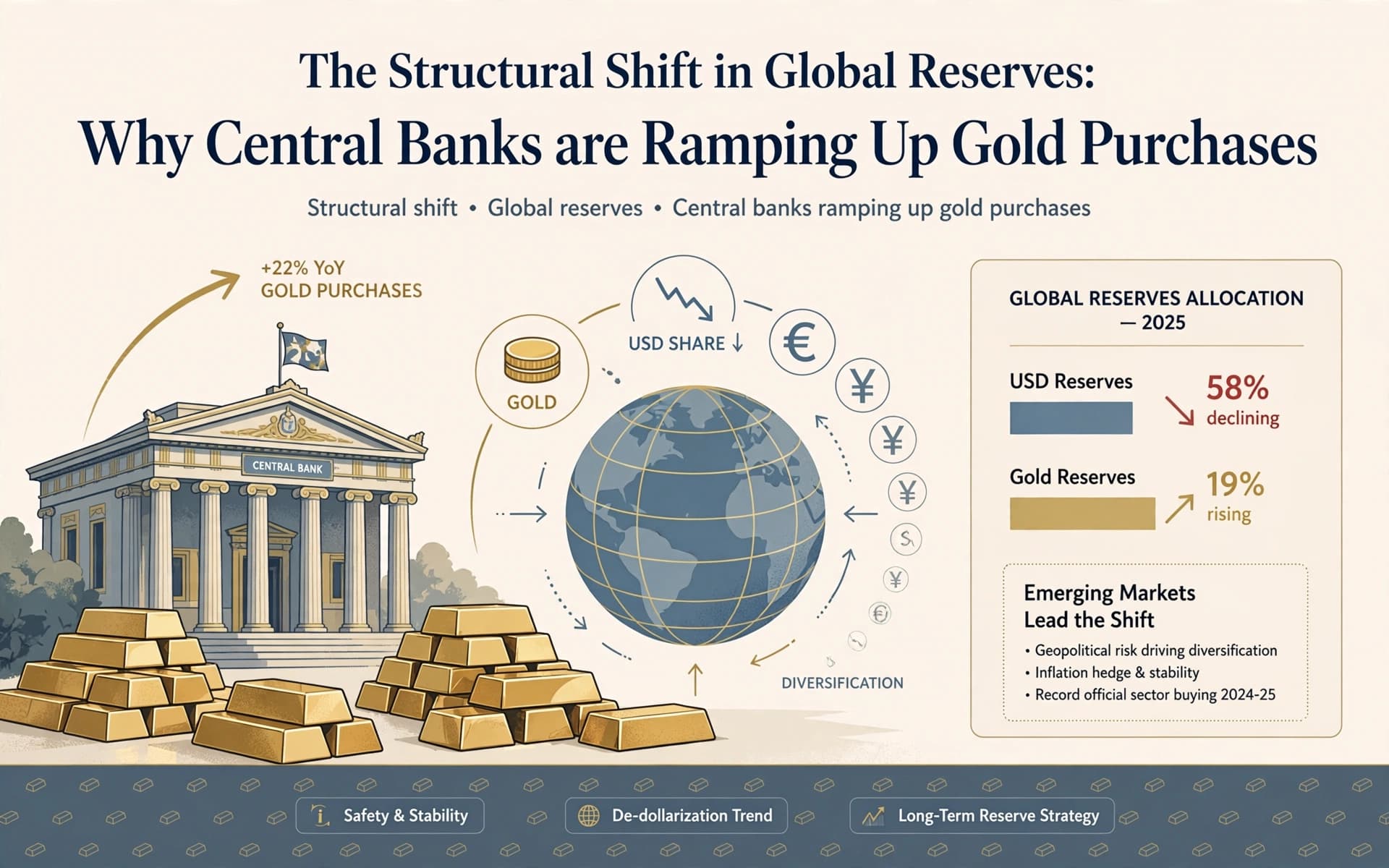
The recent acceleration in central bank gold buying marks a significant shift in reserve management since the early 2000s. After a period of relative quiet following the 2008 financial crisis, official sector demand has surged. This is driven by concerns over currency volatility, geopolitical tensions, and a desire to diversify away from traditional reserve assets.
This trend persists even as gold prices have climbed to historic highs. Such persistence underscores the strategic weight policymakers now assign to the metal.
Central Banks Accelerate Gold Accumulation
Overview of recent gold purchase trends
| Metric | Detail |
|---|---|
| Average annual gold purchases (2022‑2025) | 1,000 tonnes |
| Average annual gold purchases (2012‑2021) | ~500 tonnes |
| Share of central banks expecting reserve growth next year | 89% |
| Share planning to increase own holdings | 45% |
| Gold purchases sustained since 2022 despite record prices | Elevated |
The table shows that official sector buying has not only doubled compared with the previous decade but has remained robust even as market prices have risen. This persistence suggests that central banks view gold as a structural hedge rather than a tactical bet on short‑term price moves.
Drivers Behind the Surge
Why central banks are turning to gold
- Rising concerns about the US dollar’s share in global reserves and potential sanctions exposure.
- Geopolitical uncertainties prompting a search for assets with no counterparty risk.
- Inflationary pressures in major economies making gold an attractive store of value.
- Technological improvements in secure domestic vaulting reducing reliance on offshore centers.
These factors have converged to make gold a more appealing component of reserve portfolios. While the exact percentage decline of the US dollar’s share in global reserves remains an open question, many policymakers cite diversification as a core motive.
Storage Preferences and Domestic Holdings
How and where gold is being kept
| Aspect | Detail |
|---|---|
| Percentage of new purchases stored domestically | Increasing majority (exact figure varies by country) |
| Traditional offshore hubs (e.g., London, New York) seeing slower inflows | Notable slowdown since 2022 |
| Countries emphasizing domestic storage | Specific leaders remain an open question |
| Use of advanced vaulting technology | Growing adoption for security and auditability |
The shift toward domestic storage reflects both security considerations and a desire for greater political control over reserve assets. Although precise country‑level data are not yet public, analysts note that several emerging economies have led this movement.
Implications for Currency Markets and Asset Allocation
Broader market effects of the gold buying wave
- Potential downward pressure on the US dollar as reserves shift toward gold.
- Increased demand for gold could support prices, influencing inflation‑linked investment strategies.
- Private sector funds, such as the Motilal Oswal Midcap Fund, have begun allocating a small portion of portfolios to gold‑linked products, mirroring official sector behavior.
These developments suggest that central bank activity is beginning to ripple through broader financial markets. This affects everything from currency trading to alternative asset allocations.
Outlook
Looking ahead, the trajectory of central bank gold purchases will likely hinge on three interrelated factors: the evolution of US dollar dominance, the persistence of geopolitical risk, and the effectiveness of domestic vaulting infrastructure.
If sanctions concerns and currency volatility remain elevated, the 89% of institutions anticipating reserve growth could translate into sustained annual purchases near the 1,000‑tonne level. Conversely, a significant easing of tensions or a decisive shift in dollar confidence might temper demand. However, the structural appeal of gold as a zero‑counterparty asset is unlikely to disappear quickly.
Market participants should watch for clearer data on which nations are expanding domestic storage most aggressively. This could signal emerging power shifts in the global financial system. Additionally, any measurable change in the US dollar’s reserve share will be a key indicator of whether the current gold buying represents a temporary hedge or a longer‑term realignment of international reserves.
Frequently Asked Questions
What is driving central banks to store more gold domestically?
Domestic storage reduces reliance on foreign vaults, enhances political control over reserves, and mitigates risks associated with geopolitical sanctions or access restrictions.
How does sustained central bank buying affect gold prices?
Consistent official sector demand provides a price floor, helping to support gold levels even during periods of market volatility or rising interest rates.
Are private investors following the central bank trend into gold?
Yes, funds such as the Motilal Oswal Midcap Fund have increased exposure to gold‑linked assets, according to the fund's allocation trends, reflecting a broader appetite for the metal as a hedge against inflation and currency risk.