Key Takeaways
- India's consumption landscape is undergoing a structural pivot, with the urban-rural spending gap narrowing to 70% in 2023-24.
- Rural consumption growth is accelerating, led by states such as Odisha, while urban centers like Punjab see double-digit increases in lifestyle spending.
- A shift in food expenditure toward processed goods and a rise in credit-driven discretionary spending are redefining the retail and service sectors.
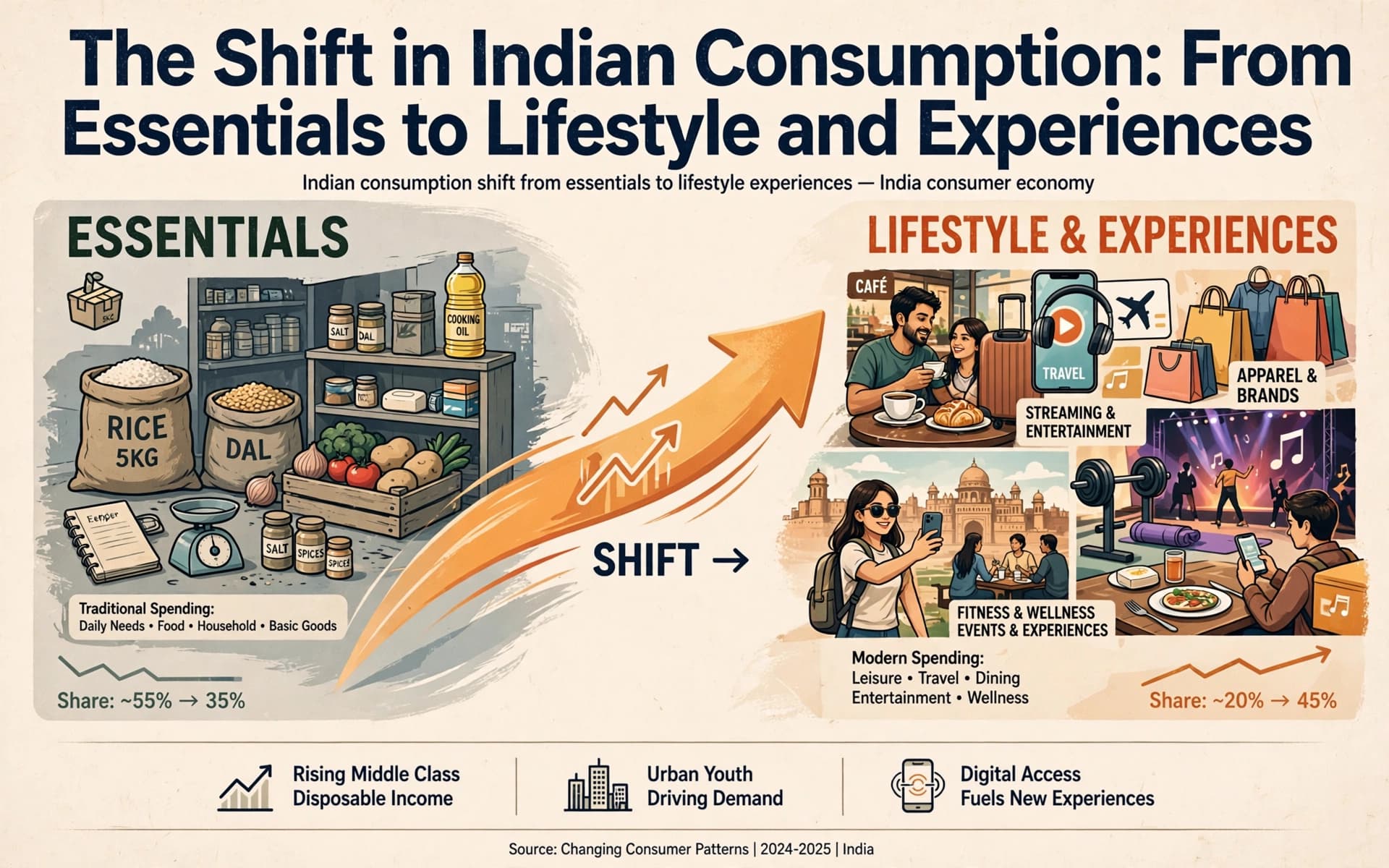
The Indian consumer profile is no longer a monolith of subsistence-based spending. As the nation moves toward 2026, data suggests a transition in how households allocate income, moving away from basic survival toward discretionary experiences and branded goods. This shift represents a structural realignment of the domestic economy.
While traditional metrics once focused heavily on calorie intake and basic staples, current patterns reveal an increasing appetite for lifestyle services and processed goods. This evolution is driven by rising incomes, improved infrastructure, and expanded digital access. These factors are altering the landscape for Economy & Policy analysts and corporate strategists.
The Changing Face of Indian Household Spending
The Household Consumption Expenditure Survey (HCES) 2023-24 highlights an upward trajectory in spending across all demographics.
| Demographic Segment | Average Monthly Per Capita Spending Growth |
|---|---|
| Rural India | 9.3% |
| Urban India | 8.3% |
The narrowing of the consumption gap—from 84% in 2011-12 to 70% in 2023-24—indicates that rural markets are catching up to urban standards.
Regional Drivers of Consumption Growth
Growth is not uniform across the subcontinent, as specific states act as engines for the broader national trend.
- Odisha has emerged as the leader in rural consumption, registering an approximate 14% growth rate.
- Punjab has set the pace for urban India, with consumption increasing by nearly 13%.
- Maharashtra and Karnataka continue to serve as high-volume hubs for both essential and lifestyle spending.
- The convergence of rural and urban spending patterns is creating a more unified national market for startups & funding ventures.
This regional divergence suggests that localized strategies are becoming essential for companies looking to capture the next wave of Indian growth.
The Food Expenditure Pivot
The composition of the "food basket" is undergoing a transformation, moving from raw commodities to value-added products.
| Expenditure Category | Rural India (% of Food Spend) | Urban India (% of Food Spend) |
|---|---|---|
| Processed Food & Beverages | 9.84% | 11.09% |
| Cereals | 4.99% | Not specified |
The rise in processed food and beverage consumption reflects a shift toward convenience and branded nutrition. This trend is a primary driver for the scaling of FMCG giants and the entry of new players in the AI & technology driven supply chain optimization space.
The Rise of Discretionary and Experience-Based Spending
As household incomes rise, the share of income dedicated to non-essential services is expanding. This is evident in the growth of platforms catering to travel, fitness, and e-commerce.
| Sector | Key Market Players | Growth Drivers |
|---|---|---|
| E-commerce | Flipkart | Digital penetration and logistics |
| Travel & Leisure | MakeMyTrip, Cleartrip | Rising middle-class aspirations |
| Wellness & Fitness | Cult.fit | Urban lifestyle and health consciousness |
While the expansion of the service sector is a positive indicator for Markets & IPOs, it introduces complexities regarding consumer behavior and credit reliance.
Structural Risks and Economic Headwinds
The transition to a consumption-led economy involves variables that require close monitoring.
- The rapid expansion of easy access to credit is increasing household debt levels, a trend that warrants scrutiny.
- Agricultural volatility, specifically the impact of El Niño, remains a critical variable for FMCG firms relying on rural income stability.
- The financial health of specialized service providers, such as the balance sheet of Cult.fit, remains a point of interest for institutional investors.
- Current levels of household debt in India remain a critical metric for policymakers to monitor to prevent systemic instability.
The interplay between rising debt and rising consumption creates a complex environment for lenders and retailers.
Outlook
The trajectory of Indian consumption suggests a long-term move toward a "lifestyle-first" economy. As the gap between urban and rural spending continues to close, companies that bridge the gap between convenience and affordability will likely lead the next decade. The shift from cereals to processed foods and from basic goods to travel and wellness services marks the maturation of the Indian middle class.
However, the reliance on credit to fuel this consumption shift introduces risk. If household debt levels rise without a corresponding rise in real wages, the sustainability of this consumption boom could be challenged. For investors and policymakers, the focus must remain on whether this growth is driven by genuine income expansion or by an unsustainable surge in leverage.
Frequently Asked Questions
How has the urban-rural consumption gap changed?
The gap has narrowed from 84% in 2011-12 to 70% in 2023-24, indicating more uniform growth across India.
What is the primary driver of rural consumption growth?
Rural growth is being driven by an increase in per capita spending, with Odisha leading the nation at approximately 14% growth.
Is the shift toward processed food a permanent trend?
Data shows an increase in the share of food expenditure dedicated to processed foods and beverages in both rural and urban areas, signaling a long-term shift toward convenience.