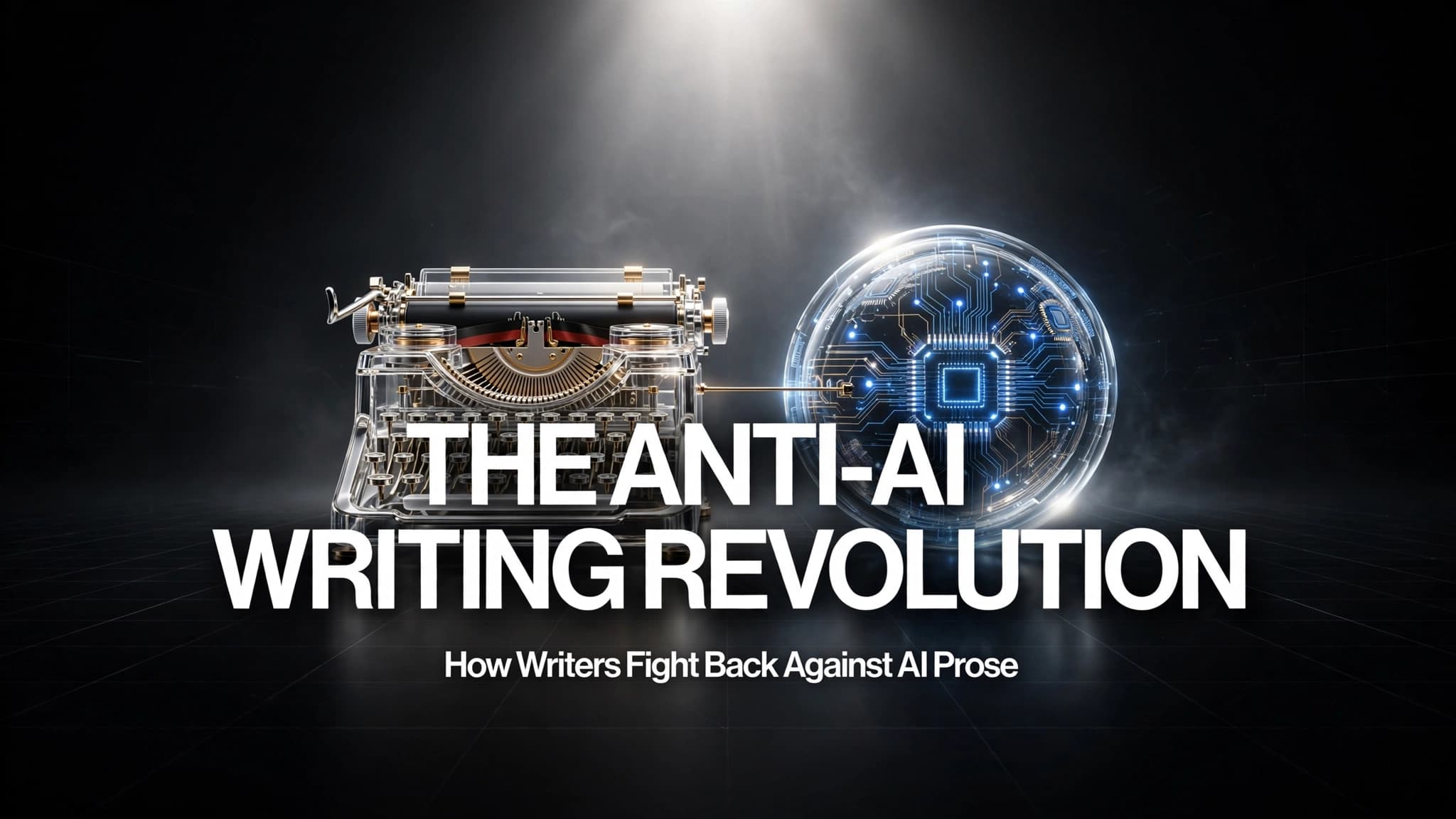
The Anti-AI Writing Revolution: How Writers Are Fighting Back Against AI-Generated Prose
As the lines between humans and machines continue to blur in the age of artificial intelligence, a growing number of writers are pushing back against the tide of AI-generated content. In a bid to reclaim the art of writing, these authors are embracing a more deliberate and human-like style, shunning the sterile, list-driven prose that has become synonymous with AI.
Key Takeaways
- Writers are creating an anti-AI 'literary counterculture' by avoiding AI-like writing styles.
- The movement is gaining momentum, with prominent authors and publications joining the fray.
- The long-term impact of AI on the publishing industry remains uncertain, but one thing is clear: the value of human writing has never been more important.
The anti-AI writing revolution is not just a reaction to the proliferation of AI-generated content; it's also a call to arms for writers to reclaim their craft. Laura Brooke Robson, a novelist, has made a conscious effort to avoid sounding like AI in her writing. "I've become more deliberate and human-like in my writing since the adoption of language models," she says. "I want my readers to feel like they're reading a real person, not a machine."
Why it Matters
Writers are avoiding AI-like writing styles, such as lists of three, passive voice, and em dashes, which have become hallmarks of AI-generated prose. Hachette pulled Mia Ballard's horror novel Shy Girl due to allegations of AI-generated writing, while Steven Rosenbaum's book The Future of Truth included fabricated quotations generated by AI. These incidents have sparked a wider debate about the role of AI in writing and the importance of human touch.
- The rise of AI-generated content has led to a homogenization of writing styles, making it harder for human writers to stand out.
- The anti-AI movement is not just about aesthetics; it's also about the value of human writing in an age where machines can produce content quickly and cheaply.
- By embracing a more deliberate and human-like style, writers can create work that is more engaging, more nuanced, and more meaningful.
Deal Structure
Mano Sundaresan, Pitchfork's head of editorial content, has sent writers a memo stating that no AI-generated content may be used when filing review copy. Philip Picardi, editor-in-chief of Playboy, has encouraged more formally adventurous writing to avoid AI-generated content. These moves demonstrate a growing recognition of the importance of human writing in the publishing industry.
| Feature | Impact |
|---|---|
| No AI-generated content | More engaging, nuanced, and meaningful writing |
| Deliberate and human-like style | Increased reader loyalty and retention |
| Emphasis on human touch | Higher value placed on human writing in the industry |
Market Impact
The anti-AI writing revolution has significant implications for the publishing industry. As more writers and publications join the movement, we can expect to see a shift towards more human-like writing styles. This, in turn, may lead to a renewed emphasis on the value of human writing, with readers and publishers alike placing a premium on work that is authentic, engaging, and meaningful.
- The anti-AI movement is not just a fad; it's a long-term shift in the way we think about writing and the role of machines in the creative process.
- By embracing a more deliberate and human-like style, writers can create work that is more resilient to the challenges of AI-generated content.
- The future of writing is uncertain, but one thing is clear: the value of human writing has never been more important.
Outlook
As the anti-AI writing revolution continues to gain momentum, it's clear that the future of writing is uncertain. Will the anti-AI counterstyle become a permanent shift in writing styles? How will AI affect the value of good writing in the long term? These questions remain unanswered, but one thing is certain: the value of human writing has never been more important.
Frequently Asked Questions
What is the impact of AI on the publishing industry?
The rise of AI-generated content has led to a homogenization of writing styles, making it harder for human writers to stand out. However, the anti-AI movement is gaining momentum, with writers and publications embracing a more deliberate and human-like style.
Will the anti-AI counterstyle become a permanent shift in writing styles?
It's difficult to predict the long-term impact of the anti-AI movement, but one thing is clear: the value of human writing has never been more important. As more writers and publications join the movement, we can expect to see a shift towards more human-like writing styles.
How will AI affect the value of good writing in the long term?
The future of writing is uncertain, but one thing is clear: the value of human writing has never been more important. As machines become more capable of producing content quickly and cheaply, the value of human writing will continue to increase.