Key Takeaways
- The Reserve Bank of India (RBI) is mandating a rigorous review of internal grievance redressal mechanisms to ensure compliance with consumer protection standards.
- Data indicates a significant volume of customer disputes are bypassing internal oversight and moving directly to the RBI Ombudsman.
- Strengthening the Internal Ombudsman framework is a central priority for maintaining financial stability and consumer trust within the regulatory ecosystem.
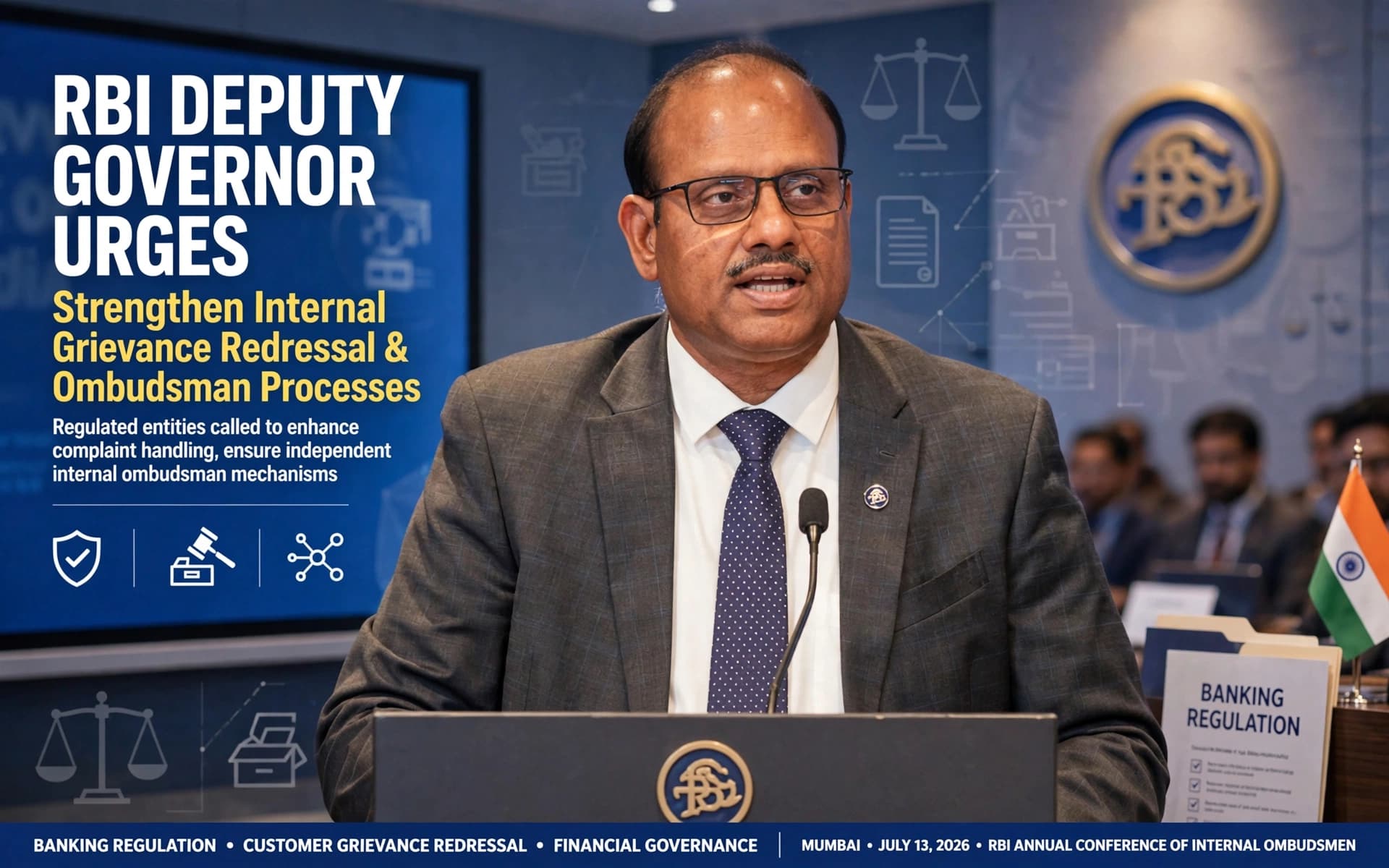
The Reserve Bank of India (RBI) has signaled a shift toward stricter oversight regarding how financial institutions manage consumer disputes. During a recent high-level gathering, senior leadership emphasized that the current architecture of grievance redressal faces systemic pressures that could undermine consumer confidence if left unaddressed.
As the financial landscape becomes increasingly digital, the friction between service providers and consumers has moved from physical branches to complex digital interfaces. This shift requires a more robust approach to Economy & Policy to ensure that individual rights are protected against large-scale institutional processes.
Strengthening the Internal Ombudsman Framework
The RBI recently convened a specialized conference to address the efficacy of current complaint management systems.
| Feature | Regulatory Focus |
|---|---|
| Primary Objective | Enhancing consumer protection and financial stability |
| Key Mechanism | Internal Ombudsman and RBI Ombudsman |
| Core Mandate | Reviewing internal grievance redressal processes |
| Strategic Goal | Preventing complaints from bypassing internal layers |
The directive aims to ensure that the Internal Ombudsman acts as a critical first line of defense before disputes escalate to the central regulator.
Why Internal Redressal is Under Scrutiny
The push for reform stems from a growing disconnect between how institutions handle complaints and how customers perceive those resolutions.
- A significant proportion of complaints resolved in favor of customers at the RBI Ombudsman level were not referred to the Internal Ombudsman initially, according to the RBI.
- Current complaint management systems are failing to capture or escalate complex disputes to the required internal oversight levels.
- The bypass of internal mechanisms increases the administrative burden on the central regulator and delays final resolutions for consumers.
- The integration of digital services requires more sophisticated, automated, and transparent grievance tracking to match the speed of transactions.
This trend suggests that many regulated entities are treating internal grievance redressal as a procedural formality rather than a substantive investigative tool.
The Mechanics of Complaint Escalation
The relationship between internal and external oversight is the cornerstone of the current consumer protection framework.
| Oversight Layer | Function and Scope |
|---|---|
| Internal Ombudsman | First-level independent review of escalated grievances |
| RBI Ombudsman | Final regulatory recourse for unresolved disputes |
| Regulated Entities | Primary responsibility for initial complaint resolution |
The effectiveness of the entire system relies on the integrity of the first layer of defense.
Broader Market and Economic Impact
The RBI's directive will have ripple effects across various sectors, particularly those involving high-frequency consumer interactions.
- Financial institutions and NBFCs must invest in more sophisticated AI & Technology to track and analyze complaint patterns.
- Non-banking entities and fintech platforms will face increased scrutiny regarding their dispute resolution transparency.
- Increased compliance requirements may lead to higher operational costs for Startups & Funding ventures in the fintech space.
As institutions tighten their internal processes, the market can expect a more standardized approach to consumer rights.
Outlook
The directive from Deputy Governor Swaminathan J marks a shift in how the RBI intends to manage the intersection of consumer rights and institutional accountability. By demanding that regulated entities redesign their complaint management systems, the central bank is attempting to fortify the foundations of the financial ecosystem.
However, several questions remain regarding the enforcement of these standards. It is currently unclear what specific regulatory changes or penalties will follow if regulated entities fail to comply with the request to review grievance processes.
Furthermore, while the RBI has identified a "significant proportion" of complaints bypassing internal layers, the exact percentage of complaints that bypass the Internal Ombudsman remains an open question for future data releases.
As the industry moves toward more automated and AI-driven customer service, the ability of the Internal Ombudsman to provide human-led, high-level oversight will be tested. The success of this initiative will depend on whether institutions view these changes as a compliance burden or as a necessary evolution to maintain market stability.
Frequently Asked Questions
What is the role of the Internal Ombudsman?
The Internal Ombudsman serves as an independent layer within a regulated entity to review complaints that the initial customer service channels failed to resolve satisfactorily.
Why is the RBI intervening in grievance processes?
The RBI is intervening because many customers are bypassing internal institutional processes and going directly to the RBI Ombudsman, which increases regulatory workload and indicates failures in internal redressal.
Which sectors will be most affected by these changes?
Regulated entities including banks, NBFCs, and digital payment providers will be most affected, as they are required to maintain robust internal grievance mechanisms.