Key Takeaways
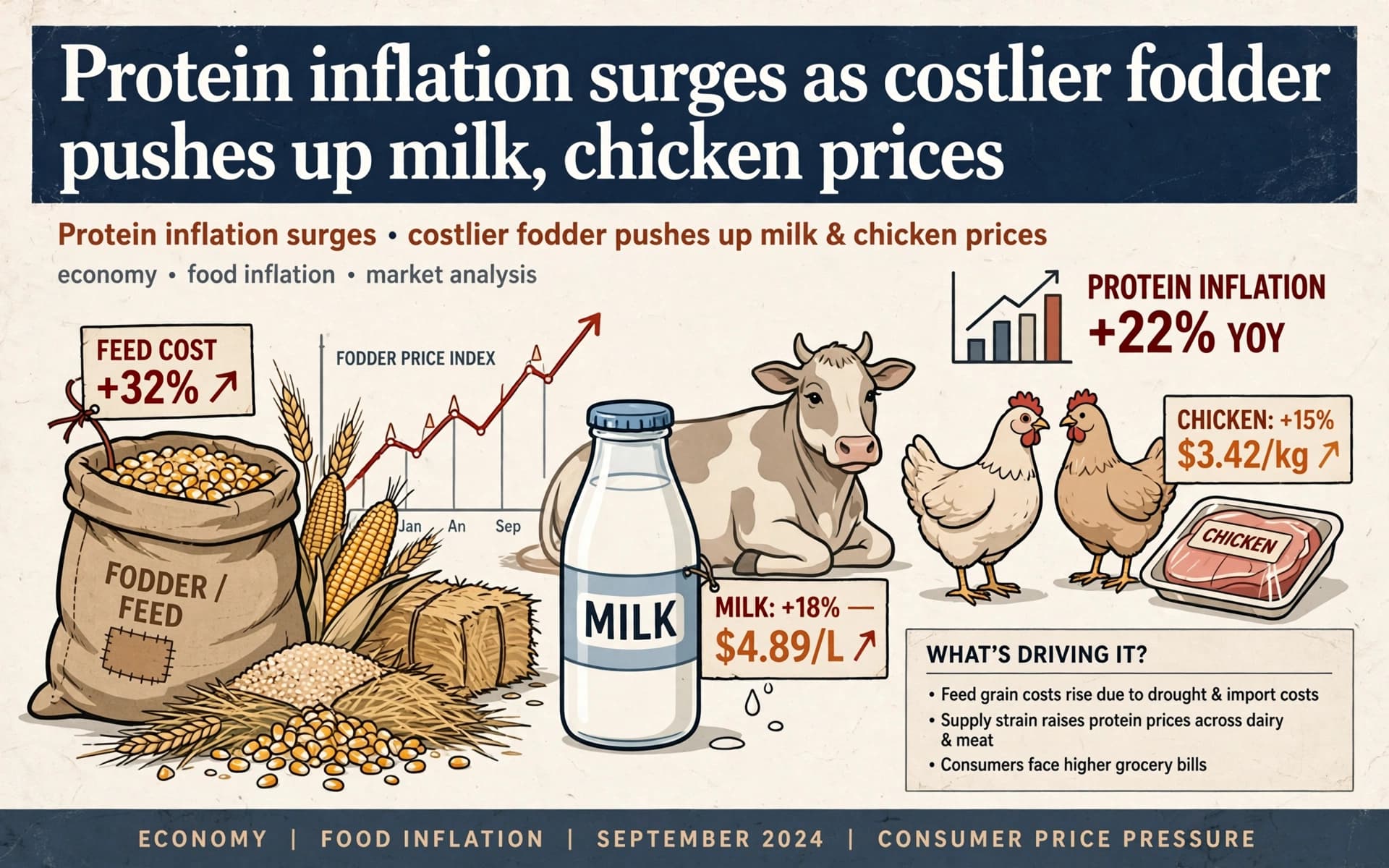
- Protein inflation surged to 5.3% in June, more than doubling from January.
- Milk prices drove the increase, accounting for 31.7% of the total, followed by chicken (27.6%) and fish and prawns (13.9%).
- El Nino and heatwaves compounded the pressure on fodder availability, driving up feed costs and squeezing margins for livestock and poultry producers.
Protein inflation has been a growing concern in recent months, with the rate accelerating to 4.6% in May and 2.6% in January. However, it's the inflation in protein-rich foods that has seen a significant spike, more than doubling from January to 5.3% in June. This surge is attributed to the rising cost of fodder, which has been exacerbated by heatwaves and El Nino conditions.
Protein Inflation: A Growing Concern
| Key Highlights | Details |
|---|---|
| Protein inflation | 5.3% in June, up from 2.6% in January |
| Major contributors | Milk (31.7%), Chicken (27.6%), Fish and Prawns (13.9%) |
| Vegetarian protein sources | Inflation rose to 3.5% in June from 2.7% in May |
The impact of protein inflation is multifaceted, with milk being the major contributor to the higher rate in June. Dairy companies, including Amul and Mother Dairy, raised prices in May, leading to an increase in milk prices. This, in turn, has had a ripple effect on other protein-rich foods, including chicken and fish and prawns.
Why it Happened
- Rising fodder costs due to heatwaves and El Nino conditions.
- Squeezed margins for livestock and poultry producers.
- Tight inventories and sowing concerns for pulses.
- Seasonal and supply-side factors influencing fish prices.
The recent heatwaves and El Nino conditions have compounded the pressure on fodder availability, driving up feed costs and squeezing margins for livestock and poultry producers. This, combined with tight inventories and sowing concerns for pulses, has contributed to the surge in protein inflation.
Deal Structure
| Key Highlights | Details |
|---|---|
| Pulses prices | Firming up due to sowing concerns and tight inventories |
| Animal feed costs | Rising due to heatwaves and El Nino conditions |
The impact of protein inflation is not limited to the dairy and poultry industries. Pulses prices are also firming up, and could face further pressure in the coming months amid sowing concerns and tight inventories.
Broader Market Impact
- Rising protein prices may lead to increased costs for food manufacturers and retailers.
- Consumers may face higher prices for protein-rich foods, including milk, chicken, and fish and prawns.
- The delayed sowing of pulses may lead to a shortage in the coming months.
The surge in protein inflation has significant implications for the food industry and consumers. Rising protein prices may lead to increased costs for food manufacturers and retailers, while consumers may face higher prices for protein-rich foods.
Outlook
The recent surge in protein inflation is a cause for concern, with milk being the major contributor to the higher rate. The rising cost of fodder, exacerbated by heatwaves and El Nino conditions, has squeezed margins for livestock and poultry producers. While pulses prices are also firming up, the delayed sowing of pulses may lead to a shortage in the coming months. As the situation unfolds, it will be crucial to monitor the impact of protein inflation on the food industry and consumers.
Frequently Asked Questions
What is the valuation of the dairy companies mentioned?
According to available data, the valuation of Amul and Mother Dairy is not publicly disclosed. However, the companies have reported significant revenue growth in recent years, driven by the increasing demand for dairy products.
What are the future prospects of pulses prices?
The future prospects of pulses prices are uncertain, with tight inventories and sowing concerns contributing to the firming up of prices. However, the delayed sowing of pulses may lead to a shortage in the coming months, which could drive up prices further.
How will the delayed sowing affect the availability of pulses?
The delayed sowing of pulses may lead to a shortage in the coming months, which could drive up prices further. This, in turn, may have a ripple effect on the food industry and consumers, leading to higher prices for protein-rich foods.