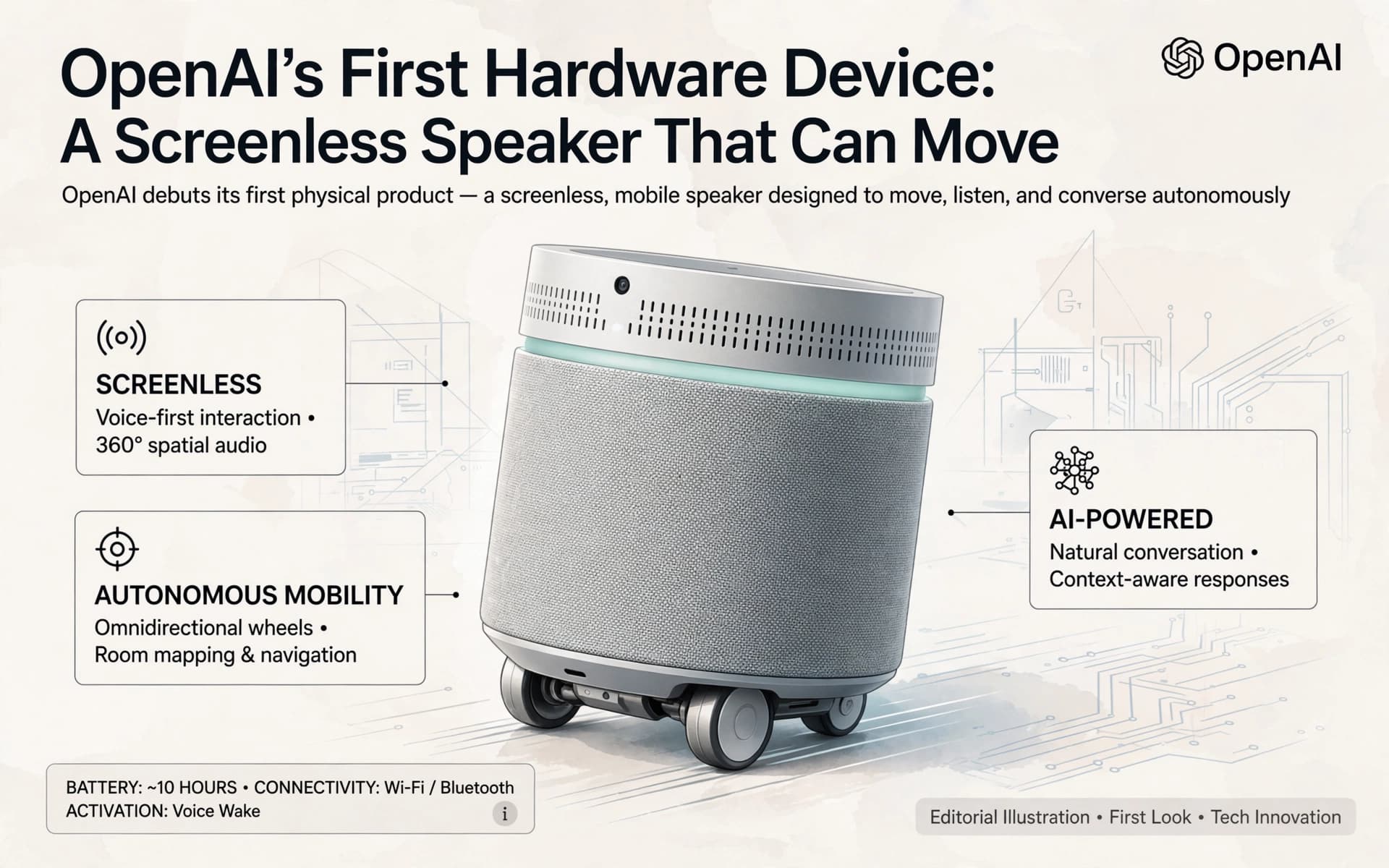
- OpenAI's first hardware device is reportedly a screenless speaker that can move, designed to be a humanlike AI companion that lives in the home.
- The device syncs with ChatGPT and provides other home AI services, with a personality that can proactively learn about its owner over time.
- The device has access to a user's digital life, drawing on information like emails, and involves mechanical elements that can move on their own.
- The device was developed with the help of many former Apple engineers, who OpenAI believes have created something significantly different from anything Apple has on the market today.
Why This Matters
The development of OpenAI's first hardware device marks a significant shift in the company's focus, moving from purely software-based solutions to more integrated, hardware-based products. This move has implications for the future of AI in the home and the potential for more seamless interactions between humans and machines.
What Happened
According to TechCrunch AI, OpenAI has developed a screenless speaker that can move, designed to be a humanlike AI companion that lives in the home. This device is reportedly the company's first foray into hardware and is being pitched as a way to bring AI into the home in a more integrated and personalized way. The device syncs with ChatGPT and provides other home AI services, with a personality that can proactively learn about its owner over time.
Background
OpenAI has been focused on developing software-based AI solutions for several years, with a particular emphasis on natural language processing and chatbots. However, with the development of this new device, the company is taking a more hardware-focused approach, integrating AI into a physical product that can interact with users in a more direct way. This move has significant implications for the future of AI in the home and the potential for more seamless interactions between humans and machines.
Quick Explanation: Screenless Speaker: A device that uses audio and other sensory inputs to interact with users, but does not have a visual display.
Timeline
No specific timeline has been provided for the release of OpenAI's new device, but according to TechCrunch AI, the company is already pitching the product internally as a way to bring AI into the home in a more integrated and personalized way.
Industry Impact
The development of OpenAI's first hardware device has significant implications for the future of AI in the home and the potential for more seamless interactions between humans and machines. This move could also have implications for the wider tech industry, as companies look to integrate AI into more physical products and services.
What Happens Next
The release of OpenAI's new device is likely to be closely watched by industry observers, who will be looking to see how the company's approach to integrating AI into hardware plays out. The device's form factor and specific features are still unclear, but according to TechCrunch AI, the company is already working on refining the product and preparing it for release.
Key Takeaways
- OpenAI's first hardware device is reportedly a screenless speaker that can move, designed to be a humanlike AI companion that lives in the home.
- The device syncs with ChatGPT and provides other home AI services, with a personality that can proactively learn about its owner over time.
- The device has access to a user's digital life, drawing on information like emails, and involves mechanical elements that can move on their own.
- The device was developed with the help of many former Apple engineers, who OpenAI believes have created something significantly different from anything Apple has on the market today.