Key Takeaways
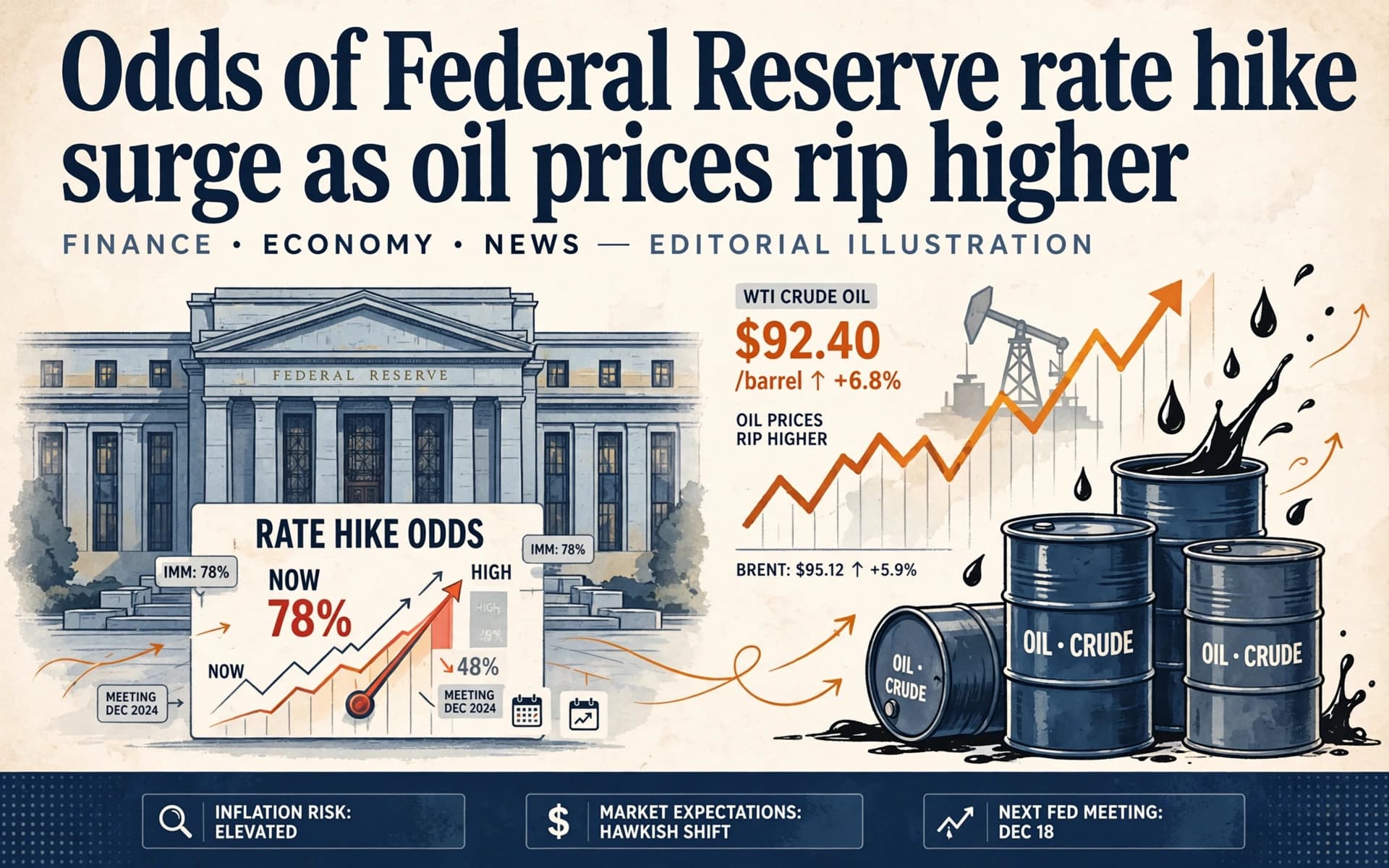
- The odds of a Federal Reserve rate hike surged to 82% in September, a significant increase from below 53% a week ago.
- Brent crude oil hit $100 a barrel for the first time since late May, contributing to a rise in the average price for a gallon of gasoline in the U.S. to $4 per gallon.
- Economists' interest rate outlook through 2026 doesn't signal an environment with tighter monetary policy, despite the rising odds of a rate hike.
As energy prices continue to soar, the Federal Reserve's stance on interest rates is being closely watched. The odds of a rate hike surged to 82% in September, a significant increase from below 53% a week ago, according to recent data. This shift in expectations is largely driven by the sharp rise in oil prices, with Brent crude hitting $100 a barrel for the first time since late May.
Odds of Rate Hike Surge Amid Rising Energy Prices
| Key Highlights | Details |
|---|---|
| Odds of rate hike | 82% in September, up from below 53% a week ago |
| Current rate | 3.50% to 3.75%, expected to remain unchanged at next week's gathering |
| Oil prices | Brent crude hit $100 a barrel for the first time since late May |
| Gasoline prices | Average price for a gallon in the U.S. reached $4 per gallon this week |
The sharp rise in oil prices is having a direct impact on the average price for a gallon of gasoline in the U.S., which has reached $4 per gallon this week. This increase in energy costs is likely to have a ripple effect on the broader economy, with potential implications for inflation and consumer spending.
Why it Happened
The surge in energy prices is largely driven by geopolitical tensions, particularly in the Middle East. The ongoing conflict in Iran has led to concerns about oil supply disruptions, contributing to the sharp rise in prices. Economists are closely watching the situation, with many expecting the Federal Reserve to keep rates unchanged at its gathering next week.
- The Federal Reserve is expected to keep rates unchanged at its gathering next week, despite the rising odds of a rate hike.
- The central bank's decision will be closely watched, with many economists expecting a rate hike in September.
- The sharp rise in oil prices is having a direct impact on the average price for a gallon of gasoline in the U.S.
Deal Structure
| Key Features | Details |
|---|---|
| Current rate | 3.50% to 3.75% |
| Expected change | No change expected at next week's gathering |
| Impact on economy | Potential implications for inflation and consumer spending |
The Federal Reserve's decision will have significant implications for the broader economy, with potential implications for inflation and consumer spending. Economists are closely watching the situation, with many expecting the central bank to keep rates unchanged at its gathering next week.
Broader Market Impact
The surge in energy prices is having a ripple effect on the broader market, with potential implications for the Dow Jones Industrial Average and the Nasdaq Composite. The sharp rise in oil prices is likely to lead to a decline in consumer spending, which could have a negative impact on economic growth.
- The sharp rise in oil prices is having a direct impact on the average price for a gallon of gasoline in the U.S.
- The increase in energy costs is likely to have a ripple effect on the broader economy.
- Economists are closely watching the situation, with many expecting a rate hike in September.
Outlook
As energy prices continue to soar, the Federal Reserve's stance on interest rates is being closely watched. The odds of a rate hike surged to 82% in September, a significant increase from below 53% a week ago. Economists' interest rate outlook through 2026 suggests that the current environment does not signal tighter monetary policy, despite the rising odds of a rate hike. The central bank's decision will have significant implications for the broader economy, with potential implications for inflation and consumer spending.
Frequently Asked Questions
What is the outlook for economic growth if energy prices continue to rise?
The sharp rise in oil prices is likely to lead to a decline in consumer spending, which could have a negative impact on economic growth.
How long will energy prices continue to spiral upward?
The ongoing conflict in Iran has led to concerns about oil supply disruptions, contributing to the sharp rise in prices. Economists are closely watching the situation, with many expecting energy prices to remain high in the near term.
What is the valuation of Alphabet after its post-earnings swoon?
The valuation of Alphabet is not directly related to the surge in energy prices. However, the sharp rise in oil prices is likely to have a negative impact on Alphabet's revenue, particularly in the advertising segment.