Key Takeaways
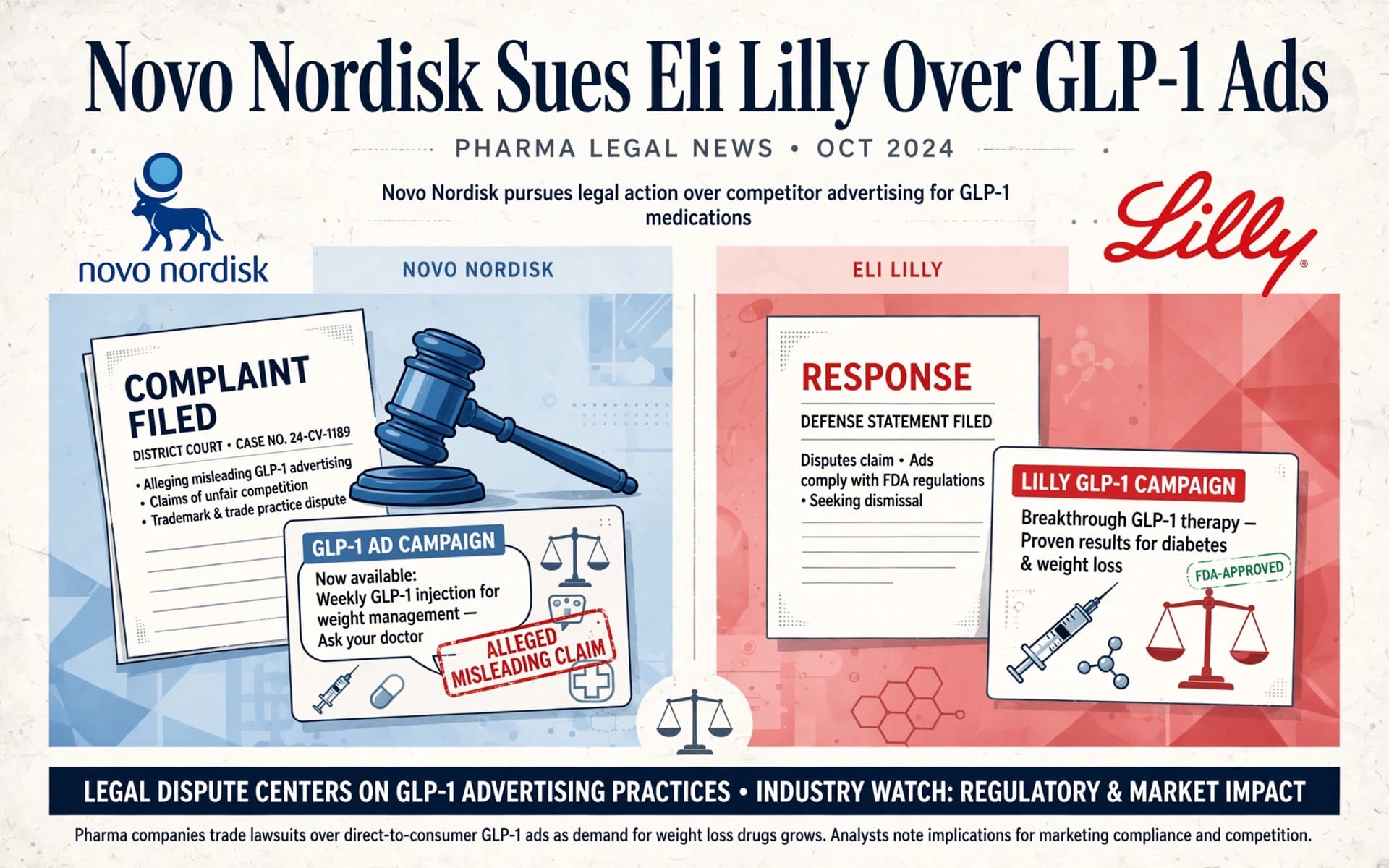
- Novo Nordisk has filed a lawsuit against Eli Lilly, alleging misleading advertising campaigns for its GLP-1 drugs.
- The lawsuit claims Eli Lilly's ads deprive consumers of truthful information about treatment options.
- Novo Nordisk's new high-dose version of Wegovy brings weight loss comparable to Eli Lilly's products.
Novo Nordisk, a leading pharmaceutical company, has taken a significant step in the ongoing battle for market share in the GLP-1 (glucagon-like peptide-1) receptor agonist market. The company has filed a lawsuit against Eli Lilly, alleging that its advertising campaigns for blockbuster obesity and diabetes drugs are designed to mislead consumers about their superior efficacy relative to Novo Nordisk's rival injections [1]. This move comes as Novo Nordisk seeks to protect its market share and reputation in the face of increasing competition from Eli Lilly and other players in the space.
Novo Nordisk Takes Aim at Eli Lilly's Advertising Practices
Novo Nordisk has specifically taken issue with nationwide ads that cite what it called 'outdated' clinical trials to compare the highest doses of Eli Lilly's medicines to lower doses of Novo Nordisk's drugs. This, according to Novo Nordisk, deprives consumers of the truthful, current, and complete information they need to make informed decisions about their available treatment options. The lawsuit highlights the need for accurate and transparent advertising in the pharmaceutical industry.
| Key Highlights | Details |
|---|---|
| Alleged misleading ads | Nationwide TV commercials comparing Eli Lilly's products to Novo Nordisk's lower-dose versions |
| Outdated clinical trials | Novo Nordisk claims Eli Lilly's ads cite trials that are no longer relevant to current market offerings |
| New high-dose version of Wegovy | Enters the market in March, bringing weight loss comparable to Eli Lilly's products |
The impact of this lawsuit will be substantial, as it challenges the advertising practices of a major player in the GLP-1 market. Novo Nordisk's new high-dose version of Wegovy, which entered the market in March, brings weight loss that's more comparable to Eli Lilly's products. This move is likely to be a key factor in the lawsuit, as Novo Nordisk seeks to demonstrate the superiority of its own products.
Why it Happened
So, why has Novo Nordisk taken this step? The answer lies in the company's desire to protect its market share and reputation in the face of increasing competition. With the entry of new players in the GLP-1 market, Novo Nordisk is seeking to differentiate itself and establish its products as the go-to choice for patients. By challenging Eli Lilly's advertising practices, Novo Nordisk is attempting to level the playing field and ensure that consumers have access to accurate and transparent information about treatment options.
- Novo Nordisk has a new high-dose version of its obesity injection, Wegovy, which entered the market in March and brings weight loss that's more comparable to Eli Lilly's products.
- Eli Lilly's advertising campaign deprives consumers of the truthful, current, and complete information they need to make informed decisions about their available treatment options.
- A recent study shows that the high-dose 7.2-milligram dose of Wegovy helped patients lose 47 pounds on average, which is 'clinically consistent' with Zepbound's weight loss in Eli Lilly's most recent rigorous trial on the drug.
- Eli Lilly has 'no basis to make these comparative claims' that its drugs are more effective, as no head-to-head trials have compared the highest doses of Wegovy and Zepbound currently available on the market.
The outcome of this lawsuit will be closely watched by the pharmaceutical industry, as it challenges the advertising practices of a major player in the GLP-1 market. The lawsuit highlights the need for accurate and transparent advertising in the pharmaceutical industry and sets a precedent for companies seeking to protect their market share and reputation.
Deal Structure
| Key Highlights | Details |
|---|---|
| Valuation of the lawsuit | Not disclosed |
| Financial damages sought | Not disclosed |
| Outcome of the lawsuit | Pending |
The valuation of Novo Nordisk's lawsuit against Eli Lilly is not disclosed, and the company is seeking financial damages for the alleged misleading advertising practices. The outcome of the lawsuit is pending, and it will be closely watched by the pharmaceutical industry.
Outlook
The lawsuit filed by Novo Nordisk against Eli Lilly highlights the need for accurate and transparent advertising in the pharmaceutical industry. As the GLP-1 market continues to evolve, companies will need to adapt their advertising practices to ensure that consumers have access to truthful and current information about treatment options. The outcome of this lawsuit will set a precedent for companies seeking to protect their market share and reputation in the face of increasing competition.
Frequently Asked Questions
What is the valuation of Novo Nordisk's lawsuit against Eli Lilly?
The valuation of Novo Nordisk's lawsuit against Eli Lilly is not disclosed.
How much financial damages is Novo Nordisk seeking?
Novo Nordisk is seeking financial damages for the alleged misleading advertising practices, but the exact amount is not disclosed.
What is the outcome of the lawsuit?
The outcome of the lawsuit is pending and will be closely watched by the pharmaceutical industry.