Key Takeaways
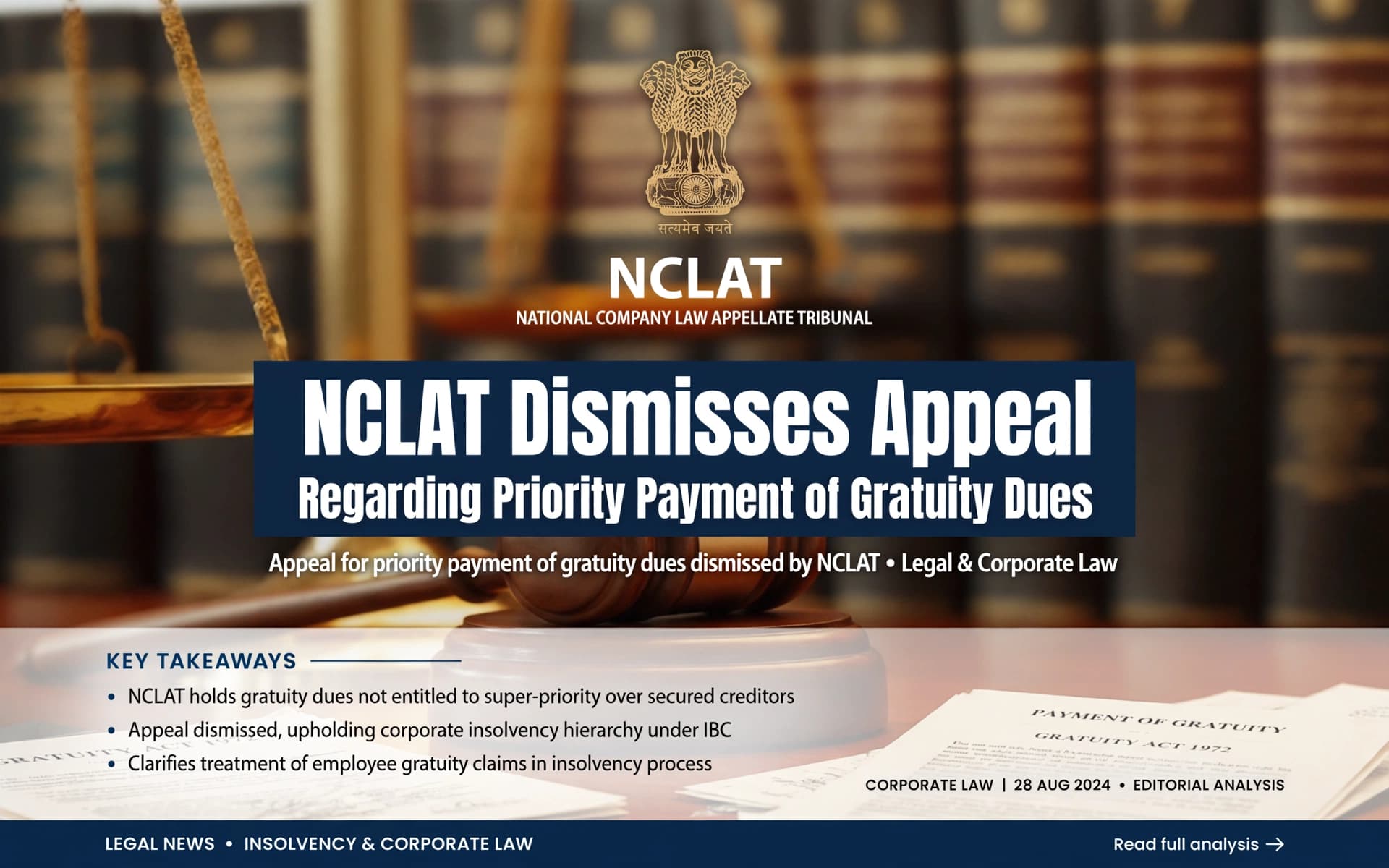
- The National Company Law Appellate Tribunal (NCLAT) dismissed an appeal regarding priority payment of gratuity dues, upholding an earlier order from the National Company Law Tribunal (NCLT).
- The appellate tribunal found the appeal misconceived and dismissed it, emphasizing that gratuity is a terminal benefit, not an insolvency resolution process cost.
- The ruling has significant implications for the Insolvency and Bankruptcy Code, particularly in relation to Section 53 and the Corporate Insolvency Resolution Process.
The NCLAT has dismissed an appeal regarding the priority payment of gratuity dues, upholding an earlier order from the NCLT. This ruling has significant implications for the Insolvency and Bankruptcy Code, particularly in relation to Section 53 and the Corporate Insolvency Resolution Process.
NCLAT Upholds NCLT Order
| Key Highlights | Details |
|---|---|
| NCLAT dismissed appeal | The appellate tribunal found the appeal misconceived and dismissed it. |
| Gratuity not an insolvency cost | The NCLAT emphasized that gratuity is a terminal benefit, not an insolvency resolution process cost. |
| Resolution plan to settle dues | The NCLAT ruled that such dues must instead be settled as per the company's approved resolution plan. |
| Significant for insolvency resolution | This ruling has significant implications for the Insolvency and Bankruptcy Code, particularly in relation to Section 53 and the Corporate Insolvency Resolution Process. |
The NCLAT's decision has far-reaching implications for companies undergoing insolvency resolution. The ruling clarifies that gratuity dues are not a priority cost in the insolvency resolution process, but rather a terminal benefit that must be settled as per the company's approved resolution plan.
Why it Happened
The NCLAT's decision was a result of the appellate tribunal's careful consideration of the facts and the law. The NCLAT found that the appeal was misconceived and that the earlier NCLT order was correct in its assessment of the gratuity dues.
- The NCLAT emphasized that gratuity is a terminal benefit, not an insolvency resolution process cost.
- The appellate tribunal found that the resolution professional had partially admitted the claim, later revising the gratuity component to Rs 52.82 lakh.
- The NCLAT's ruling has significant implications for the Insolvency and Bankruptcy Code, particularly in relation to Section 53 and the Corporate Insolvency Resolution Process.
- The decision also highlights the importance of carefully considering the facts and the law in insolvency resolution cases.
Deal Structure
| Key Highlights | Details |
|---|---|
| Subir Mukherje's claim | Subir Mukherje, who had served Duncans Industries for over 25 years, claimed over Rs 83.58 lakh in dues. |
| Resolution professional's revision | The resolution professional had partially admitted the claim, later revising the gratuity component to Rs 52.82 lakh. |
The NCLAT's decision has significant implications for the Insolvency and Bankruptcy Code, particularly in relation to Section 53 and the Corporate Insolvency Resolution Process. The ruling clarifies that gratuity dues are not a priority cost in the insolvency resolution process, but rather a terminal benefit that must be settled as per the company's approved resolution plan.
Broader Market Impact
- The NCLAT's decision has significant implications for companies undergoing insolvency resolution.
- The ruling clarifies that gratuity dues are not a priority cost in the insolvency resolution process, but rather a terminal benefit that must be settled as per the company's approved resolution plan.
- The decision also highlights the importance of carefully considering the facts and the law in insolvency resolution cases.
Outlook
The NCLAT's decision has significant implications for the Insolvency and Bankruptcy Code, particularly in relation to Section 53 and the Corporate Insolvency Resolution Process. The ruling clarifies that gratuity dues are not a priority cost in the insolvency resolution process, but rather a terminal benefit that must be settled as per the company's approved resolution plan. This decision is likely to have a significant impact on companies undergoing insolvency resolution and highlights the importance of carefully considering the facts and the law in such cases.
Frequently Asked Questions
What is the current status of Duncans Industries' insolvency resolution process?
The current status of Duncans Industries' insolvency resolution process is not explicitly stated in the NCLAT's decision. However, the decision suggests that the company's approved resolution plan will be used to settle the gratuity dues.