Key Takeaways
• Microsoft's revenue beats analyst estimates, with Azure cloud business reporting 43% growth. • Meta's shares slide 9% on missed earnings and revenue guidance. • Meta's free cash flow plunges 91% year-on-year to $784 million.
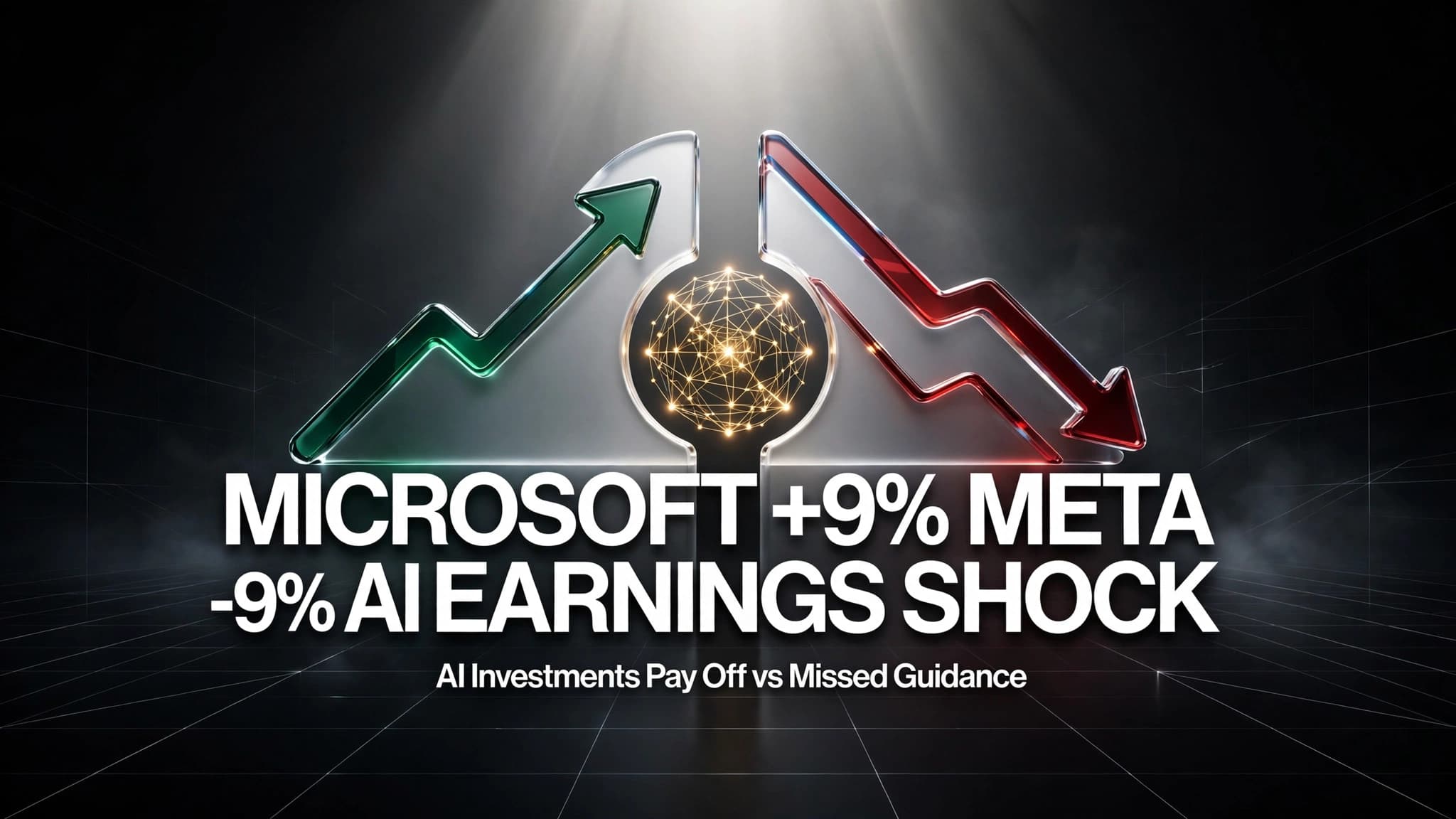
Microsoft's quarterly earnings have sent shockwaves through the tech industry, with the company's revenue exceeding analyst estimates and its Azure cloud business reporting a 43% growth. Meanwhile, Meta's shares have taken a hit, sliding 9% in extended trading on Wednesday after the company missed earnings and revenue guidance.
Microsoft's AI Investments Pay Off
| Key Highlights | Details |
|---|---|
| Revenue beats analyst estimates | $250 billion in revenue, exceeding expectations |
| Azure cloud business reports 43% growth | Cloud computing revenue reaches $20 billion |
| Microsoft 365 Copilot reaches 30 million paid seats | AI-powered productivity tool gains traction |
Microsoft's success can be attributed to its strategic investments in AI, particularly in its Azure cloud business. The company's AI-powered productivity tool, Microsoft 365 Copilot, has reached 30 million paid seats, further solidifying its position in the market. In contrast, Meta's struggles with AI investments have led to a decline in its shares.
Why Meta's Earnings Missed Expectations
- Meta's revenue guidance missed market expectations, with the company expecting revenue of between $61 billion and $64 billion.
- Meta's free cash flow plunged 91% year-on-year to $784 million.
- Meta CEO Mark Zuckerberg said the company is 'getting a lot of offers for compute at a significant premium'.
Meta's earnings miss can be attributed to several factors, including its struggles with AI investments. The company's revenue guidance missed market expectations, and its free cash flow plunged 91% year-on-year to $784 million. Meta CEO Mark Zuckerberg acknowledged the company's AI capacity dilemma, stating that it is 'getting a lot of offers for compute at a significant premium'. This suggests that Meta may begin leasing out its excess computing capacity to third parties, a move that could have significant implications for the industry.
Meta's AI Capacity Dilemma
| Key Highlights | Details |
|---|---|
| Meta's excess computing capacity | Estimated to be worth billions of dollars |
| Potential impact on industry | Leasing out capacity could lead to increased competition |
Meta's decision to lease out its excess computing capacity to third parties could have significant implications for the industry. This move could lead to increased competition, as other companies may follow suit. According to Forrester analyst Tracy Woo, 'the AI capacity dilemma is a major challenge for Meta, and its decision to lease out capacity will have far-reaching consequences'.
Outlook
The tech industry is bracing for a significant shift in the way companies approach AI investments. Microsoft's success with Azure cloud business and Microsoft 365 Copilot has sent a clear message that AI investments can pay off. Meanwhile, Meta's struggles with AI investments have led to a decline in its shares. As the industry continues to evolve, one thing is clear: companies that fail to adapt to the changing landscape will be left behind.
Frequently Asked Questions
What is the potential impact of Meta leasing out its excess computing capacity to third parties?
Meta's decision to lease out its excess computing capacity to third parties could lead to increased competition in the industry. This move could also have significant implications for the company's revenue and profitability.
How does Microsoft's success with Azure cloud business and Microsoft 365 Copilot compare to Meta's struggles with AI investments?
Microsoft's success with Azure cloud business and Microsoft 365 Copilot is a clear indication that AI investments can pay off. In contrast, Meta's struggles with AI investments have led to a decline in its shares.
What is the current state of Meta's free cash flow?
Meta's free cash flow has plunged 91% year-on-year to $784 million, a significant decline that has raised concerns about the company's financial health.
Related Articles: 5 Key Takeaways: Fed Holds Rates Steady, Meta Misses Earnings, and Chipotle Sees Sales Drop Meta's Enterprise AI Ambitions Extend Beyond Agents: Zuckerberg Microsoft Takes Aim at OpenAI and Anthropic with Cheaper AI Models Billions at Stake: 4 Tech Giants' AI Investment Boom