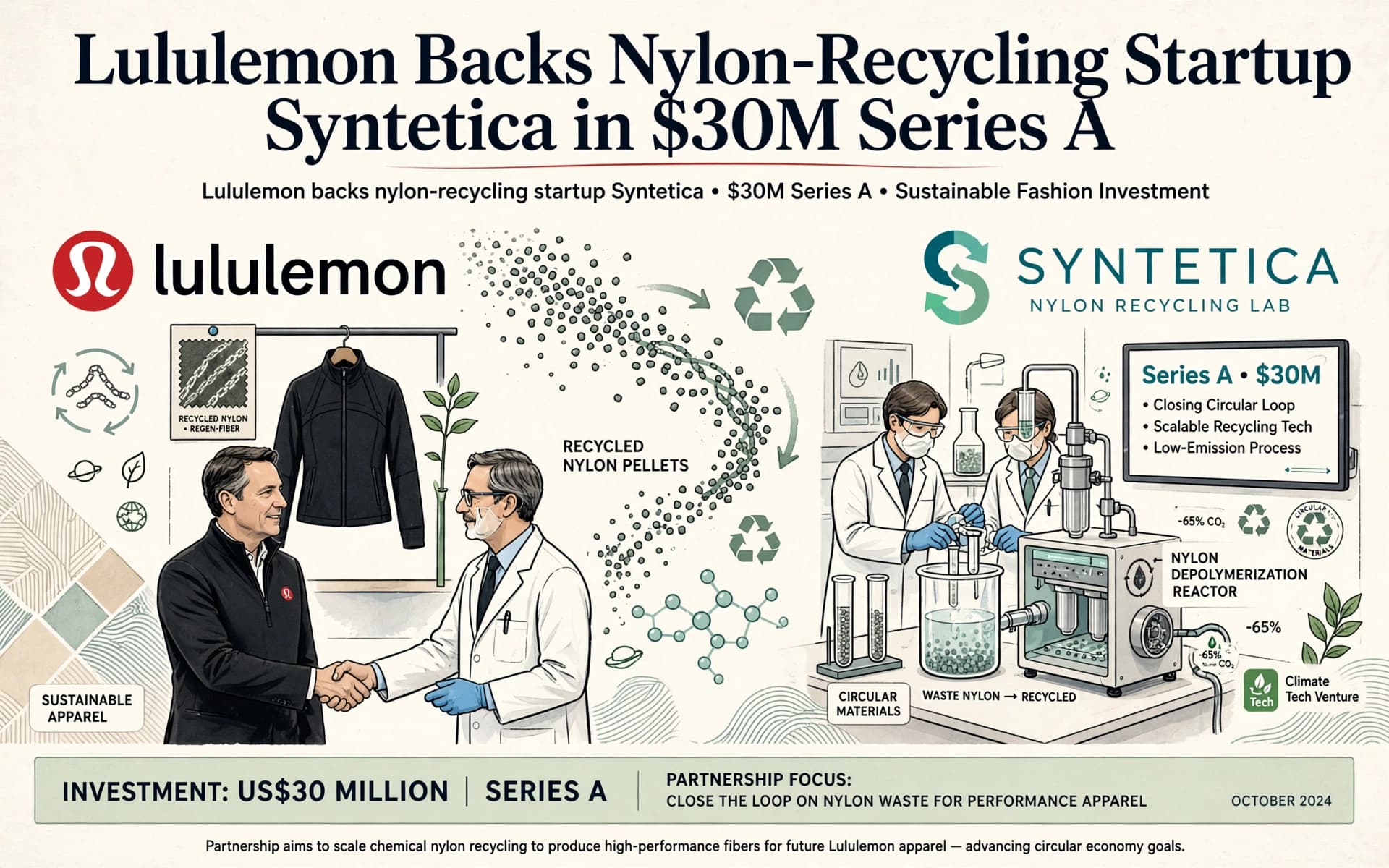
Lululemon, the Canadian athletic apparel giant, has made a significant investment in Syntetica, a startup pioneering a novel approach to recycling nylon. The $30 million Series A round, led by Lululemon, marks a major milestone for the fashion-tech startup, which has been making a name for itself in the industry with its innovative recycling technology.
Quick Explanation: Nylon is a type of synthetic polymer used extensively in clothing, textiles, and other applications. However, nylon waste has become a significant environmental concern, with millions of tons of nylon ending up in landfills and oceans each year.
Syntetica's CEO, Marco Bertone, a seasoned executive with a background in fashion and secondhand e-commerce, has been at the helm of the company since its inception. Bertone's expertise has been instrumental in securing partnerships with prominent brands like Lululemon, Victoria's Secret, and Etam, which have all recognized the potential of Syntetica's technology to reduce waste and promote sustainability in the fashion industry.
Under The Hood
Syntetica's recycling technology focuses on two types of nylon: Nylon 6 and Nylon 6,6. The startup's approach involves a proprietary process that enables the efficient recycling of these materials, which are commonly used in clothing and textiles. By developing a novel approach to recycling nylon, Syntetica aims to reduce the environmental impact of the fashion industry and provide a sustainable solution for brands looking to minimize their waste.
The Series A round was also backed by MAS Holdings, a large apparel manufacturer, which has a significant presence in the global fashion industry. This investment highlights the growing interest in sustainable fashion and the potential for innovative technologies like Syntetica's to transform the industry.
The Strategic Pivot
Syntetica's partnership with Lululemon is a significant endorsement of the startup's technology and its potential to drive positive change in the fashion industry. By investing in Syntetica, Lululemon is signaling its commitment to sustainability and its desire to reduce waste in its supply chain. This strategic move is likely to have a ripple effect across the industry, as other brands and manufacturers begin to take notice of Syntetica's innovative approach to recycling nylon.
Regulatory Headwinds
While Syntetica's technology has the potential to transform the fashion industry, the startup still faces significant regulatory hurdles. The European Union's Circular Economy Package sets ambitious targets for recycling and waste reduction, which Syntetica's technology is well-positioned to meet. However, the startup will need to navigate a complex regulatory landscape to ensure that its technology is compliant with EU regulations.
Competitive Landscape
Syntetica's competitors in the nylon recycling space include startups using enzymatic approaches to break down plastics, as well as chemical giant BASF, which has developed its own recycled nylon technology. While these competitors present a challenge to Syntetica's market share, the startup's innovative approach and partnerships with prominent brands like Lululemon give it a strong competitive advantage.
Conclusion
Lululemon's investment in Syntetica marks a significant milestone for the fashion-tech startup, which has been making a name for itself in the industry with its innovative recycling technology. As the fashion industry continues to grapple with the challenges of sustainability, Syntetica's technology is well-positioned to drive positive change and reduce waste in the supply chain. With its partnerships with prominent brands and its innovative approach to recycling nylon, Syntetica is poised to become a leader in the sustainable fashion space.