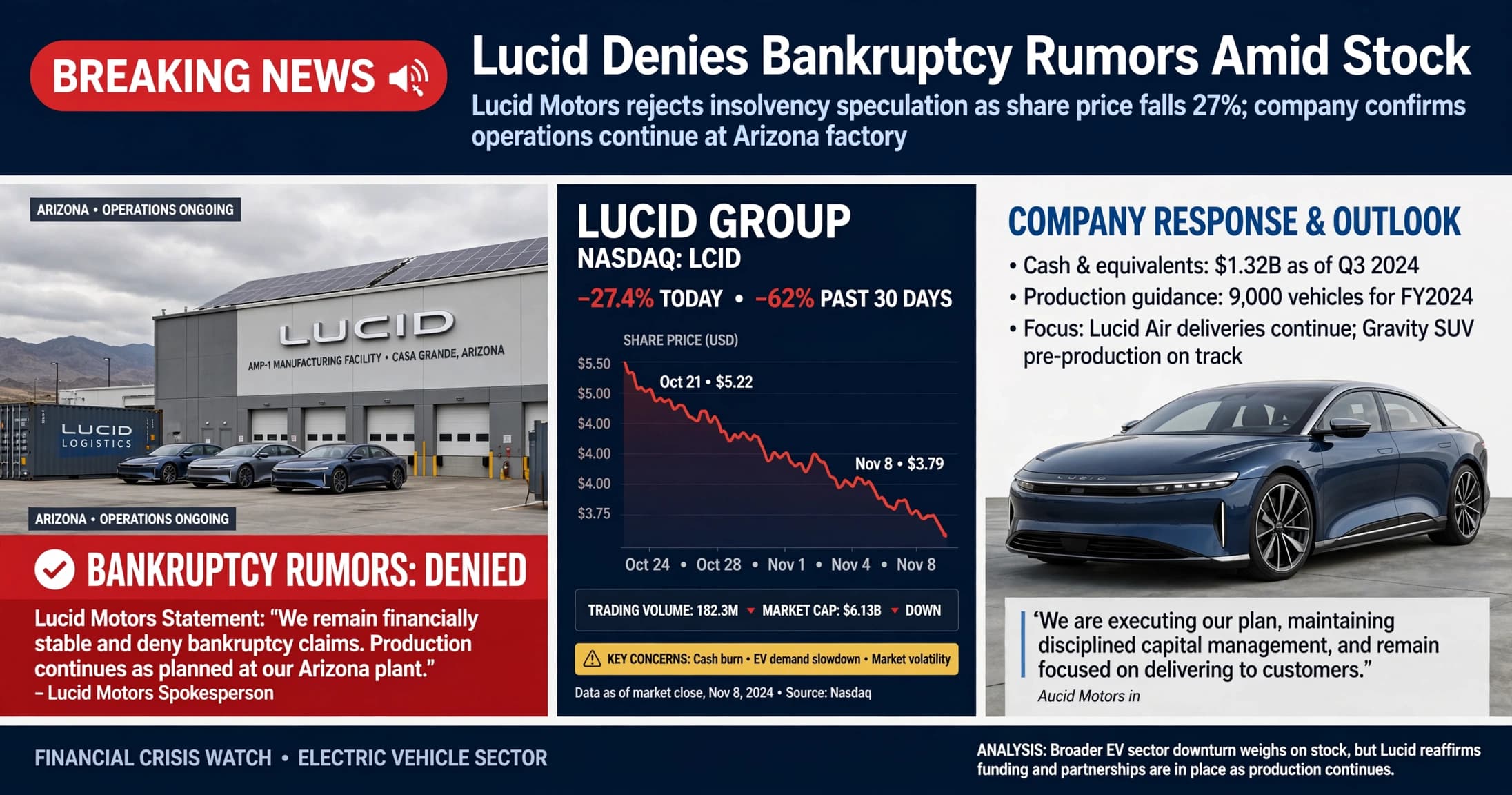
- Lucid stock trading was halted multiple times Tuesday due to volatility, with shares plummeting more than 40% at one point.
- The company denied bankruptcy rumors, stating they are "completely false."
- Lucid has sufficient liquidity to carry its operations well into next year, according to recent quarterly filings.
- The company is focusing on improving execution and positioning itself to realize the full potential of its technology and products.
Why This Matters
Lucid's stock plunge and subsequent denial of bankruptcy rumors have significant implications for the electric vehicle (EV) market and its investors. The company's struggles to adapt to changing regulations and slower-than-expected adoption of EVs have raised concerns about its viability.
What Happened
According to CNBC Economy, Lucid stock trading was halted for volatility multiple times Tuesday as shares plummeted more than 40% at one point. The stock recovered some of its intraday losses and closed the day 16% lower, trading for $4.62 a share. This significant decline has sparked rumors of bankruptcy, which Lucid has vehemently denied. In a statement, the company said, "the rumors are completely false."
Background
Lucid has been facing an increasingly challenging market amid slower-than-expected adoption of EVs and changing regulations under the Trump administration, including the elimination of a $7,500 federal incentive for purchasing an EV. The company has been heavily backed by Saudi Arabia's Public Investment Fund and has been working to improve its execution and operations. However, its recent struggles have raised concerns about its viability.
Timeline
- 2023: Lucid's new CEO Silvio Napoli announced a shake-up of the company's leadership team to simplify its structure.
- 2023: Lucid suspended its production guidance, citing the need to lower its elevated inventory of vehicles.
- 2023: Lucid laid off 18% of its U.S. workforce as part of a cost-savings plan.
- 2023: Lucid missed Wall Street expectations for second-quarter delivery results.
- 2023: Lucid's stock trading was halted for volatility multiple times Tuesday as shares plummeted more than 40% at one point.
Industry Impact
The EV market has been facing significant challenges in recent years, including slower-than-expected adoption and changing regulations. Lucid's struggles have raised concerns about the viability of the company and the industry as a whole. The elimination of the federal incentive for purchasing an EV has also had a significant impact on the market, with many companies struggling to adapt to the new regulations.
What Happens Next
Lucid's focus on improving execution and positioning itself to realize the full potential of its technology and products is crucial to its survival. The company has sufficient liquidity to carry its operations well into next year, according to recent quarterly filings. However, the implications of the changing regulations under the Trump administration and the slower-than-expected adoption of EVs remain to be seen.
Key Takeaways
- Lucid's stock trading was halted multiple times Tuesday due to volatility, with shares plummeting more than 40% at one point.
- The company denied bankruptcy rumors, stating they are "completely false."
- Lucid has sufficient liquidity to carry its operations well into next year, according to recent quarterly filings.
- The company is focusing on improving execution and positioning itself to realize the full potential of its technology and products.
- The EV market has been facing significant challenges in recent years, including slower-than-expected adoption and changing regulations.