Key Takeaways
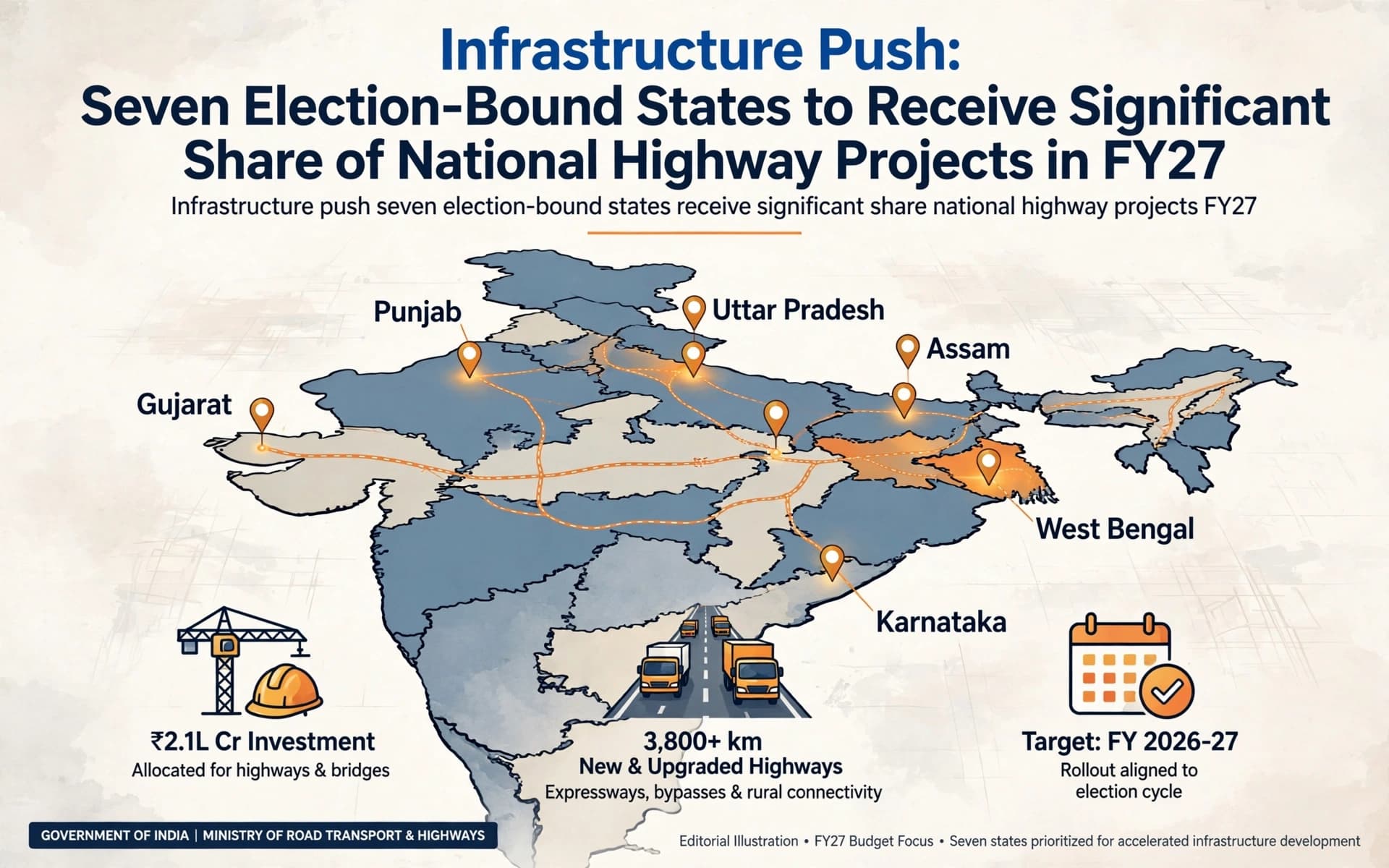
- Seven states facing 2027 assembly elections will account for 24.1% of total national highway construction in FY27.
- The Ministry of Road Transport and Highways has set an internal target to award 12,000 km of roads this fiscal year.
- Infrastructure spending in these specific regions is expected to rise, with 2,238 km of highways scheduled for construction.
As the 2027 assembly elections approach, the landscape of Indian infrastructure development is shifting toward key political battlegrounds. The Ministry of Road Transport and Highways has signaled a significant deployment of capital into specific regions. This move aligns closely with the electoral cycles of several critical states.
This strategic allocation of resources highlights the intersection of large-scale engineering projects and political cycles within the broader Economy & Policy framework. The surge in highway development is a driver of regional economic activity. By concentrating construction efforts in states like Uttar Pradesh and Gujarat, the central government is positioning infrastructure as a primary pillar of regional development ahead of major polls.
Strategic Allocation for Election-Bound States
The distribution of upcoming highway projects shows a concentration in states where political competition is expected to be intense.
| Metric | FY27 Projection |
|---|---|
| Total Highway Construction in Target States | 24.1% of National Total |
| Total Highway Projects Awarded in Target States | 18.3% of National Total |
| Total Kilometers to be Awarded (7 States) | 2,204 km |
| Total Kilometers to be Built (7 States) | 2,238 km |
This concentrated investment ensures that the seven states facing 2027 elections receive a significant share of the national infrastructure pipeline.
Drivers of Infrastructure Acceleration
The current push for highway expansion is driven by a combination of national targets and the specific needs of high-growth corridors.
- The Ministry of Road Transport and Highways has set a target to award 12,000 km of roads this fiscal year.
- Construction targets for the current fiscal year are set at 9,700 km to meet long-term logistics goals.
- The National Highways & Infrastructure Development Corporation Ltd (NHIDCL) is tasked with awarding 1,200 km and constructing 850 km.
- Political considerations play a role, as the BJP-led government currently holds power in five of the seven election-bound states.
The scale of these projects suggests a coordinated effort to bolster connectivity in states including Uttar Pradesh, Gujarat, Punjab, Himachal Pradesh, Uttarakhand, Manipur, and Goa.
Project Scope and Regional Breakdown
The deployment of resources is being managed through multiple agencies to ensure that both arterial highways and regional connectors are addressed.
| Agency | Award Target (km) | Construction Target (km) |
|---|---|---|
| Ministry (Total) | 12,000 | 9,700 |
| NHIDCL | 1,200 | 850 |
This dual-track approach allows for both national corridors and specialized regional networks to be developed simultaneously.
Broader Economic Implications
The acceleration of highway construction has ripple effects across various sectors of the Indian economy.
- Increased demand for cement, steel, and heavy machinery will likely stimulate industrial production.
- Enhanced connectivity in states like Manipur and Uttarakhand will improve market access for rural producers.
- The influx of capital into these regions will likely influence local Startups & Funding ecosystems by improving logistics for e-commerce and manufacturing.
The scale of these projects is an indicator of the government's commitment to physical connectivity as a means of driving GDP growth.
Outlook
The upcoming fiscal year will serve as a critical test for the Ministry of Road Transport and Highways. The ability to meet the 9,700 km construction target will depend heavily on the efficiency of land acquisition and the speed of environmental clearances.
As these projects move from the planning phase to active construction, the focus will shift toward the logistical capacity of contractors to handle the influx of work. However, several variables remain uncertain.
It remains unclear what the specific timeline for 'priority approvals' will be for these election-bound states. Furthermore, the market will be watching to see how the increased awarding of roads—which is 71.4% higher than last year—will impact the overall national budget allocation and whether it will lead to inflationary pressures in construction materials.
Ultimately, the success of this infrastructure push will be measured by whether the 2,238 km of new roads in the seven target states can be completed within the projected timeframe. If successful, the connectivity improvements could provide a boost to regional economies, regardless of the political outcomes in the 2027 elections.
Frequently Asked Questions
Which states are receiving the most highway projects?
The seven states facing 2027 elections—Uttar Pradesh, Gujarat, Punjab, Himachal Pradesh, Uttarakhand, Manipur, and Goa—will receive 18.3% of all national highway projects awarded this year.
How much total highway construction is planned for FY27?
The Ministry aims to construct a total of 9,700 km of highways across the country during this fiscal period.
What is the role of the NHIDCL in this expansion?
The National Highways & Infrastructure Development Corporation Ltd (NHIDCL) is responsible for awarding 1,200 km of highways and constructing 850 km of highways.