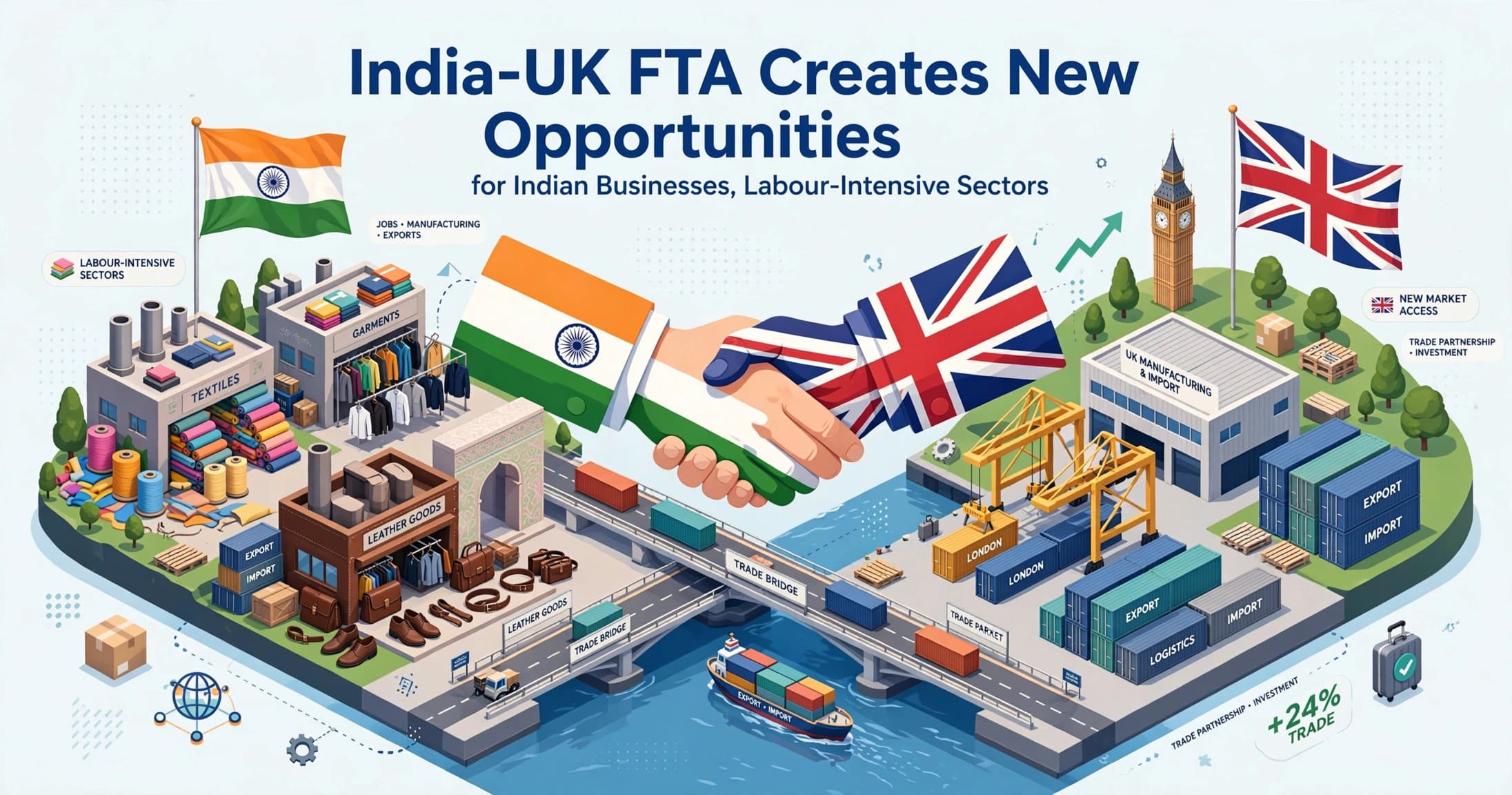
- India and the UK have operationalized a free trade agreement, according to ET Economy.
- The pact grants zero-duty access for nearly 99% of India's exports, according to ET Economy.
- Labour-intensive sectors like textiles and leather will see enhanced competitiveness, according to ET Economy.
- A social security agreement has also been operationalized from July 15, according to ET Economy.
- The agreement provides greater certainty and transparent rules for businesses, according to ET Economy.
Why This Matters
The India-UK free trade agreement is a significant development for Indian businesses, particularly those in labour-intensive sectors. The pact offers new opportunities for growth and expansion into the UK market, which is expected to benefit Indian exporters. According to Chandrajit Banerjee, Director-General of the Confederation of Indian Industry (CII), the agreement will help Indian businesses tap into the UK's large and sophisticated market.
What Happened
According to ET Economy, India and the UK operationalized a free trade agreement on Wednesday, marking a significant milestone in bilateral trade relations. The pact grants zero-duty access for nearly 99% of India's exports, making it easier for Indian businesses to export goods to the UK. Labour-intensive sectors like textiles and leather will see enhanced competitiveness, according to ET Economy. A social security agreement has also been operationalized from July 15, according to ET Economy. This agreement will facilitate the movement of workers between the two countries and provide greater certainty and transparent rules for businesses.
Background
The India-UK free trade agreement is the culmination of several years of negotiations between the two countries. The agreement is expected to boost bilateral trade and investment between India and the UK, which has been growing steadily in recent years. According to Anant Goenka, President of the Federation of Indian Chambers of Commerce and Industry (FICCI), the agreement will help Indian businesses tap into the UK's large and sophisticated market. The agreement is also expected to promote India's participation in global trade and investment networks.
Timeline
- 2023: India and the UK begin negotiations on a free trade agreement.
- 2024: The two countries sign the free trade agreement.
- 2024: The pact is ratified by both countries.
- 2024: The agreement comes into effect.
Industry Impact
The India-UK free trade agreement is expected to have a significant impact on various industries in India, particularly those in labour-intensive sectors. The pact will make it easier for Indian businesses to export goods to the UK, which is expected to boost exports and create new opportunities for growth and expansion. According to ET Economy, the agreement will also promote India's participation in global trade and investment networks.
Implementation Roadmap
The implementation of the India-UK free trade agreement will be a gradual process. The two countries will need to work together to establish a framework for the agreement's implementation. This will involve setting up a mechanism for the resolution of disputes and establishing a system for monitoring trade flows. According to ET Economy, the agreement will promote India's participation in global trade and investment networks.
Key Takeaways
- The India-UK free trade agreement offers new opportunities for Indian businesses, particularly those in labour-intensive sectors.
- The pact grants zero-duty access for nearly 99% of India's exports.
- Labour-intensive sectors like textiles and leather will see enhanced competitiveness.
- A social security agreement has also been operationalized from July 15.
- The agreement provides greater certainty and transparent rules for businesses.