Key Takeaways
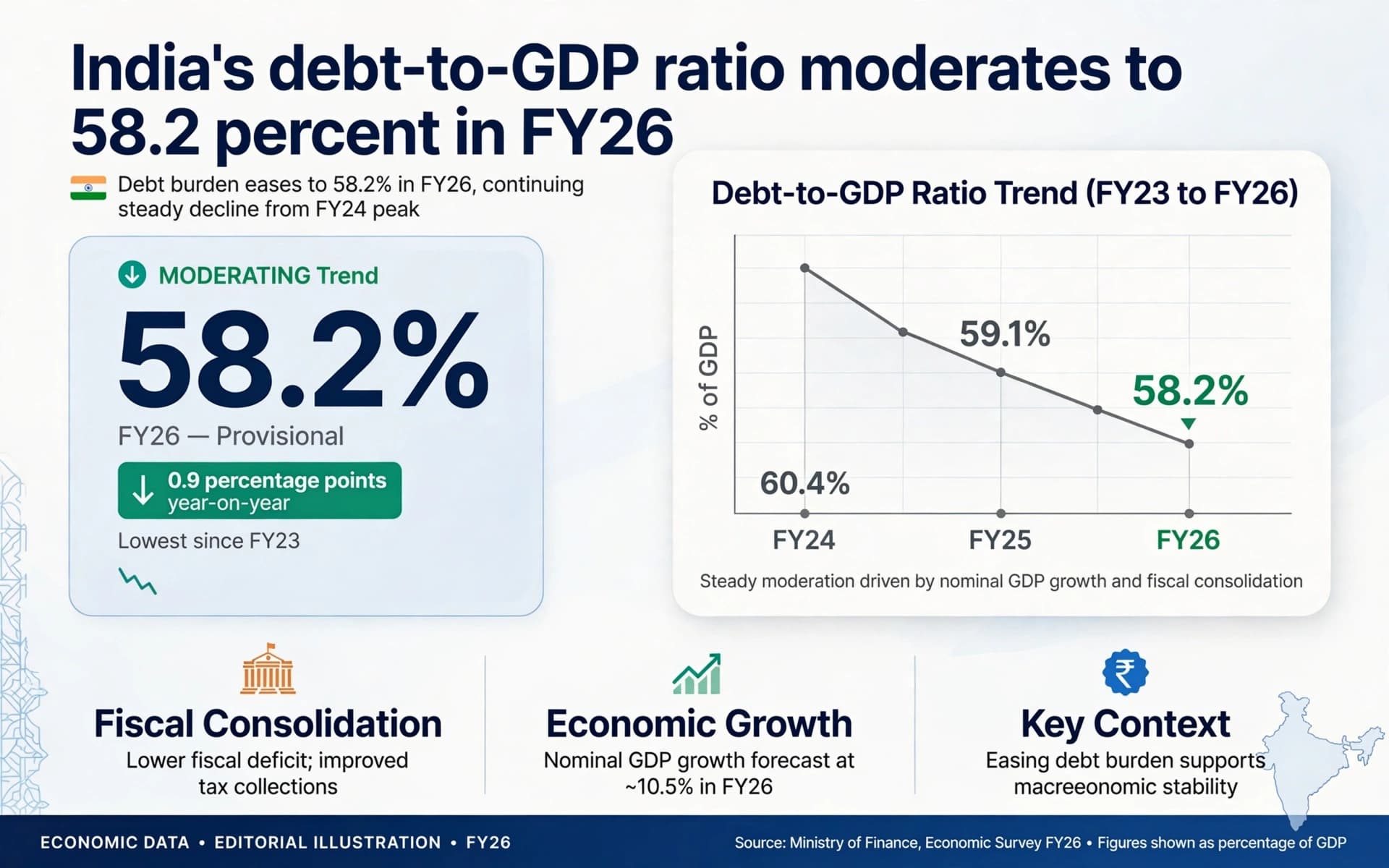
- India's debt-to-GDP ratio moderates to 58.2 percent in FY26, a notable improvement from previous years.
- The government's interest payments have declined substantially since the Covid-19 pandemic, indicating a positive trend.
- Effective capital expenditure for FY27 exceeds fresh debt receipts, suggesting a more sustainable fiscal path.
As the Indian economy continues to navigate the complexities of post-pandemic growth, the latest data on the country's debt-to-GDP ratio has brought some welcome relief. According to official figures, India's debt-to-GDP ratio has moderated to 58.2 percent in FY26, marking a notable improvement from previous years. This development is particularly noteworthy given the government's efforts to contain fiscal deficits and promote sustainable growth.
Debt-to-GDP Ratio Moderates
| Key Highlights | Details |
|---|---|
| Debt-to-GDP ratio | 58.2% |
| Central government debt | Rs 228.27 lakh crore |
| Capital expenditure | Rs 44.03 lakh crore (FY21-FY26) |
The moderation in debt-to-GDP ratio is a testament to the government's commitment to fiscal discipline. This improvement is also reflected in the decline in interest payments, which have significantly reduced since the Covid-19 pandemic. The government's effective capital expenditure for FY27 exceeds fresh debt receipts, indicating a more sustainable fiscal path.
Reasons Behind the Improvement
The government's efforts to contain fiscal deficits and promote sustainable growth have been instrumental in moderating the debt-to-GDP ratio. Some key factors contributing to this improvement include:
- The government's focus on capital expenditure, which has increased significantly between FY21 and FY26, reaching Rs 44.03 lakh crore.
- The decline in interest payments, which has reduced the burden on the government's finances.
- The government's efforts to enhance revenue collection and reduce non-essential expenditure.
Deal Structure and Key Features
| Key Highlights | Details |
|---|---|
| FRBM | Fiscal Responsibility and Budget Management Act |
| PM GatiShakti National Master Plan | National Logistics Policy |
| PM GatiShakti Public Platform | Digital platform for logistics and infrastructure development |
The government's initiatives, including the FRBM, PM GatiShakti National Master Plan, and the National Logistics Policy, aim to enhance revenue collection, reduce non-essential expenditure, and promote infrastructure development.
Broader Market Impact
The moderation in debt-to-GDP ratio has significant implications for the Indian economy. Some key takeaways include:
- Improved credit ratings: The moderation in debt-to-GDP ratio is likely to improve India's credit ratings, making it more attractive to foreign investors.
- Reduced interest rates: The decline in interest payments is likely to reduce interest rates, making borrowing more affordable for individuals and businesses.
- Enhanced investor confidence: The government's commitment to fiscal discipline is likely to enhance investor confidence, promoting economic growth and job creation.
Outlook
The moderation in debt-to-GDP ratio is a welcome development for the Indian economy. However, the government must continue to focus on fiscal discipline and promote sustainable growth to ensure long-term economic stability. As the economy continues to navigate the complexities of post-pandemic growth, it is essential to monitor the debt-to-GDP ratio and take corrective measures to prevent any potential risks.
Frequently Asked Questions
What is the valuation of the debt burden in FY27?
According to official figures, the valuation of the debt burden in FY27 is estimated to be Rs 228.27 lakh crore.
What is the exact amount of fresh debt receipts in FY27?
The exact amount of fresh debt receipts in FY27 is not disclosed in the official figures.
How does the PM GatiShakti National Master Plan contribute to sustainable growth?
The PM GatiShakti National Master Plan aims to enhance revenue collection, reduce non-essential expenditure, and promote infrastructure development, contributing to sustainable growth.