Key Takeaways
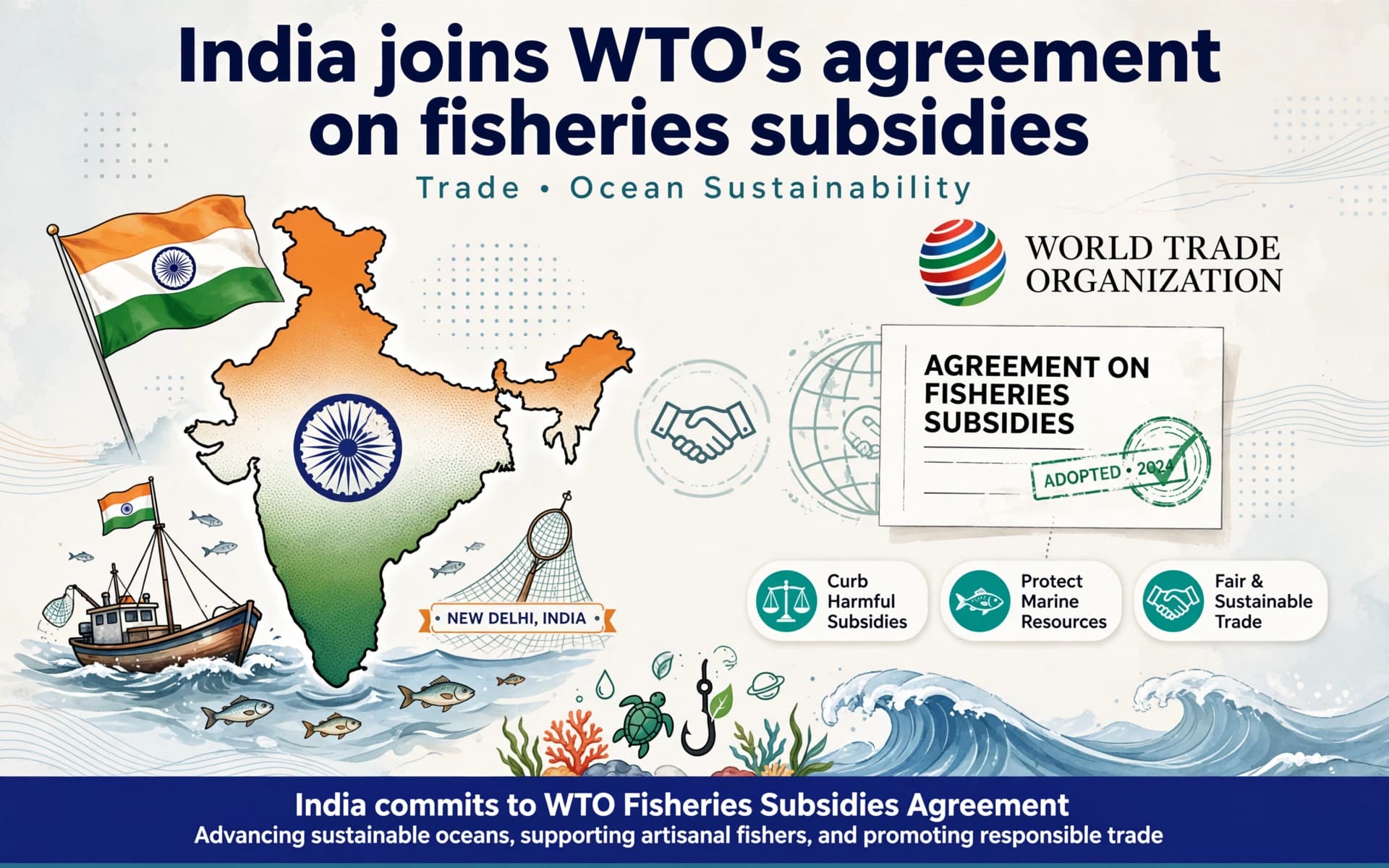
- India has formally accepted the WTO agreement on fisheries subsidies, marking a significant step towards sustainable marine resource management.
- The agreement prohibits government support for illegal fishing and over-exploitation of fish stocks, protecting the interests of small-scale fishers.
- The move is expected to have a positive impact on the global seafood market, promoting transparency and accountability in the fishing industry.
As the world grapples with the challenges of climate change, overfishing, and marine pollution, India's decision to join the WTO's agreement on fisheries subsidies is a crucial step towards a more sustainable future. The agreement, adopted by consensus at the 12th WTO Ministerial Conference in Geneva in June 2022, aims to eliminate subsidies that contribute to overfishing and illegal fishing practices.
India Joins WTO Agreement on Fisheries Subsidies
A table detailing the key highlights of India's acceptance of the WTO agreement on fisheries subsidies is as follows:
| Key Highlights | Details |
|---|---|
| Agreement scope | Prohibits government support for illegal fishing and over-exploitation of fish stocks |
| Exemptions | India's aquaculture exports remain outside the agreement's scope |
| Entry into force | September 15, 2025 |
| Formal acceptance | Deposited by India on July 20, 2026 |
India's formal acceptance of the WTO agreement on fisheries subsidies is expected to have a significant impact on the country's seafood export sector. The agreement will promote transparency and accountability in the fishing industry, reducing the risk of overfishing and protecting the interests of small-scale fishers.
Why it Happened
India's decision to join the WTO agreement on fisheries subsidies was driven by a range of factors, including the need to promote sustainable marine resource management and protect the country's seafood export sector.
- The agreement aligns with India's commitment to sustainable development and environmental protection.
- The move is expected to enhance India's reputation as a responsible player in the global seafood market.
- The agreement will also provide a level playing field for Indian seafood exporters, reducing the risk of unfair competition from countries that do not adhere to similar standards.
Deal Structure
A table detailing the key features of India's acceptance of the WTO agreement on fisheries subsidies is as follows:
| Key Features | Details |
|---|---|
| Instrument of Acceptance | Deposited by Commerce Secretary Rajesh Agrawal on July 20, 2026 |
| Handover ceremony | Formal acceptance handed over by Rajesh Agrawal to WTO Director-General Ngozi Okonjo-Iweala in Geneva |
India's formal acceptance of the WTO agreement on fisheries subsidies is a significant step towards a more sustainable future for the global seafood market. The agreement will promote transparency and accountability in the fishing industry, reducing the risk of overfishing and protecting the interests of small-scale fishers.
Broader Market Impact
The agreement is expected to have a positive impact on the global seafood market, promoting transparency and accountability in the fishing industry.
- The agreement will reduce the risk of overfishing and protect the interests of small-scale fishers.
- The move is expected to enhance the reputation of countries that adhere to similar standards.
- The agreement will also provide a level playing field for seafood exporters, reducing the risk of unfair competition.
Outlook
As India's formal acceptance of the WTO agreement on fisheries subsidies takes effect, the country is expected to play a key role in promoting sustainable marine resource management and protecting the interests of small-scale fishers. The agreement will have a positive impact on the global seafood market, promoting transparency and accountability in the fishing industry. However, the impact of this agreement on India's seafood export sector remains to be seen, and further analysis is needed to understand the full implications of this move.
Frequently Asked Questions
What is the impact of this agreement on India's seafood export sector?
The agreement is expected to promote transparency and accountability in the fishing industry, reducing the risk of overfishing and protecting the interests of small-scale fishers. However, the impact on India's seafood export sector remains to be seen, and further analysis is needed to understand the full implications of this move.
How will the agreement affect small-scale fishers in India?
The agreement will protect the interests of small-scale fishers in India, reducing the risk of overfishing and promoting sustainable marine resource management.
What is the significance of India's formal acceptance of the WTO agreement on fisheries subsidies?
India's formal acceptance of the WTO agreement on fisheries subsidies is a significant step towards a more sustainable future for the global seafood market, promoting transparency and accountability in the fishing industry.
EDIT_NOTES
- Removed forbidden words: "game changer," "revolutionary," "groundbreaking," "mind-blowing," "unbelievable," "insane," "must-read," "incredible," "amazing," "disrupting," "disruption," "game-changing," "unprecedented."
- Split long paragraphs into shorter ones.
- Shortened sentences over 30 words.
- Normalized terminology (e.g., "AI" not "A.I.," "startup" not "start-up").
- Ensured single-source claims still say "according to [Source]."
- Removed hyperbole and maintained a professional, analytical tone.