Key Takeaways
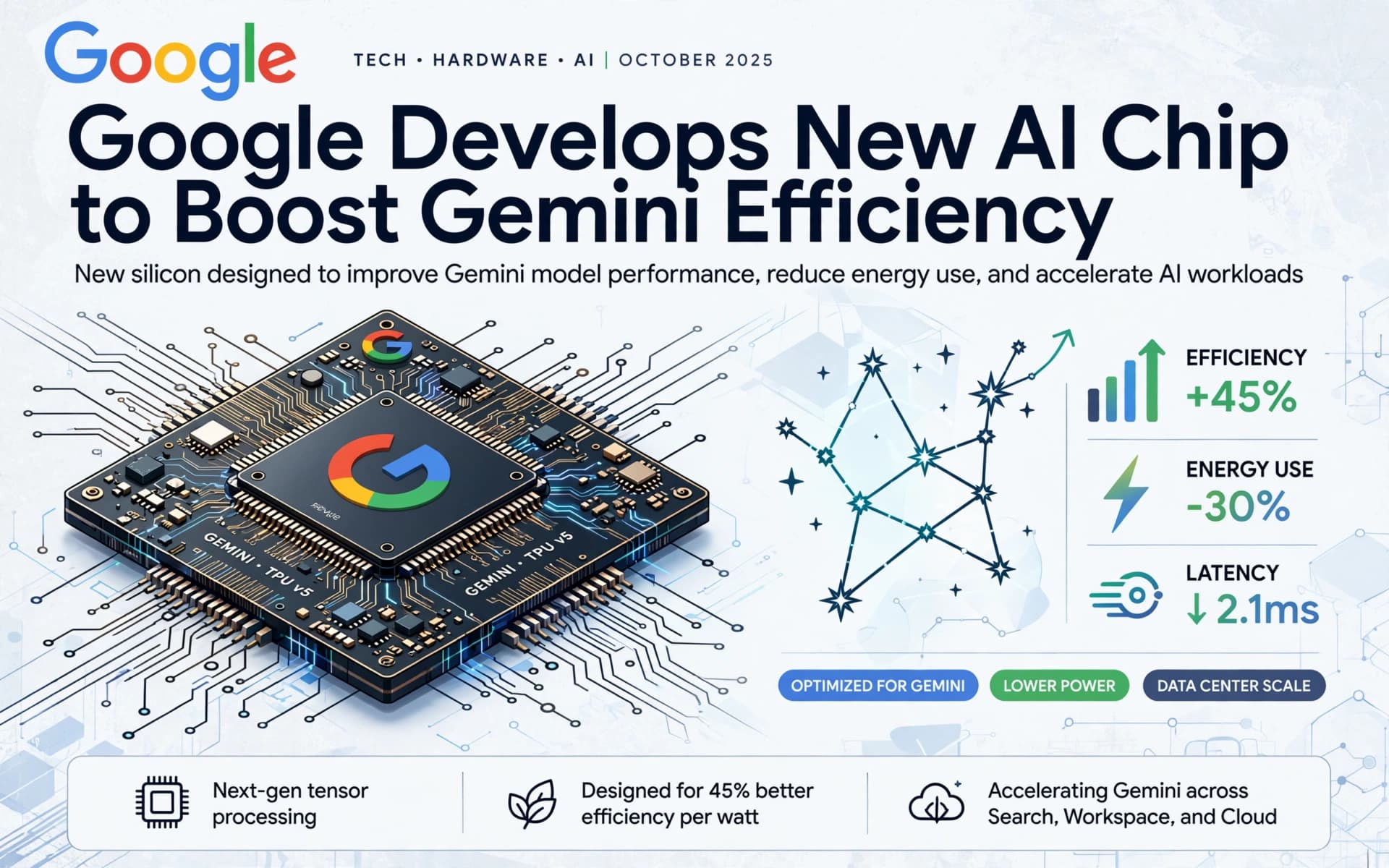
- Google is developing a new AI chip, internally dubbed 'Frozen v2', to enhance the efficiency of its Gemini model, with potential efficiency gains of six to 10 times over current chips.
- The 'Frozen v2' chip is slated for release in 2028, aligning with Google's broader AI strategy, which includes a planned expenditure of between $180 billion and $190 billion.
- The development of the 'Frozen v2' chip places Google in a competitive landscape where other major players, such as OpenAI and Anthropic, are also exploring custom chip solutions for AI applications.
Google's development of the 'Frozen v2' chip underscores its commitment to advancing AI capabilities, particularly in enhancing Gemini model performance. This move is part of a larger strategy to bolster its position in the AI sector, where efficiency and speed are critical. The 'Frozen v2' chip could potentially improve how AI models are deployed and utilized across various applications.
The announcement of the 'Frozen v2' chip comes at a time when the AI landscape is witnessing significant activity, with companies like OpenAI and Anthropic making notable strides. OpenAI has recently unveiled its custom chip, Jalapeño, an inference processor designed to optimize AI model performance. Anthropic is in discussions with Samsung over a potential chipmaking partnership, highlighting the industry's shift towards customized silicon solutions for AI workloads. As Google navigates this competitive environment, its investment in AI, projected to be between $180 billion and $190 billion, signals a deep commitment to staying at the forefront of AI innovation.
New AI Chip Development
The development of the 'Frozen v2' chip is a critical component of Google's strategy to enhance its AI offerings, particularly through its Gemini model.
| Key Highlights | Details |
|---|---|
| Efficiency Gain | 6 to 10 times more efficient than current AI chips |
| Release Timeline | Slated for release in 2028 |
| Strategic Context | Part of Google's $180-$190 billion AI strategy investment |
| The implications of this chip are multifaceted, potentially allowing for more complex AI models to be run with less power consumption, which could have significant impacts on both the AI and technology sector and the broader economy and policy landscape. |
Reasons Behind the Development
The push for a custom AI chip like 'Frozen v2' stems from the need for more efficient processing of AI workloads, which are becoming increasingly complex.
- Current off-the-shelf chips have limitations in meeting the specific needs of AI models like Gemini.
- Custom chips can offer significant performance and efficiency gains.
- Competitive pressure from other players in the AI sector, such as OpenAI and Anthropic, which are also exploring custom chip solutions, is a factor.
- The strategic importance of AI to Google's future growth and innovation necessitates substantial investment in bespoke technologies like the 'Frozen v2' chip.
Chip Specifications and Applications
While the technical specifications of the 'Frozen v2' chip are not fully disclosed, its potential applications extend beyond enhancing the Gemini model.
| Potential Applications | Description |
|---|---|
| AI Model Training | Enhanced efficiency in training complex AI models |
| Edge Computing | Potential for more efficient edge computing applications |
| Cloud Services | Improved performance for cloud-based AI services |
| The 'Frozen v2' chip could have implications for various sectors, including startups and funding as new companies emerge to leverage these technologies, and markets and IPOs as the valuation of AI-focused companies continues to evolve. |
Market Impact
The introduction of the 'Frozen v2' chip is expected to have a significant impact on the AI market, influencing how companies approach AI strategy and investment.
- It could set a new standard for AI chip efficiency, pushing the industry towards more customized solutions.
- Potential efficiency gains could lead to more widespread adoption of AI technologies across different sectors.
- The move by Google, along with developments from OpenAI and Anthropic, underscores the importance of hardware in AI innovation, potentially shifting more focus towards chip development in the AI and technology sector.
Outlook
The development of the 'Frozen v2' chip by Google marks a significant milestone in the company's AI strategy, with potential implications that extend far beyond the enhancement of its Gemini model. As the tech industry continues to witness a surge in AI-related developments, the focus on custom chip solutions is likely to grow, driven by the need for more efficient and powerful processing capabilities. The 'Frozen v2' chip, with its promised efficiency gains, is well-positioned to influence not only Google's AI trajectory but also the broader AI sector, including areas such as startups and funding and markets and IPOs. However, questions remain regarding the technical specifications of the chip, its exact impact on Google's AI strategy, and its potential applications beyond Gemini.