Key Takeaways
- Fertiliser vessels are stranded at Indian ports, hindering crop nutrient supplies.
- Port congestion and supply chain issues are delaying crucial fertiliser dispatches.
- Industry executives express concerns over potential shortages affecting the kharif sowing season.
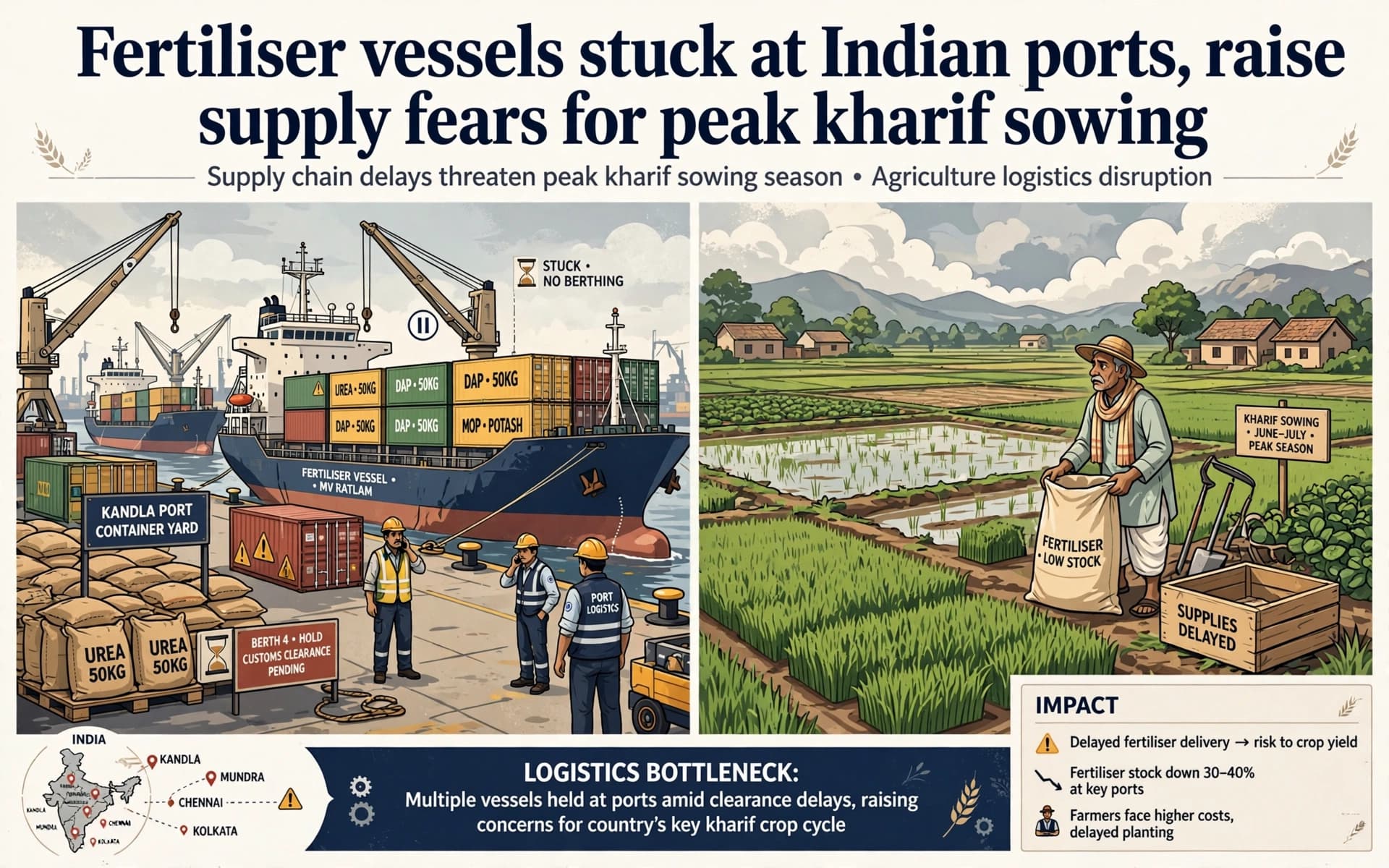
The Indian fertiliser market is facing a crisis as vessels carrying essential crop nutrients are stuck at ports, raising concerns over the timely distribution of these critical inputs. The situation has been exacerbated by the West Asia crisis, which has led to rerouting of vessels and further delayed fertiliser dispatches. As the kharif sowing season gains momentum, the industry is bracing for potential shortages.
Fertiliser Vessels Stranded at Indian Ports
| Key Highlights | Details |
|---|---|
| Two vessels stuck at Kandla Port | 1 vessel carrying 60,000 tonnes of DAP/NPK, 1 vessel carrying 7,000 tonnes of urea |
| Vessels waiting for berth since July 14 | Delayed fertiliser dispatches due to port congestion and supply chain issues |
| Impact on kharif sowing season | Potential shortages of fertilisers, affecting crop yields and farmer incomes |
The situation at Kandla Port is critical, with two vessels stuck since July 14. The vessels are carrying essential fertilisers, including DAP/NPK and urea, which are critical for crop growth. The delays in fertiliser dispatches are likely to have a significant impact on the kharif sowing season.
Why it Happened
- The West Asia crisis and rerouting of vessels have contributed to significant delays in fertiliser dispatches.
- Port congestion and supply chain issues are further exacerbating the situation.
- Industry executives express concerns over potential shortages affecting the kharif sowing season.
- DAP availability remains tight due to constrained global supplies of ammonia and sulphur.
- Urea supplies remain comfortable for the ongoing kharif season.
The West Asia crisis has led to rerouting of vessels, which has further delayed fertiliser dispatches. Port congestion and supply chain issues are also contributing to the situation. Industry executives are expressing concerns over potential shortages affecting the kharif sowing season.
Deal Structure
| Key Highlights | Details |
|---|---|
| Current status of fertiliser vessels | Stranded at Indian ports, awaiting berth |
| Impact on kharif sowing season | Potential shortages of fertilisers, affecting crop yields and farmer incomes |
| Government measures to prevent shortages | Not yet announced |
The government has not yet announced any measures to prevent shortages of fertilisers. The situation at Indian ports is critical.
Outlook for the Kharif Sowing Season
- The area sown has reached nearly 60% of the normal level by July 17, up from 48% on July 10, and 32% on July 5.
- Industry executives express concerns over potential shortages affecting the kharif sowing season.
- The situation at Indian ports is critical, with vessels stuck and awaiting berth.
The kharif sowing season is gaining momentum, with the area sown reaching nearly 60% of the normal level. However, the situation at Indian ports is critical, and the industry is bracing for potential shortages affecting crop yields and farmer incomes.
Frequently Asked Questions
What is the current status of the fertiliser vessels stuck at Indian ports?
According to industry sources, the vessels are stranded at Indian ports, awaiting berth. The situation at Kandla Port is critical, with two vessels stuck since July 14.
How will the delays in fertiliser dispatches affect the kharif sowing season?
The delays in fertiliser dispatches are likely to have a significant impact on the kharif sowing season, potentially leading to shortages of fertilisers and affecting crop yields and farmer incomes.
What measures are being taken by the government to prevent shortages of fertilisers?
According to government officials, no measures have been announced to prevent shortages of fertilisers. The situation at Indian ports is critical, and the industry is bracing for potential shortages affecting crop yields and farmer incomes.