Key Takeaways
- India's monsoon precipitation has reached critical lows, with June recorded as the fifth-driest month in historical data.
- Current rainfall deficits are creating a dual crisis: threatening agricultural yields and driving spikes in urban power demand.
- While the IMD forecasts a near-average seasonal total, private meteorological data suggests significant precipitation deficits may persist through the monsoon's second half.
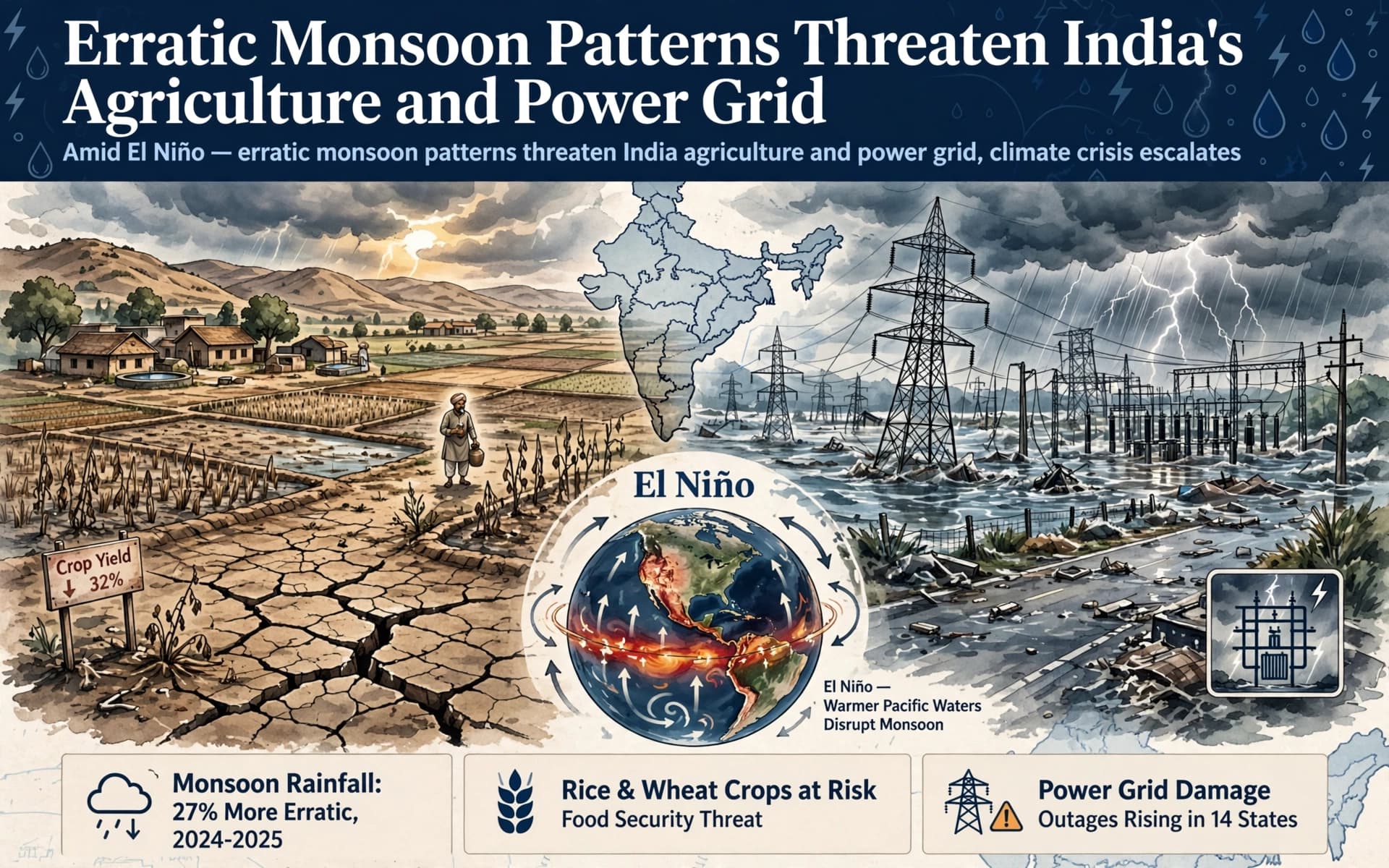
The Indian subcontinent is navigating a volatile meteorological landscape as the seasonal monsoon fails to provide the steady, predictable rains required for national stability. The convergence of El Niño effects and broader global warming trends has transformed the once-reliable monsoon into an erratic phenomenon. This pattern is characterized by sudden pauses and extreme temperature spikes.
This instability is no longer just a weather concern; it has evolved into a significant macroeconomic challenge. Such shifts threaten to ripple through the nation's Economy & Policy framework.
As the agricultural sector faces uncertainty in sowing patterns, urban infrastructure is struggling to manage the energy demands triggered by extreme heat. The current climate volatility is testing the resilience of India's food security and its energy distribution networks. This creates a complex set of challenges for policymakers and industrial planners alike.
Monsoon Precipitation Deficits
The following data outlines the current status of rainfall across the subcontinent compared to historical norms.
| Metric | Current Status |
|---|---|
| June Rainfall Performance | 40% below normal levels |
| National Rainfall (as of July 19) | 24% lower than seasonal average |
| Historical Context (June) | 5th driest June on record |
| IMD Seasonal Forecast | 94% of long-term average |
The significant deficit in June has already hampered the initial stages of the sowing season. This leaves much of the country's agricultural output in a state of flux.
Drivers of Meteorological Instability
The current erratic weather patterns result from complex interactions between oceanic cycles and atmospheric warming.
- The presence of El Niño is a primary driver, suppressing the typical moisture-laden winds that characterize the monsoon.
- Global warming has increased the frequency of "monsoon pauses," where rainfall ceases for extended periods despite the season being active.
- Thermal anomalies in urban centers are exacerbating the perceived severity of the dry spells.
- The interaction between shifting oceanic temperatures and atmospheric pressure systems is making precipitation timing highly unpredictable.
These factors have created a scenario where the traditional seasonal rhythm is being replaced by extreme fluctuations. This unpredictability complicates long-term planning for startups & funding in the agritech sector and large-scale infrastructure projects.
Regional Climate Extremes
The impact of the current weather cycle is not uniform, with different regions experiencing distinct types of climate stress.
| Region | Observed Impact |
|---|---|
| Bengaluru | Recorded hottest July day in 112 years |
| Urban Centers | Increased cooling demand and power grid strain |
| Agricultural Belts | Disrupted summer crop sowing and soil moisture loss |
The extreme heat in Bengaluru serves as a localized indicator of the broader trend. As rainfall fails to arrive, temperatures rise to levels not seen in over a century.
Macroeconomic and Sectoral Implications
The volatility in weather patterns is creating a cascade of effects across various sectors of the Indian economy.
- Agricultural output is under threat, which directly impacts rural incomes and domestic food inflation.
- The power grid is facing heightened pressure as urban cooling needs surge during rainfall pauses.
- Supply chain logistics are facing disruptions due to the unpredictable nature of extreme weather events.
The intersection of these factors suggests that the current weather cycle will have a measurable impact on Markets & IPOs as investors weigh the risks of food inflation and energy volatility.
Outlook
The trajectory of India's monsoon remains a subject of intense scrutiny. While the India Meteorological Department (IMD) maintains a relatively optimistic forecast of 94% of the long-term average, this figure may be misleading if rainfall is distributed unevenly or arrives in extreme, destructive bursts.
Private meteorologists, including experts from Skymet Weather Services, have cautioned that the second half of the monsoon could see wider precipitation deficits. This could potentially worsen current drought conditions in key agricultural zones.
The central question for the remainder of the year is whether rainfall will normalize or if the current deficit will lead to a prolonged period of agricultural stress. Furthermore, the exact impact of this monsoon on the national GDP remains an open question. The correlation between rainfall, rural consumption, and industrial output is highly sensitive to these specific climatic shifts. As the nation moves into the latter half of the season, the ability of the state to manage both food security and energy stability will be a critical test of economic resilience.
Frequently Asked Questions
How is El Niño affecting the Indian monsoon?
El Niño creates atmospheric conditions that suppress the moisture-laden winds essential for the monsoon, leading to lower overall precipitation and more erratic rainfall patterns.
Why is power demand increasing during the monsoon?
Monsoon pauses—periods where rainfall ceases despite being in the season—lead to extreme heat in urban areas, which drives up the demand for air conditioning and cooling.
What is the current rainfall deficit as of July 19?
National rainfall is currently approximately 24% lower than the usual levels for this time of year.