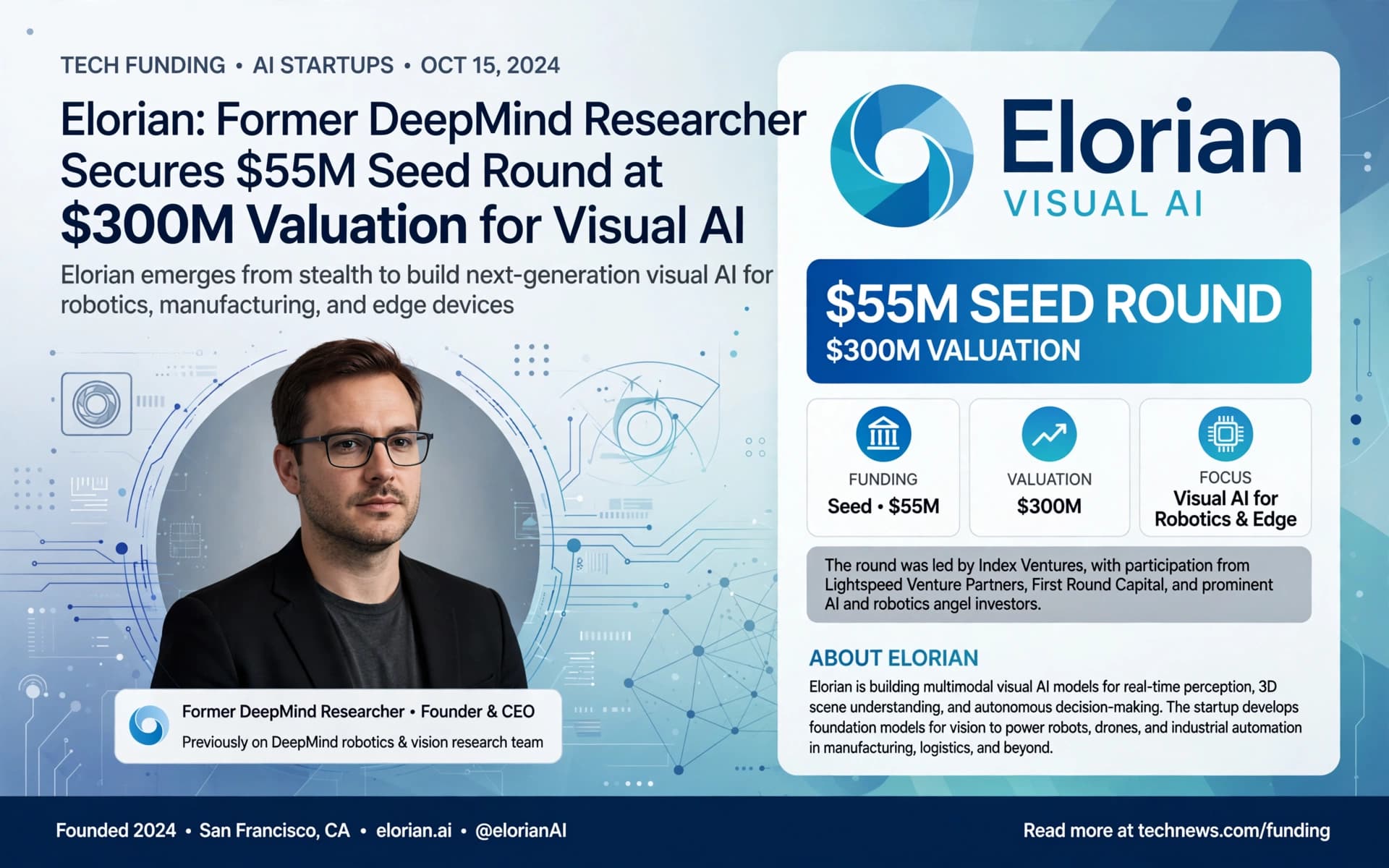
The pursuit of Artificial General Intelligence (AGI) has shifted from text-based reasoning toward the complexities of visual perception. As large language models master linguistic nuances, the next frontier involves machines that can interpret, navigate, and reason within the physical world through visual data. This transition requires computational sophistication that few startups are currently equipped to handle, yet Elorian has positioned itself at the center of this shift.
The company, led by veteran researcher Andrew Dai, is moving beyond the limitations of current multimodal models. By focusing on the intersection of vision and reasoning, Elorian aims to bridge the gap between static image recognition and dynamic, real-world understanding. This ambition is supported by a capital infusion that signals a significant investment in the future of visual intelligence.
A Capital Injection for Visual Intelligence
The recent funding round marks one of the most significant seed-stage investments in the history of artificial intelligence, according to company disclosures, signaling confidence in the technical roadmap.
| Key Highlights | Details |
|---|---|
| Total Seed Funding | $55 Million |
| Post-Money Valuation | $300 Million |
| Lead Strategic Investors | Nvidia, Menlo Ventures |
| Primary Objective | Development of Visual AGI |
This valuation at the seed stage reflects the high barrier to entry in the visual AI sector. This is driven primarily by immense compute requirements and the scarcity of specialized talent.
The Pedigree Behind Elorian
The momentum behind Elorian is largely attributed to the technical expertise of its leadership and strategic alignment with hardware and venture giants.
- Andrew Dai, the founder and CEO, brings experience from Google DeepMind, where his research contributed to foundational developments that informed the architecture of ChatGPT.
- The involvement of Nvidia provides Elorian with more than just capital; it offers a strategic partnership essential for scaling the compute workloads required for visual reasoning.
- Menlo Ventures has joined the cap table, providing the institutional backing necessary to navigate the high-burn environment of frontier model training.
- The company is recruiting talent to build its core research team, though the exact number of researchers recruited from Big Tech remains undisclosed.
By leveraging research roots and hardware-centric partnerships, Elorian is attempting to bypass the incrementalism that often affects late-stage AI labs.
Core Technical Objectives and Structure
Elorian is architecting a system designed for spatial and temporal reasoning rather than building a standard multimodal chatbot.
| Development Pillar | Strategic Focus |
|---|---|
| Model Architecture | Visual AGI-centric reasoning |
| Hardware Integration | Optimized for Nvidia infrastructure |
| Research Focus | Moving beyond static image captioning |
| Market Positioning | High-fidelity visual perception |
The company's focus remains on the foundational layer of visual intelligence. It aims to create models that understand the "why" and "how" of visual scenes rather than just the "what."
Market Implications and Competitive Landscape
The entry of a well-funded, research-heavy entity like Elorian alters the competitive calculus for established players in the AI space.
- The shift toward visual AGI forces competitors to move beyond text-centric models and invest in video and spatial data processing.
- High-valuation seed rounds create a "talent vacuum," making it difficult for mid-sized AI startups to compete for elite researchers.
- The partnership between software-focused startups and hardware leaders like Nvidia suggests a trend toward vertical integration in the AI development lifecycle.
As the industry moves toward agents that can interact with the physical world, the ability to process visual data with human-like reasoning becomes a primary differentiator.
Outlook
While the capital and pedigree are established, Elorian faces significant execution risks. The company has yet to reveal its specific product roadmap or a definitive timeline for its first commercial release.
The industry is monitoring whether Elorian can translate high-level research into a scalable product that competes with the multimodal capabilities being integrated into existing ecosystems.
Furthermore, the number of researchers recruited from Google DeepMind and other tech giants remains a critical metric for Elorian's long-term success. If the company can navigate the transition from a research-heavy startup to a product-focused entity, it may define the standard for how machines perceive the physical world.