Key Takeaways
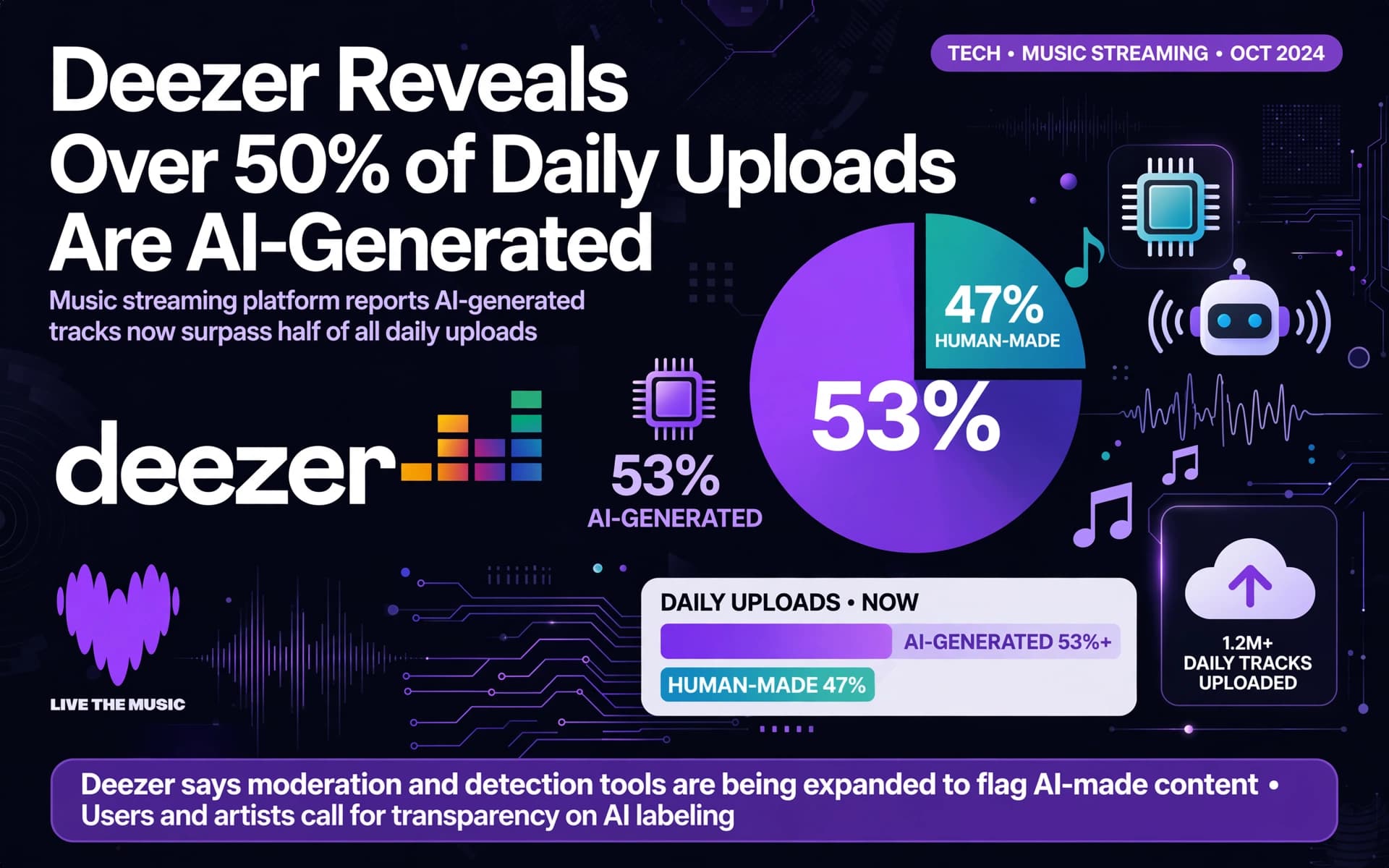
- Deezer reports that over 50% of daily uploads are AI-generated, a significant increase from last year's tracking.
- AI music now represents a monthly average of 90,000 tracks per day, with a peak in June 2026.
- Deezer will remove AI-generated tracks that haven't been streamed in the past six months or are involved in fraudulent streams.
Deezer, a leading music streaming platform, has revealed that more than half of daily uploads on its platform are AI-generated. This surge in AI music has been tracked by Deezer since last year, with a notable increase in the number of AI-generated tracks being uploaded daily. As of June 2026, the platform saw a monthly average of 90,000 AI-generated tracks per day.
Deezer's AI-Generated Music Problem
Deezer CEO Alexis Lanternier stated that the company has been at the forefront of combating fraud and reducing payment dilution related to AI music for nearly two years. The platform has been labeling AI music on its platform since last year and has also made its detection technology available to other platforms earlier this year. Deezer's detection technology can identify tracks generated with models from Suno and Udio.
| Key Highlights | Details |
|---|---|
| AI music represents 50% of daily uploads | Deezer tracks AI-generated music since last year |
| Monthly average of 90,000 AI-generated tracks per day | Peak in June 2026 |
| AI-generated tracks will be removed | If not streamed in the past six months or involved in fraudulent streams |
Deezer's move to label AI music on its platform and make its detection technology available to other platforms is a significant step in addressing the issue of AI-generated music. The platform's decision to remove AI-generated tracks that haven't been streamed in the past six months or are involved in fraudulent streams is also a crucial measure to prevent revenue dilution.
Why it Happened
- Deezer started labeling AI music on its platform last year.
- Deezer made its detection technology available to other platforms earlier this year.
- Deezer's detection technology can also identify tracks generated with models from Suno and Udio.
- Other music streaming platforms like Bandcamp and Tidal have banned AI-generated tracks or cut off monetization for AI-generated tracks.
The rise of AI-generated music on Deezer's platform can be attributed to the increasing availability of AI music generation tools. Deezer's decision to label AI music on its platform and make its detection technology available to other platforms has been a significant step in addressing the issue. However, other music streaming platforms have taken a more drastic approach by banning AI-generated tracks or cutting off monetization for AI-generated tracks.
Deal Structure
| Key Highlights | Details |
|---|---|
| Deezer will remove AI-generated tracks | If not streamed in the past six months or involved in fraudulent streams |
| Deezer's detection technology can identify tracks | Generated with models from Suno and Udio |
Deezer's decision to remove AI-generated tracks that haven't been streamed in the past six months or are involved in fraudulent streams is a crucial measure to prevent revenue dilution. The platform's detection technology can identify tracks generated with models from Suno and Udio, making it a valuable tool in addressing the issue of AI-generated music.
Broader Market Impact
- AI-generated music has significant implications for the music industry.
- Other music streaming platforms will need to address the issue of AI-generated music.
- The rise of AI-generated music raises questions about the value of human creativity in music production.
The rise of AI-generated music on Deezer's platform has significant implications for the music industry. Other music streaming platforms will need to address the issue of AI-generated music, and the rise of AI-generated music raises questions about the value of human creativity in music production.
Outlook
The rise of AI-generated music on Deezer's platform is a significant development in the music streaming industry. As AI music generation tools become more widely available, it is likely that other music streaming platforms will see a similar surge in AI-generated tracks. Deezer's decision to label AI music on its platform and make its detection technology available to other platforms is a crucial step in addressing the issue of AI-generated music. However, the implications of AI-generated music on the music industry are still unclear, and it will be interesting to see how other music streaming platforms address the issue.
Frequently Asked Questions
What is the valuation of Deezer?
Deezer's valuation is not publicly disclosed.
How do other music streaming platforms plan to address AI-generated music?
Other music streaming platforms like Bandcamp and Tidal have banned AI-generated tracks or cut off monetization for AI-generated tracks.
What are the implications of AI-generated music on the music industry?
The implications of AI-generated music on the music industry are still unclear, but it raises questions about the value of human creativity in music production.