The landscape of American monetary policy is facing a shift in momentum as recent inflation data presents a complex, contradictory picture for policymakers. While recent monthly declines suggest a cooling economy, underlying year-over-year pressures remain above the Federal Reserve's long-term mandate.
This tension has placed the Federal Open Market Committee (FOMC) in a delicate position as it prepares for its next deliberation.
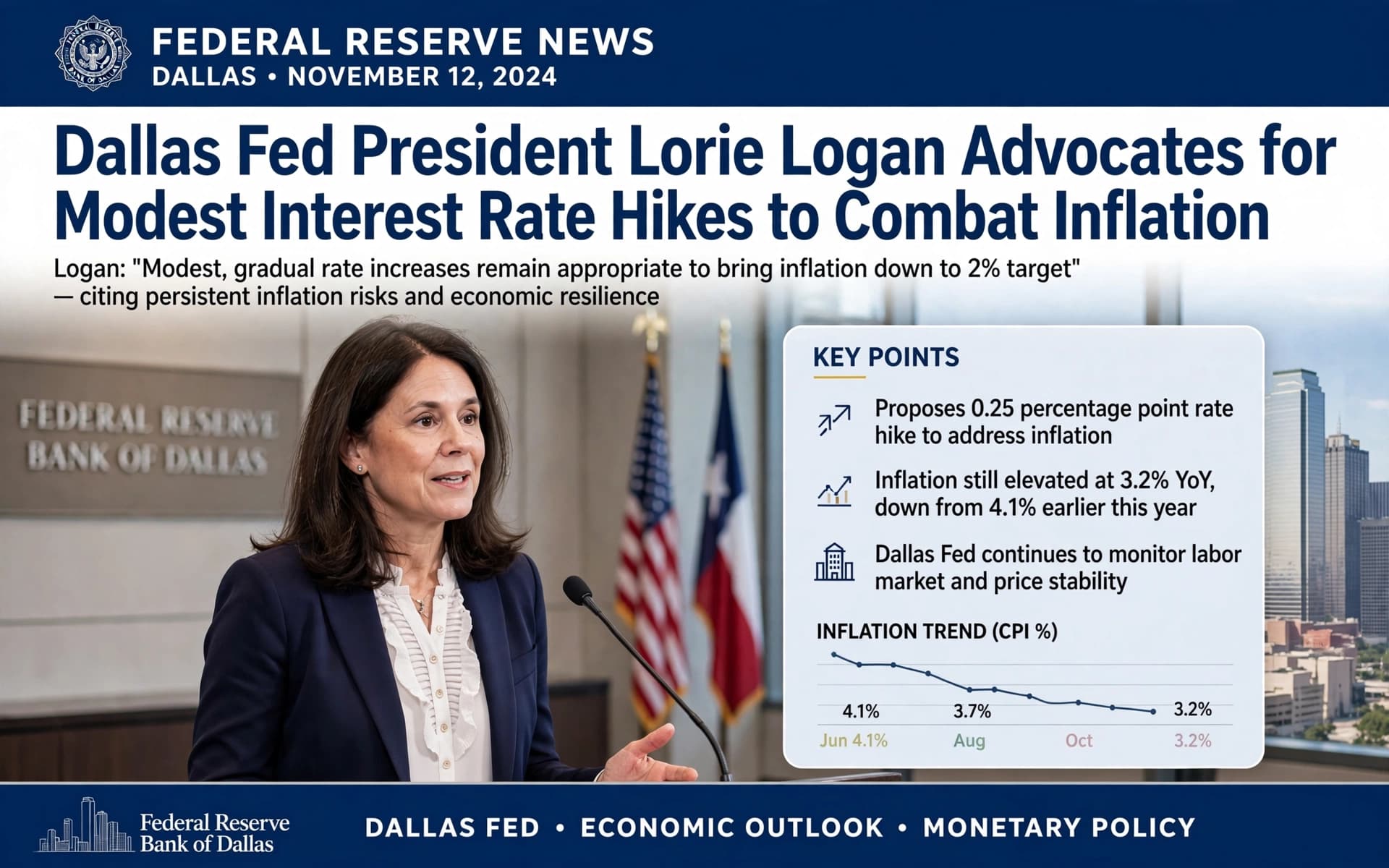
Lorie Logan, President of the Federal Reserve Bank of Dallas and a voting member of the FOMC, has signaled that the current restrictive stance may not be sufficient to anchor inflation expectations. Her recent commentary suggests the central bank may need to move toward modestly higher interest rates to ensure the economy returns to its 2% inflation target.
This stance arrives during a period of volatility in price indices, forcing a re-evaluation of the current trajectory of the federal funds rate.
Divergent Inflation Indicators
Recent data from the Bureau of Labor Statistics reveals a contrast between monthly price movements and annual trends.
| Metric Category | June Performance | Year-over-Year Change |
|---|---|---|
| Consumer Prices (CPI) | -0.4% | +3.5% |
| Wholesale Prices (PPI) | -0.3% | +5.5% |
The monthly drop in consumer prices represents the largest single-month decline since April 2020, yet annual figures indicate that inflationary pressures remain elevated. This divergence creates a difficult environment for the FOMC as it weighs immediate deflationary signals against persistent long-term trends.
Drivers of the Monetary Policy Debate
The current debate within the Federal Reserve is driven by conflicting economic signals that complicate the path toward price stability.
- The 0.4% monthly drop in consumer prices suggests recent tightening may be working more effectively than previously anticipated.
- Persistent year-over-year wholesale cost increases of 5.5% indicate that supply-side pressures remain a factor in the broader economy.
- The 3.5% annual rise in consumer prices remains above the 2% target, necessitating a cautious approach to rate cuts.
- Lorie Logan's advocacy for higher rates suggests a concern that the Fed may be moving too quickly toward easing.
These factors have created a bifurcated economic reality where monthly cooling does not necessarily translate to a resolution of inflation.
The July FOMC Meeting and Market Expectations
As the FOMC prepares for its scheduled meeting on July 28-29, market participants are monitoring the probability of a policy shift.
| Indicator | Current Status |
|---|---|
| Upcoming FOMC Meeting | July 28-29 |
| FedWatch Probability of Rate Hike | 12.3% |
| Target Inflation Rate | 2.0% |
While the CME Group's FedWatch tracker indicates a 12.3% probability of a rate hike at the July meeting, Logan's comments have added uncertainty to the outlook. The market is attempting to price in whether the Fed will maintain its current stance or pivot toward the hawkish position suggested by Logan.
Broader Market Implications
The tension between monthly deflation and annual inflation is expected to influence several key sectors of the global economy.
- Fixed-income markets are likely to see increased volatility as investors react to FOMC voting member commentary.
- Equity valuations may face pressure if the market begins to price in a higher-for-longer interest rate environment.
- Banking sector margins may shift depending on the speed and direction of the federal funds rate.
The outcome of the July meeting will serve as a primary indicator for how the Fed intends to navigate this period of economic transition.
Outlook
The central question for the remainder of 2026 is how much higher Lorie Logan believes interest rates must climb to achieve the 2% target. While her recent comments suggest a need for more restrictive policy, the specific magnitude of the required increase remains unknown.
The Fed must balance the risk of over-tightening, which could trigger a recession, against the risk of under-reacting, which could allow inflation to become entrenched.
Investors are looking toward the late summer and autumn months for clarity. It remains unclear whether Logan will push for an increase during the July 28-29 meeting or if the FOMC will wait to observe further data.
The decision-making window for the committee will likely expand into September or October. The Fed must determine if recent monthly price drops are a permanent trend or a temporary fluctuation.