Key Takeaways
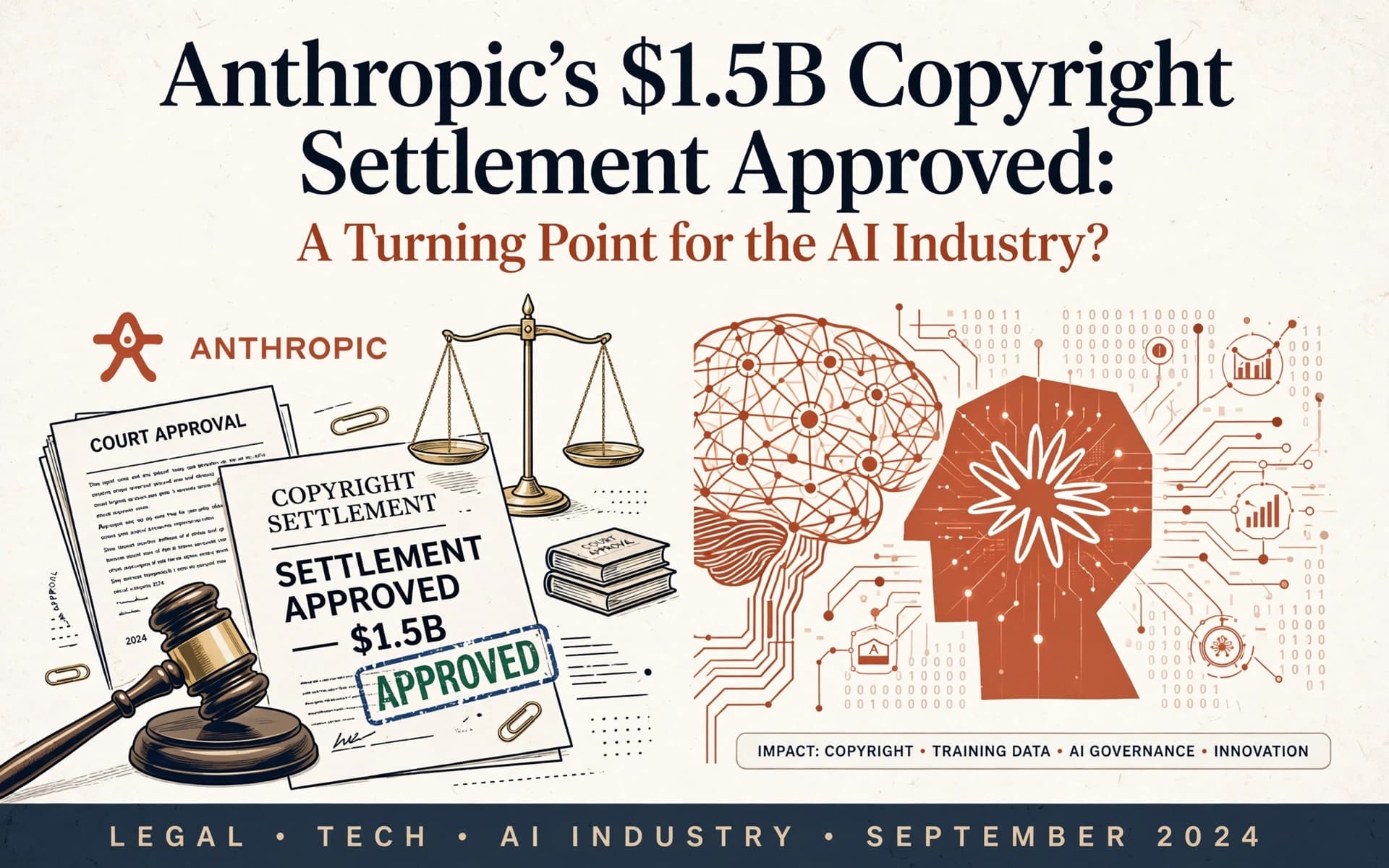
- Anthropic's $1.5B copyright settlement has been approved, signaling a shift in how the AI industry manages copyrighted content.
- The payout will distribute $3,000 per work across an estimated 500,000 works, establishing a new framework for AI training data compensation.
- According to the ruling by Judge William Alsup, training an AI model on copyrighted text may constitute fair use, which could have broad implications for the sector.
The approval of Anthropic's $1.5B copyright settlement marks a significant shift in the AI industry's approach to copyrighted content. The payout will deliver $3,000 per work across an estimated 500,000 works, establishing a new precedent for AI training data compensation.
This development may encourage other companies to prioritize fair use in their AI training practices.
Anthropic's $1.5B Copyright Settlement: Key Highlights
| Key Highlights | Details |
|---|---|
| Payout amount | $1.5B |
| Number of works | 500,000 |
| Payout per work | $3,000 |
| Source of training library | Purchased and scanned books, and books from unauthorized sites |
The approval of Anthropic's $1.5B copyright settlement marks a shift in the AI industry's approach to copyrighted content. The payout will deliver $3,000 per work across an estimated 500,000 works.
This development may encourage other companies to follow suit and prioritize fair use in their AI training practices.
Why it Happened
Anthropic's AI lab built its training library from two sources: books it purchased and scanned, and books it downloaded from unauthorized sites. This approach raised concerns among publishers and authors, who accused the company of using copyrighted works without permission.
A group of publishers and authors, including Hachette, Cengage, Elsevier, author Scott Turow, and S.C.R.I.B.E., filed a class action lawsuit against Anthropic regarding these allegations.
- The lawsuit highlighted the need for clearer guidelines on fair use in AI training practices.
- Anthropic's use of unauthorized sites to download copyrighted works raised concerns regarding the company's compliance with fair use standards.
- The settlement may encourage other companies to prioritize fair use in their AI training practices.
Deal Structure
| Key Features | Details |
|---|---|
| Payout amount | $1.5B |
| Number of works | 500,000 |
| Payout per work | $3,000 |
The settlement between Anthropic and the group of publishers and authors establishes a new precedent for AI training data compensation. The payout will deliver $3,000 per work across an estimated 500,000 works.
Outlook for the AI Industry
The approval of Anthropic's $1.5B copyright settlement may have broad implications for the AI industry. According to the ruling by Judge William Alsup, training an AI model on copyrighted text may constitute fair use.
This ruling may encourage other companies to prioritize fair use in their AI training practices.
- The settlement may set a new precedent for AI training data compensation.
- The ruling by Judge Alsup may influence other judges and courts.
- The industry may see a shift towards prioritizing fair use in AI training practices.
Frequently Asked Questions
What is the valuation of the settlement?
The $1.5B payout establishes a new precedent for AI training data compensation.
How will the settlement impact the AI industry?
The settlement may encourage other companies to prioritize fair use in their AI training practices, signaling a shift in the industry's approach to copyrighted content.
Will other judges follow Judge Alsup's ruling on fair use?
The ruling by Judge Alsup may influence other judges and courts, potentially leading to a broader shift in the industry's approach to fair use.